
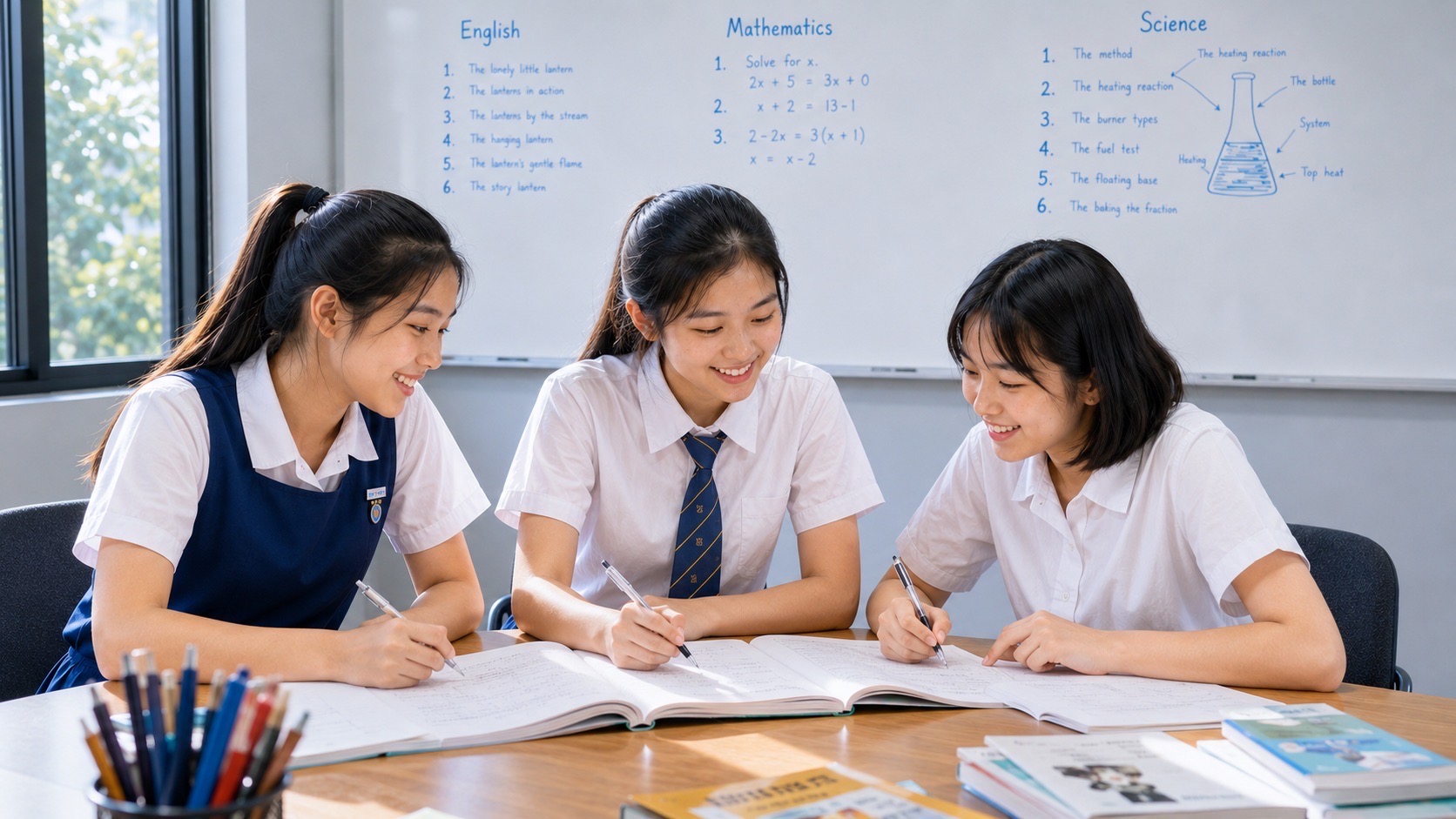
Idea generation is not waiting for inspiration. It is a controlled process of noticing, connecting, selecting and developing material until the writer has something specific enough to use.
Students often say they “have no ideas” when the real problem is more precise. They may have noticed too little, generated too narrowly, selected too quickly, or failed to develop a workable thought into something that can carry a paragraph, story or argument.
This pillar supports How Composition Planning Works, How Reading Builds Language, How English Enrichment Compounds, Creative Writing Classes Singapore and the wider English Composition Tuition system.
Ideas Begin with Material
Writers need raw material: observations, experiences, facts, images, conflicts, questions, examples, places, people, systems, memories and distinctions. The richer the internal store, the easier it becomes to generate relevant possibilities.
This is why reading and enrichment matter to writing. They enlarge the amount of material the writer can connect.
The Four-Part Idea Engine
- Notice: identify useful material.
- Connect: link the material to the prompt, a memory, a contrast or another idea.
- Select: choose the direction with the strongest fit and development potential.
- Develop: add cause, consequence, detail, evidence, tension or qualification.
The process can happen quickly under examination conditions, but the underlying stages remain useful.
Noticing Is a Trainable Skill
Some students notice broad categories: “the park”, “the argument”, “the problem”. Stronger writers notice usable specifics: the half-empty water bottle left on a bench, the pause before someone answers, the rule that creates the conflict, the detail that changes the reader’s interpretation.
Specific noticing makes later writing easier because the material already contains texture.
Connection Creates Possibility
Ideas often emerge when two things are connected that were not previously linked.
- a personal memory linked to a broader theme;
- a current issue linked to a historical example;
- a setting linked to a specific constraint;
- a character desire linked to a conflicting value;
- a fact linked to a surprising consequence.
Connection turns isolated material into a direction.
Maren: Too Many Ideas, Too Little Selection
Maren rarely lacks ideas. Her difficulty is selecting one that can be developed cleanly. She often chooses the most dramatic possibility rather than the most manageable.
Her selection test uses four questions: does this fit the prompt, can I explain the conflict clearly, can I develop the middle, and can I end it without inventing another plot?
Iona: Evidence as an Idea Source
Iona’s reading strength gives her a different route into ideas. She extracts claims, examples and contrasts from reading, then asks how those ideas might apply to another issue.
Her idea generation is strongest when reading becomes a store of relationships, not merely facts.
Leonie: Generating Under Time Pressure
Leonie can overthink the opening move. Her practice uses timed generation: produce three possible directions quickly, reject two, and commit. The goal is not the perfect idea. It is a workable idea chosen efficiently.
Prompt Words Are Idea Boundaries
A prompt does not merely inspire. It restricts. Good generation happens inside those boundaries.
- What must appear?
- What kind of relationship is implied?
- What would count as drifting?
- What room remains for interpretation?
Generate More Than You Need
The first idea has an unfair advantage because it arrives first. Generate at least two or three directions before choosing. This creates comparison.
In timed settings, the alternatives can be brief. A few words are enough if they make the trade-offs visible.
Selection Is a Quality Filter
- Fit: does the idea answer the prompt?
- Specificity: can it produce concrete material?
- Development: can the middle grow?
- Control: can it be completed within the time and word limit?
- Consequence: does the idea lead somewhere meaningful?
Development Adds Movement
An idea becomes usable when it can change as the writing proceeds. Development can add:
- cause;
- effect;
- contrast;
- evidence;
- specific example;
- counterargument;
- choice;
- consequence;
- reflection.
A paragraph that begins and ends with the same idea has not developed, even if it contains many sentences.
Idea Generation for Narrative Writing
Narrative ideas become stronger when they contain desire, resistance and consequence.
- Who wants what?
- What makes it difficult?
- What choice becomes necessary?
- What changes afterward?
These questions create a story engine without requiring an elaborate plot.
Idea Generation for Argument
Argumentative ideas benefit from distinctions.
- short-term versus long-term;
- individual versus society;
- benefit versus cost;
- access versus quality;
- efficiency versus fairness;
- freedom versus responsibility.
Distinctions help students move beyond generic opinions.
Idea Generation for Reflection
Reflective writing needs a change in interpretation. Useful prompts include: what did I believe before, what challenged it, what do I understand now, and what remains unresolved?
Reading Feeds Idea Generation
Students who read broadly have more examples, structures and questions available. Reading does not provide ready-made answers. It enlarges the network from which answers can be built.
See How Reading Builds Language.
Conversation Feeds Idea Generation
Discussion forces students to hear another perspective, clarify an assumption and make connections quickly. A conversation can generate writing material long before a composition task appears.
Knowledge Feeds Idea Generation
Background knowledge provides examples and causal models. Students who know more about how the world works can generate more specific explanations and arguments.
See How English Enrichment Compounds.
The Idea Notebook
A useful idea notebook stores triggers, not essays.
- interesting conflict;
- useful example;
- striking image;
- question worth thinking about;
- unexpected cause-and-effect relationship;
- real-world system that could support an argument.
Periodically connect old entries. The notebook becomes useful when one idea activates another.
Timed Idea Drills
- read a prompt;
- generate three directions in two minutes;
- rank them;
- state why the strongest one wins;
- build one paragraph job or story turn;
- stop without drafting the full piece.
This concentrates practice on generation and selection.
Common Idea-Generation Failures
Waiting for inspiration
Use material, prompts and timed alternatives to create movement.
Choosing the first idea automatically
Generate alternatives before committing.
Ideas too broad to develop
Narrow to a specific conflict, claim or example.
Ideas too ambitious for the time
Reduce cast, locations, scope or number of claims.
Idea Generation by Stage
Primary
Use concrete people, places, objects, problems and consequences.
PSLE preparation
Practise fast selection of manageable ideas under timed prompts.
Secondary
Increase abstraction, thematic connections, genre awareness and evaluation.
Advanced English / General Paper
Develop idea generation through knowledge, distinctions, examples, counterarguments and source comparison.
The Idea Standard
A good idea is not merely interesting. It fits the task, can be developed, gives the writing direction and can be completed with control.
Continue Through the Writing System
- How Composition Planning Works
- How Description Works in Writing
- How Dialogue Works in Writing
- How Story Craft Works
- How English Enrichment Compounds
- English Composition Tuition Singapore
Properly taught kids shine a bright light into the future.
Continue through the connected writing guides: Ideas, description, dialogue and revision.