
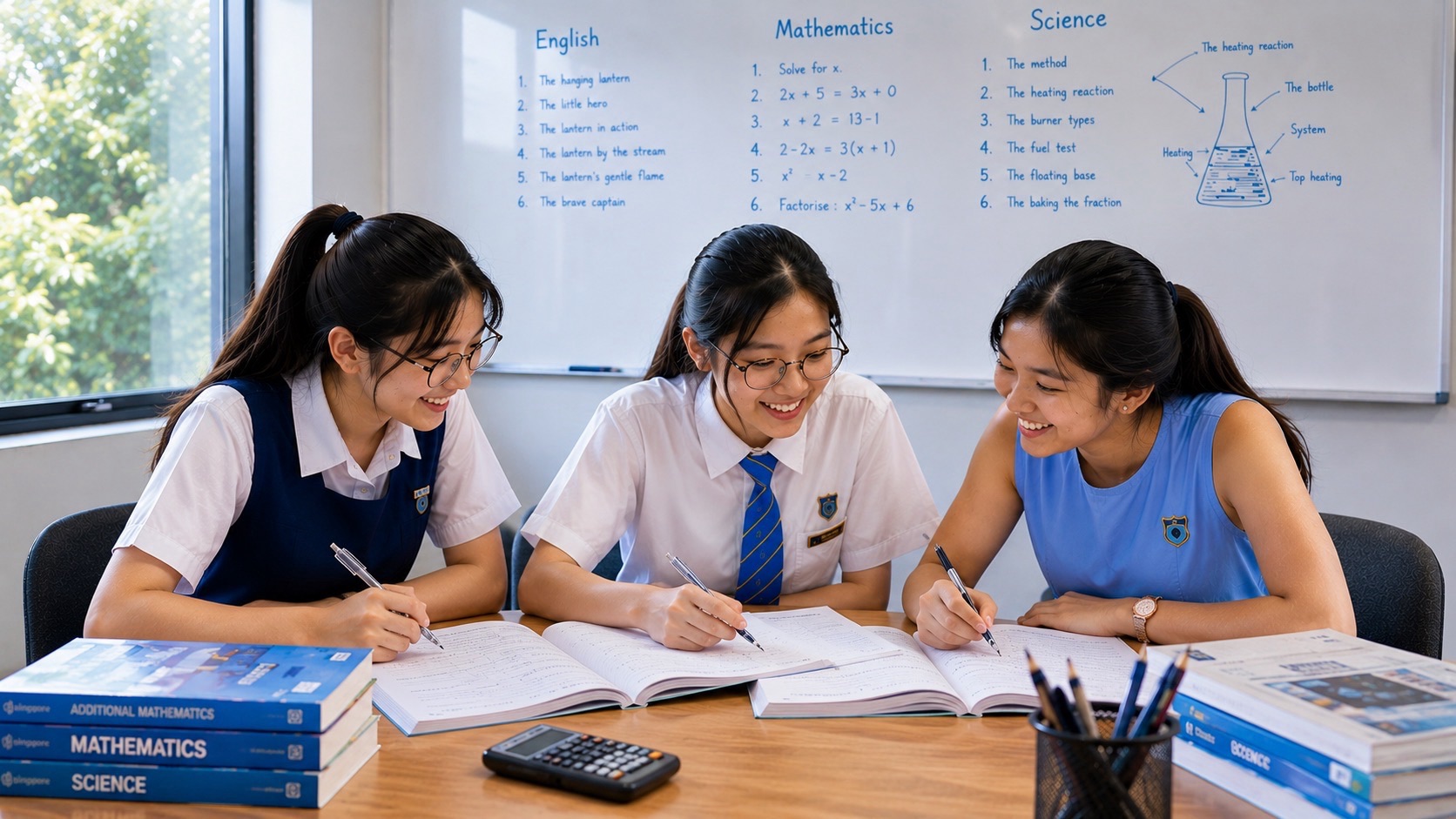
A Secondary 4 English tutor in Sembawang should help a student make final-year decisions with precision. Families searching for Sec 4 English tuition Sembawang, English tutor Sembawang, O-Level English tuition, Secondary English tuition Singapore, one-to-one English tuition, small-group tuition, online lessons or tutor rates usually have limited time. The tutor therefore needs to identify which losses are caused by comprehension, summary, writing, grammar, task reading, timing or recovery rather than simply assigning more work.
For students graduating in 2026, the relevant existing GCE routes still apply. The Singapore-Cambridge Secondary Education Certificate begins for graduating school candidates from 2027. A Secondary 4 tutor should keep that boundary clear, verify the student’s actual current syllabus and avoid mixing future SEC labels into current GCE preparation. For future cohorts, G1, G2 and G3 English preparation should match the actual subject level.
This Sembawang guide owns final-year tutor-fit intent. It does not replace SETC’s broader Secondary 4 curriculum owner or the existing SEC English Tuition | Sembawang local programme page. It focuses on triage, marked-paper diagnosis, writing feedback, full papers versus targeted repair, prelim analysis, the last twelve weeks, the last four weeks, tutor qualifications, rates, class format, online versus in-person tuition and practical scheduling.
Final-year triage
Final-year teaching should be selective here because limited time means the tutor must prioritise the largest recurring losses rather than improve every skill equally. The tutor’s role is to convert limited weeks into reliable performance, not simply create a heavier timetable.
Inspect. The tutor should map recent marks by component, cause, frequency and likely value of repair. Current school scripts should drive priorities wherever possible because final-year time is too valuable for generic sequencing.
Teach. The tutor should rank targets by leverage and fixability before prescribing practice. The rule should be concise enough to retrieve under pressure and precise enough to guide an actual decision.
Repair at the right scale. Isolate a narrow weakness for several dense repetitions before returning to a full paper. This produces more useful practice than repeatedly completing secure components.
Integrate. Put the repaired skill back among neighbouring demands. The student must decide when to use it while managing reading load, writing, checking and time.
Verify. The tutor should recheck priorities after each major assessment. Verification should use unseen material and realistic timing when the underlying skill is ready.
Recovery. Include tasks difficult enough to disturb the student’s rhythm and practise a skip-return-recover routine. The goal is to protect the rest of the paper when one item becomes costly.
Student ownership. The learner should name the error signature, recognise the warning sign and state the first corrective action. Tutor feedback is strongest when it becomes an internal check.
Parent evidence. Look for better completion, fewer repeated errors, clearer student explanations and a smaller gap between homework and timed work. Patterns across scripts are more informative than one isolated score.
Failure mode. Avoid responding to anxiety by increasing volume without choosing priorities. Final-year anxiety often drives volume, but volume cannot repair a process that has never been diagnosed precisely.
Maintenance. Move the target out of active repair when the student can explain it, execute it on unseen work, retain it after delay and use it under realistic timing.
2026 GCE accuracy
This matters disproportionately in Secondary 4 because current Secondary 4 students graduating in 2026 should prepare for the relevant existing GCE route, not future SEC labels. The visible mistake should be traced back to its causal step before practice volume increases.
Inspect. The tutor should confirm the exact school syllabus and assessment format. Current school scripts should drive priorities wherever possible because final-year time is too valuable for generic sequencing.
Teach. The tutor should use current route-specific materials and keep future SEC information separate. The rule should be concise enough to retrieve under pressure and precise enough to guide an actual decision.
Repair at the right scale. Isolate a narrow weakness for several dense repetitions before returning to a full paper. This produces more useful practice than repeatedly completing secure components.
Integrate. Put the repaired skill back among neighbouring demands. The student must decide when to use it while managing reading load, writing, checking and time.
Verify. The tutor should cross-check the student’s school documents and current SEAB information. Verification should use unseen material and realistic timing when the underlying skill is ready.
Recovery. Include tasks difficult enough to disturb the student’s rhythm and practise a skip-return-recover routine. The goal is to protect the rest of the paper when one item becomes costly.
Student ownership. The learner should name the error signature, recognise the warning sign and state the first corrective action. Tutor feedback is strongest when it becomes an internal check.
Parent evidence. Look for better completion, fewer repeated errors, clearer student explanations and a smaller gap between homework and timed work. Patterns across scripts are more informative than one isolated score.
Failure mode. Avoid mixing 2026 GCE preparation with 2027 SEC preparation. Final-year anxiety often drives volume, but volume cannot repair a process that has never been diagnosed precisely.
Maintenance. Move the target out of active repair when the student can explain it, execute it on unseen work, retain it after delay and use it under realistic timing.
Marked-paper matrix
The examination year turns this into an execution problem as well as a knowledge problem. a final-year script should reveal recurring causes rather than become a one-off correction exercise. The learner needs a method that survives unfamiliar material and time.
Inspect. The tutor should classify errors into task reading, evidence, inference, expression, structure, grammar, time and incompletion. Current school scripts should drive priorities wherever possible because final-year time is too valuable for generic sequencing.
Teach. The tutor should rank patterns and select one or two active repair targets. The rule should be concise enough to retrieve under pressure and precise enough to guide an actual decision.
Repair at the right scale. Isolate a narrow weakness for several dense repetitions before returning to a full paper. This produces more useful practice than repeatedly completing secure components.
Integrate. Put the repaired skill back among neighbouring demands. The student must decide when to use it while managing reading load, writing, checking and time.
Verify. The tutor should compare the next paper with the same matrix. Verification should use unseen material and realistic timing when the underlying skill is ready.
Recovery. Include tasks difficult enough to disturb the student’s rhythm and practise a skip-return-recover routine. The goal is to protect the rest of the paper when one item becomes costly.
Student ownership. The learner should name the error signature, recognise the warning sign and state the first corrective action. Tutor feedback is strongest when it becomes an internal check.
Parent evidence. Look for better completion, fewer repeated errors, clearer student explanations and a smaller gap between homework and timed work. Patterns across scripts are more informative than one isolated score.
Failure mode. Avoid chasing isolated errors without pattern analysis. Final-year anxiety often drives volume, but volume cannot repair a process that has never been diagnosed precisely.
Maintenance. Move the target out of active repair when the student can explain it, execute it on unseen work, retain it after delay and use it under realistic timing.
Maren: final-year writing structure
A strong final-year programme treats this as a closed loop. final-year writing needs a precise line of thought and lean planning that survives the clock. Diagnose, repair, vary, time, verify and then either maintain or move on.
Inspect. The tutor should inspect thesis quality, paragraph overlap, example interpretation and conclusion control. Current school scripts should drive priorities wherever possible because final-year time is too valuable for generic sequencing.
Teach. The tutor should teach efficient planning and distinct paragraph jobs. The rule should be concise enough to retrieve under pressure and precise enough to guide an actual decision.
Repair at the right scale. Isolate a narrow weakness for several dense repetitions before returning to a full paper. This produces more useful practice than repeatedly completing secure components.
Integrate. Put the repaired skill back among neighbouring demands. The student must decide when to use it while managing reading load, writing, checking and time.
Verify. The tutor should use a fresh prompt under time and require the student to justify the structure. Verification should use unseen material and realistic timing when the underlying skill is ready.
Recovery. Include tasks difficult enough to disturb the student’s rhythm and practise a skip-return-recover routine. The goal is to protect the rest of the paper when one item becomes costly.
Student ownership. The learner should name the error signature, recognise the warning sign and state the first corrective action. Tutor feedback is strongest when it becomes an internal check.
Parent evidence. Look for better completion, fewer repeated errors, clearer student explanations and a smaller gap between homework and timed work. Patterns across scripts are more informative than one isolated score.
Failure mode. Avoid introducing increasingly elaborate essay templates near the exam. Final-year anxiety often drives volume, but volume cannot repair a process that has never been diagnosed precisely.
Maintenance. Move the target out of active repair when the student can explain it, execute it on unseen work, retain it after delay and use it under realistic timing.
Iona: comprehension calibration
Final-year teaching should be selective here because final-year reading marks depend on evidence control and answer scope. The tutor’s role is to convert limited weeks into reliable performance, not simply create a heavier timetable.
Inspect. The tutor should inspect whether the answer is too literal, too broad or unsupported. Current school scripts should drive priorities wherever possible because final-year time is too valuable for generic sequencing.
Teach. The tutor should teach command reading, evidence tracing and calibrated inference. The rule should be concise enough to retrieve under pressure and precise enough to guide an actual decision.
Repair at the right scale. Isolate a narrow weakness for several dense repetitions before returning to a full paper. This produces more useful practice than repeatedly completing secure components.
Integrate. Put the repaired skill back among neighbouring demands. The student must decide when to use it while managing reading load, writing, checking and time.
Verify. The tutor should use near-similar answers on fresh passages. Verification should use unseen material and realistic timing when the underlying skill is ready.
Recovery. Include tasks difficult enough to disturb the student’s rhythm and practise a skip-return-recover routine. The goal is to protect the rest of the paper when one item becomes costly.
Student ownership. The learner should name the error signature, recognise the warning sign and state the first corrective action. Tutor feedback is strongest when it becomes an internal check.
Parent evidence. Look for better completion, fewer repeated errors, clearer student explanations and a smaller gap between homework and timed work. Patterns across scripts are more informative than one isolated score.
Failure mode. Avoid accepting plausible but ungrounded interpretation. Final-year anxiety often drives volume, but volume cannot repair a process that has never been diagnosed precisely.
Maintenance. Move the target out of active repair when the student can explain it, execute it on unseen work, retain it after delay and use it under realistic timing.
Leonie: timing and recovery
This matters disproportionately in Secondary 4 because the student must protect the whole paper when one task becomes difficult. The visible mistake should be traced back to its causal step before practice volume increases.
Inspect. The tutor should locate time leaks such as over-planning, rereading, overlong answers and getting stuck. Current school scripts should drive priorities wherever possible because final-year time is too valuable for generic sequencing.
Teach. The tutor should teach section allocation, skip-and-return and a realistic checking routine. The rule should be concise enough to retrieve under pressure and precise enough to guide an actual decision.
Repair at the right scale. Isolate a narrow weakness for several dense repetitions before returning to a full paper. This produces more useful practice than repeatedly completing secure components.
Integrate. Put the repaired skill back among neighbouring demands. The student must decide when to use it while managing reading load, writing, checking and time.
Verify. The tutor should use timed sections and later full-condition work. Verification should use unseen material and realistic timing when the underlying skill is ready.
Recovery. Include tasks difficult enough to disturb the student’s rhythm and practise a skip-return-recover routine. The goal is to protect the rest of the paper when one item becomes costly.
Student ownership. The learner should name the error signature, recognise the warning sign and state the first corrective action. Tutor feedback is strongest when it becomes an internal check.
Parent evidence. Look for better completion, fewer repeated errors, clearer student explanations and a smaller gap between homework and timed work. Patterns across scripts are more informative than one isolated score.
Failure mode. Avoid telling the student to work faster without identifying the bottleneck. Final-year anxiety often drives volume, but volume cannot repair a process that has never been diagnosed precisely.
Maintenance. Move the target out of active repair when the student can explain it, execute it on unseen work, retain it after delay and use it under realistic timing.
Full papers versus targeted repair
The examination year turns this into an execution problem as well as a knowledge problem. full papers are useful for integration but inefficient when one narrow process is broken. The learner needs a method that survives unfamiliar material and time.
Inspect. The tutor should compare how often the weak skill actually appears in a full paper. Current school scripts should drive priorities wherever possible because final-year time is too valuable for generic sequencing.
Teach. The tutor should repair at micro scale, reconnect to sections and then verify in full conditions. The rule should be concise enough to retrieve under pressure and precise enough to guide an actual decision.
Repair at the right scale. Isolate a narrow weakness for several dense repetitions before returning to a full paper. This produces more useful practice than repeatedly completing secure components.
Integrate. Put the repaired skill back among neighbouring demands. The student must decide when to use it while managing reading load, writing, checking and time.
Verify. The tutor should alternate focused sets, sections and selected full papers. Verification should use unseen material and realistic timing when the underlying skill is ready.
Recovery. Include tasks difficult enough to disturb the student’s rhythm and practise a skip-return-recover routine. The goal is to protect the rest of the paper when one item becomes costly.
Student ownership. The learner should name the error signature, recognise the warning sign and state the first corrective action. Tutor feedback is strongest when it becomes an internal check.
Parent evidence. Look for better completion, fewer repeated errors, clearer student explanations and a smaller gap between homework and timed work. Patterns across scripts are more informative than one isolated score.
Failure mode. Avoid drilling whole papers while the same error repeats. Final-year anxiety often drives volume, but volume cannot repair a process that has never been diagnosed precisely.
Maintenance. Move the target out of active repair when the student can explain it, execute it on unseen work, retain it after delay and use it under realistic timing.
Comprehension commands
A strong final-year programme treats this as a closed loop. final-year answers can fail before reading if the command is misunderstood. Diagnose, repair, vary, time, verify and then either maintain or move on.
Inspect. The tutor should inspect misreading of why, how, suggest, compare, effect and similar task words. Current school scripts should drive priorities wherever possible because final-year time is too valuable for generic sequencing.
Teach. The tutor should teach quick plain-language paraphrase of the question. The rule should be concise enough to retrieve under pressure and precise enough to guide an actual decision.
Repair at the right scale. Isolate a narrow weakness for several dense repetitions before returning to a full paper. This produces more useful practice than repeatedly completing secure components.
Integrate. Put the repaired skill back among neighbouring demands. The student must decide when to use it while managing reading load, writing, checking and time.
Verify. The tutor should change wording while preserving the operation. Verification should use unseen material and realistic timing when the underlying skill is ready.
Recovery. Include tasks difficult enough to disturb the student’s rhythm and practise a skip-return-recover routine. The goal is to protect the rest of the paper when one item becomes costly.
Student ownership. The learner should name the error signature, recognise the warning sign and state the first corrective action. Tutor feedback is strongest when it becomes an internal check.
Parent evidence. Look for better completion, fewer repeated errors, clearer student explanations and a smaller gap between homework and timed work. Patterns across scripts are more informative than one isolated score.
Failure mode. Avoid using memorised answer shapes without reading the task. Final-year anxiety often drives volume, but volume cannot repair a process that has never been diagnosed precisely.
Maintenance. Move the target out of active repair when the student can explain it, execute it on unseen work, retain it after delay and use it under realistic timing.
Inference calibration
Final-year teaching should be selective here because the strongest inference is the smallest conclusion that fits the evidence and question. The tutor’s role is to convert limited weeks into reliable performance, not simply create a heavier timetable.
Inspect. The tutor should inspect both literal copying and speculative overreach. Current school scripts should drive priorities wherever possible because final-year time is too valuable for generic sequencing.
Teach. The tutor should teach contrast among literal, calibrated and over-inferred responses. The rule should be concise enough to retrieve under pressure and precise enough to guide an actual decision.
Repair at the right scale. Isolate a narrow weakness for several dense repetitions before returning to a full paper. This produces more useful practice than repeatedly completing secure components.
Integrate. Put the repaired skill back among neighbouring demands. The student must decide when to use it while managing reading load, writing, checking and time.
Verify. The tutor should require textual evidence for each inferential step. Verification should use unseen material and realistic timing when the underlying skill is ready.
Recovery. Include tasks difficult enough to disturb the student’s rhythm and practise a skip-return-recover routine. The goal is to protect the rest of the paper when one item becomes costly.
Student ownership. The learner should name the error signature, recognise the warning sign and state the first corrective action. Tutor feedback is strongest when it becomes an internal check.
Parent evidence. Look for better completion, fewer repeated errors, clearer student explanations and a smaller gap between homework and timed work. Patterns across scripts are more informative than one isolated score.
Failure mode. Avoid confusing imagination with inference. Final-year anxiety often drives volume, but volume cannot repair a process that has never been diagnosed precisely.
Maintenance. Move the target out of active repair when the student can explain it, execute it on unseen work, retain it after delay and use it under realistic timing.
Language effect
This matters disproportionately in Secondary 4 because analysis should begin with local meaning before broad claims about effect. The visible mistake should be traced back to its causal step before practice volume increases.
Inspect. The tutor should inspect generic technique labels and vague reader reactions. Current school scripts should drive priorities wherever possible because final-year time is too valuable for generic sequencing.
Teach. The tutor should teach meaning, connotation, structure and context-specific purpose. The rule should be concise enough to retrieve under pressure and precise enough to guide an actual decision.
Repair at the right scale. Isolate a narrow weakness for several dense repetitions before returning to a full paper. This produces more useful practice than repeatedly completing secure components.
Integrate. Put the repaired skill back among neighbouring demands. The student must decide when to use it while managing reading load, writing, checking and time.
Verify. The tutor should use new passages with different features. Verification should use unseen material and realistic timing when the underlying skill is ready.
Recovery. Include tasks difficult enough to disturb the student’s rhythm and practise a skip-return-recover routine. The goal is to protect the rest of the paper when one item becomes costly.
Student ownership. The learner should name the error signature, recognise the warning sign and state the first corrective action. Tutor feedback is strongest when it becomes an internal check.
Parent evidence. Look for better completion, fewer repeated errors, clearer student explanations and a smaller gap between homework and timed work. Patterns across scripts are more informative than one isolated score.
Failure mode. Avoid writing universal effects. Final-year anxiety often drives volume, but volume cannot repair a process that has never been diagnosed precisely.
Maintenance. Move the target out of active repair when the student can explain it, execute it on unseen work, retain it after delay and use it under realistic timing.
Summary under time
The examination year turns this into an execution problem as well as a knowledge problem. summary requires scope, point selection, paraphrase, compression, grammar and word-budget control. The learner needs a method that survives unfamiliar material and time.
Inspect. The tutor should inspect omitted points, duplicates, changed meaning and lost qualifiers. Current school scripts should drive priorities wherever possible because final-year time is too valuable for generic sequencing.
Teach. The tutor should teach a staged workflow and then streamline it for time. The rule should be concise enough to retrieve under pressure and precise enough to guide an actual decision.
Repair at the right scale. Isolate a narrow weakness for several dense repetitions before returning to a full paper. This produces more useful practice than repeatedly completing secure components.
Integrate. Put the repaired skill back among neighbouring demands. The student must decide when to use it while managing reading load, writing, checking and time.
Verify. The tutor should verify first untimed and then under realistic timing. Verification should use unseen material and realistic timing when the underlying skill is ready.
Recovery. Include tasks difficult enough to disturb the student’s rhythm and practise a skip-return-recover routine. The goal is to protect the rest of the paper when one item becomes costly.
Student ownership. The learner should name the error signature, recognise the warning sign and state the first corrective action. Tutor feedback is strongest when it becomes an internal check.
Parent evidence. Look for better completion, fewer repeated errors, clearer student explanations and a smaller gap between homework and timed work. Patterns across scripts are more informative than one isolated score.
Failure mode. Avoid compressing before understanding what must be preserved. Final-year anxiety often drives volume, but volume cannot repair a process that has never been diagnosed precisely.
Maintenance. Move the target out of active repair when the student can explain it, execute it on unseen work, retain it after delay and use it under realistic timing.
Situational writing
A strong final-year programme treats this as a closed loop. communication purpose should control structure, tone and detail. Diagnose, repair, vary, time, verify and then either maintain or move on.
Inspect. The tutor should inspect role, audience, required points, tone and desired reader action. Current school scripts should drive priorities wherever possible because final-year time is too valuable for generic sequencing.
Teach. The tutor should teach rapid prompt extraction and reader-centred organisation. The rule should be concise enough to retrieve under pressure and precise enough to guide an actual decision.
Repair at the right scale. Isolate a narrow weakness for several dense repetitions before returning to a full paper. This produces more useful practice than repeatedly completing secure components.
Integrate. Put the repaired skill back among neighbouring demands. The student must decide when to use it while managing reading load, writing, checking and time.
Verify. The tutor should change audience or purpose and test adaptation. Verification should use unseen material and realistic timing when the underlying skill is ready.
Recovery. Include tasks difficult enough to disturb the student’s rhythm and practise a skip-return-recover routine. The goal is to protect the rest of the paper when one item becomes costly.
Student ownership. The learner should name the error signature, recognise the warning sign and state the first corrective action. Tutor feedback is strongest when it becomes an internal check.
Parent evidence. Look for better completion, fewer repeated errors, clearer student explanations and a smaller gap between homework and timed work. Patterns across scripts are more informative than one isolated score.
Failure mode. Avoid using one formal template for every task. Final-year anxiety often drives volume, but volume cannot repair a process that has never been diagnosed precisely.
Maintenance. Move the target out of active repair when the student can explain it, execute it on unseen work, retain it after delay and use it under realistic timing.
Argumentative writing
Final-year teaching should be selective here because a final-year argument needs a precise thesis, distinct mechanisms, explained evidence and qualification. The tutor’s role is to convert limited weeks into reliable performance, not simply create a heavier timetable.
Inspect. The tutor should inspect whether examples are interpreted and paragraphs are genuinely different. Current school scripts should drive priorities wherever possible because final-year time is too valuable for generic sequencing.
Teach. The tutor should teach claim-mechanism-evidence-interpretation-qualification. The rule should be concise enough to retrieve under pressure and precise enough to guide an actual decision.
Repair at the right scale. Isolate a narrow weakness for several dense repetitions before returning to a full paper. This produces more useful practice than repeatedly completing secure components.
Integrate. Put the repaired skill back among neighbouring demands. The student must decide when to use it while managing reading load, writing, checking and time.
Verify. The tutor should switch topics and preserve the reasoning quality. Verification should use unseen material and realistic timing when the underlying skill is ready.
Recovery. Include tasks difficult enough to disturb the student’s rhythm and practise a skip-return-recover routine. The goal is to protect the rest of the paper when one item becomes costly.
Student ownership. The learner should name the error signature, recognise the warning sign and state the first corrective action. Tutor feedback is strongest when it becomes an internal check.
Parent evidence. Look for better completion, fewer repeated errors, clearer student explanations and a smaller gap between homework and timed work. Patterns across scripts are more informative than one isolated score.
Failure mode. Avoid using confidence or memorised examples instead of analysis. Final-year anxiety often drives volume, but volume cannot repair a process that has never been diagnosed precisely.
Maintenance. Move the target out of active repair when the student can explain it, execute it on unseen work, retain it after delay and use it under realistic timing.
Discursive writing
This matters disproportionately in Secondary 4 because discursive responses should organise perspectives and reach a synthesised conclusion. The visible mistake should be traced back to its causal step before practice volume increases.
Inspect. The tutor should inspect whether the essay only alternates advantages and disadvantages. Current school scripts should drive priorities wherever possible because final-year time is too valuable for generic sequencing.
Teach. The tutor should teach stakeholder, time-horizon, principle-practicality and risk-benefit lenses. The rule should be concise enough to retrieve under pressure and precise enough to guide an actual decision.
Repair at the right scale. Isolate a narrow weakness for several dense repetitions before returning to a full paper. This produces more useful practice than repeatedly completing secure components.
Integrate. Put the repaired skill back among neighbouring demands. The student must decide when to use it while managing reading load, writing, checking and time.
Verify. The tutor should use a new issue and require an organising axis. Verification should use unseen material and realistic timing when the underlying skill is ready.
Recovery. Include tasks difficult enough to disturb the student’s rhythm and practise a skip-return-recover routine. The goal is to protect the rest of the paper when one item becomes costly.
Student ownership. The learner should name the error signature, recognise the warning sign and state the first corrective action. Tutor feedback is strongest when it becomes an internal check.
Parent evidence. Look for better completion, fewer repeated errors, clearer student explanations and a smaller gap between homework and timed work. Patterns across scripts are more informative than one isolated score.
Failure mode. Avoid ending without a meaningful synthesis. Final-year anxiety often drives volume, but volume cannot repair a process that has never been diagnosed precisely.
Maintenance. Move the target out of active repair when the student can explain it, execute it on unseen work, retain it after delay and use it under realistic timing.
Narrative writing
The examination year turns this into an execution problem as well as a knowledge problem. final-year narratives should favour manageable control over dramatic complexity. The learner needs a method that survives unfamiliar material and time.
Inspect. The tutor should inspect viewpoint, scene selection, dialogue function, transitions and consequence. Current school scripts should drive priorities wherever possible because final-year time is too valuable for generic sequencing.
Teach. The tutor should teach a lean story map and selective expansion. The rule should be concise enough to retrieve under pressure and precise enough to guide an actual decision.
Repair at the right scale. Isolate a narrow weakness for several dense repetitions before returning to a full paper. This produces more useful practice than repeatedly completing secure components.
Integrate. Put the repaired skill back among neighbouring demands. The student must decide when to use it while managing reading load, writing, checking and time.
Verify. The tutor should use timed planning on fresh prompts. Verification should use unseen material and realistic timing when the underlying skill is ready.
Recovery. Include tasks difficult enough to disturb the student’s rhythm and practise a skip-return-recover routine. The goal is to protect the rest of the paper when one item becomes costly.
Student ownership. The learner should name the error signature, recognise the warning sign and state the first corrective action. Tutor feedback is strongest when it becomes an internal check.
Parent evidence. Look for better completion, fewer repeated errors, clearer student explanations and a smaller gap between homework and timed work. Patterns across scripts are more informative than one isolated score.
Failure mode. Avoid choosing plots too complex to finish well. Final-year anxiety often drives volume, but volume cannot repair a process that has never been diagnosed precisely.
Maintenance. Move the target out of active repair when the student can explain it, execute it on unseen work, retain it after delay and use it under realistic timing.
Vocabulary under pressure
A strong final-year programme treats this as a closed loop. final-year vocabulary should be precise and retrievable rather than rare. Diagnose, repair, vary, time, verify and then either maintain or move on.
Inspect. The tutor should inspect vague verbs, poor collocations and overconfident absolute language. Current school scripts should drive priorities wherever possible because final-year time is too valuable for generic sequencing.
Teach. The tutor should teach high-utility language for cause, contrast, degree, concession and evaluation. The rule should be concise enough to retrieve under pressure and precise enough to guide an actual decision.
Repair at the right scale. Isolate a narrow weakness for several dense repetitions before returning to a full paper. This produces more useful practice than repeatedly completing secure components.
Integrate. Put the repaired skill back among neighbouring demands. The student must decide when to use it while managing reading load, writing, checking and time.
Verify. The tutor should retrieve it inside timed writing. Verification should use unseen material and realistic timing when the underlying skill is ready.
Recovery. Include tasks difficult enough to disturb the student’s rhythm and practise a skip-return-recover routine. The goal is to protect the rest of the paper when one item becomes costly.
Student ownership. The learner should name the error signature, recognise the warning sign and state the first corrective action. Tutor feedback is strongest when it becomes an internal check.
Parent evidence. Look for better completion, fewer repeated errors, clearer student explanations and a smaller gap between homework and timed work. Patterns across scripts are more informative than one isolated score.
Failure mode. Avoid cramming advanced words that cannot be used naturally. Final-year anxiety often drives volume, but volume cannot repair a process that has never been diagnosed precisely.
Maintenance. Move the target out of active repair when the student can explain it, execute it on unseen work, retain it after delay and use it under realistic timing.
Grammar error budget
Final-year teaching should be selective here because checking time should focus on the student’s highest-cost recurring language errors. The tutor’s role is to convert limited weeks into reliable performance, not simply create a heavier timetable.
Inspect. The tutor should rank sentence boundaries, tense, agreement, reference, modifiers and punctuation. Current school scripts should drive priorities wherever possible because final-year time is too valuable for generic sequencing.
Teach. The tutor should teach a short personal editing sequence. The rule should be concise enough to retrieve under pressure and precise enough to guide an actual decision.
Repair at the right scale. Isolate a narrow weakness for several dense repetitions before returning to a full paper. This produces more useful practice than repeatedly completing secure components.
Integrate. Put the repaired skill back among neighbouring demands. The student must decide when to use it while managing reading load, writing, checking and time.
Verify. The tutor should apply it in timed writing and track what is caught independently. Verification should use unseen material and realistic timing when the underlying skill is ready.
Recovery. Include tasks difficult enough to disturb the student’s rhythm and practise a skip-return-recover routine. The goal is to protect the rest of the paper when one item becomes costly.
Student ownership. The learner should name the error signature, recognise the warning sign and state the first corrective action. Tutor feedback is strongest when it becomes an internal check.
Parent evidence. Look for better completion, fewer repeated errors, clearer student explanations and a smaller gap between homework and timed work. Patterns across scripts are more informative than one isolated score.
Failure mode. Avoid re-reading everything without a target. Final-year anxiety often drives volume, but volume cannot repair a process that has never been diagnosed precisely.
Maintenance. Move the target out of active repair when the student can explain it, execute it on unseen work, retain it after delay and use it under realistic timing.
Oral readiness
This matters disproportionately in Secondary 4 because oral preparation should build flexible response and recovery rather than memorised scripts. The visible mistake should be traced back to its causal step before practice volume increases.
Inspect. The tutor should inspect directness, relevance, examples, qualification and follow-up performance. Current school scripts should drive priorities wherever possible because final-year time is too valuable for generic sequencing.
Teach. The tutor should teach adaptable structures and challenge questions. The rule should be concise enough to retrieve under pressure and precise enough to guide an actual decision.
Repair at the right scale. Isolate a narrow weakness for several dense repetitions before returning to a full paper. This produces more useful practice than repeatedly completing secure components.
Integrate. Put the repaired skill back among neighbouring demands. The student must decide when to use it while managing reading load, writing, checking and time.
Verify. The tutor should use unfamiliar prompts and require reformulation. Verification should use unseen material and realistic timing when the underlying skill is ready.
Recovery. Include tasks difficult enough to disturb the student’s rhythm and practise a skip-return-recover routine. The goal is to protect the rest of the paper when one item becomes costly.
Student ownership. The learner should name the error signature, recognise the warning sign and state the first corrective action. Tutor feedback is strongest when it becomes an internal check.
Parent evidence. Look for better completion, fewer repeated errors, clearer student explanations and a smaller gap between homework and timed work. Patterns across scripts are more informative than one isolated score.
Failure mode. Avoid predicting topics instead of building flexible reasoning. Final-year anxiety often drives volume, but volume cannot repair a process that has never been diagnosed precisely.
Maintenance. Move the target out of active repair when the student can explain it, execute it on unseen work, retain it after delay and use it under realistic timing.
Listening control
The examination year turns this into an execution problem as well as a knowledge problem. listening requires selective attention, working memory and the ability to let one missed detail go. The learner needs a method that survives unfamiliar material and time.
Inspect. The tutor should inspect whether vocabulary, note-taking, speaker tracking or perseveration causes errors. Current school scripts should drive priorities wherever possible because final-year time is too valuable for generic sequencing.
Teach. The tutor should teach prediction of information type and concise notes. The rule should be concise enough to retrieve under pressure and precise enough to guide an actual decision.
Repair at the right scale. Isolate a narrow weakness for several dense repetitions before returning to a full paper. This produces more useful practice than repeatedly completing secure components.
Integrate. Put the repaired skill back among neighbouring demands. The student must decide when to use it while managing reading load, writing, checking and time.
Verify. The tutor should use fresh audio and compare first-listen reconstruction with the source. Verification should use unseen material and realistic timing when the underlying skill is ready.
Recovery. Include tasks difficult enough to disturb the student’s rhythm and practise a skip-return-recover routine. The goal is to protect the rest of the paper when one item becomes costly.
Student ownership. The learner should name the error signature, recognise the warning sign and state the first corrective action. Tutor feedback is strongest when it becomes an internal check.
Parent evidence. Look for better completion, fewer repeated errors, clearer student explanations and a smaller gap between homework and timed work. Patterns across scripts are more informative than one isolated score.
Failure mode. Avoid chasing one missed phrase while losing later information. Final-year anxiety often drives volume, but volume cannot repair a process that has never been diagnosed precisely.
Maintenance. Move the target out of active repair when the student can explain it, execute it on unseen work, retain it after delay and use it under realistic timing.
Prelim analysis
A strong final-year programme treats this as a closed loop. prelims are diagnostic evidence rather than a final verdict. Diagnose, repair, vary, time, verify and then either maintain or move on.
Inspect. The tutor should compare prelim losses with earlier school papers and separate new from recurring problems. Current school scripts should drive priorities wherever possible because final-year time is too valuable for generic sequencing.
Teach. The tutor should update final priorities from patterns rather than emotion. The rule should be concise enough to retrieve under pressure and precise enough to guide an actual decision.
Repair at the right scale. Isolate a narrow weakness for several dense repetitions before returning to a full paper. This produces more useful practice than repeatedly completing secure components.
Integrate. Put the repaired skill back among neighbouring demands. The student must decide when to use it while managing reading load, writing, checking and time.
Verify. The tutor should repair the dominant clusters and verify again. Verification should use unseen material and realistic timing when the underlying skill is ready.
Recovery. Include tasks difficult enough to disturb the student’s rhythm and practise a skip-return-recover routine. The goal is to protect the rest of the paper when one item becomes costly.
Student ownership. The learner should name the error signature, recognise the warning sign and state the first corrective action. Tutor feedback is strongest when it becomes an internal check.
Parent evidence. Look for better completion, fewer repeated errors, clearer student explanations and a smaller gap between homework and timed work. Patterns across scripts are more informative than one isolated score.
Failure mode. Avoid changing the whole method after one disappointing score. Final-year anxiety often drives volume, but volume cannot repair a process that has never been diagnosed precisely.
Maintenance. Move the target out of active repair when the student can explain it, execute it on unseen work, retain it after delay and use it under realistic timing.
Last twelve weeks
Final-year teaching should be selective here because the final phase should move from repair to integration to stability. The tutor’s role is to convert limited weeks into reliable performance, not simply create a heavier timetable.
Inspect. The tutor should inspect which skills remain active repair targets and which are ready for maintenance. Current school scripts should drive priorities wherever possible because final-year time is too valuable for generic sequencing.
Teach. The tutor should schedule targeted repair, section integration, selected full papers and review. The rule should be concise enough to retrieve under pressure and precise enough to guide an actual decision.
Repair at the right scale. Isolate a narrow weakness for several dense repetitions before returning to a full paper. This produces more useful practice than repeatedly completing secure components.
Integrate. Put the repaired skill back among neighbouring demands. The student must decide when to use it while managing reading load, writing, checking and time.
Verify. The tutor should compare error distributions every fortnight. Verification should use unseen material and realistic timing when the underlying skill is ready.
Recovery. Include tasks difficult enough to disturb the student’s rhythm and practise a skip-return-recover routine. The goal is to protect the rest of the paper when one item becomes costly.
Student ownership. The learner should name the error signature, recognise the warning sign and state the first corrective action. Tutor feedback is strongest when it becomes an internal check.
Parent evidence. Look for better completion, fewer repeated errors, clearer student explanations and a smaller gap between homework and timed work. Patterns across scripts are more informative than one isolated score.
Failure mode. Avoid doing so many papers that review quality collapses. Final-year anxiety often drives volume, but volume cannot repair a process that has never been diagnosed precisely.
Maintenance. Move the target out of active repair when the student can explain it, execute it on unseen work, retain it after delay and use it under realistic timing.
Last four weeks
This matters disproportionately in Secondary 4 because the final month should reduce novelty and strengthen reliable routines. The visible mistake should be traced back to its causal step before practice volume increases.
Inspect. The tutor should inspect whether the student has stable methods for questions, writing choice, summary, editing and recovery. Current school scripts should drive priorities wherever possible because final-year time is too valuable for generic sequencing.
Teach. The tutor should keep retrieval frequent and major new systems rare. The rule should be concise enough to retrieve under pressure and precise enough to guide an actual decision.
Repair at the right scale. Isolate a narrow weakness for several dense repetitions before returning to a full paper. This produces more useful practice than repeatedly completing secure components.
Integrate. Put the repaired skill back among neighbouring demands. The student must decide when to use it while managing reading load, writing, checking and time.
Verify. The tutor should use a small number of realistic simulations with careful review. Verification should use unseen material and realistic timing when the underlying skill is ready.
Recovery. Include tasks difficult enough to disturb the student’s rhythm and practise a skip-return-recover routine. The goal is to protect the rest of the paper when one item becomes costly.
Student ownership. The learner should name the error signature, recognise the warning sign and state the first corrective action. Tutor feedback is strongest when it becomes an internal check.
Parent evidence. Look for better completion, fewer repeated errors, clearer student explanations and a smaller gap between homework and timed work. Patterns across scripts are more informative than one isolated score.
Failure mode. Avoid introducing many new acronyms or essay formulas just before the exam. Final-year anxiety often drives volume, but volume cannot repair a process that has never been diagnosed precisely.
Maintenance. Move the target out of active repair when the student can explain it, execute it on unseen work, retain it after delay and use it under realistic timing.
One-to-one versus small group
The examination year turns this into an execution problem as well as a knowledge problem. the final-year format should match diagnostic needs while preserving individual writing feedback. The learner needs a method that survives unfamiliar material and time.
Inspect. The tutor should inspect how much personal work is read and how often the student works without prompts. Current school scripts should drive priorities wherever possible because final-year time is too valuable for generic sequencing.
Teach. The tutor should use one-to-one for narrow repair and small groups for comparison where individual feedback remains strong. The rule should be concise enough to retrieve under pressure and precise enough to guide an actual decision.
Repair at the right scale. Isolate a narrow weakness for several dense repetitions before returning to a full paper. This produces more useful practice than repeatedly completing secure components.
Integrate. Put the repaired skill back among neighbouring demands. The student must decide when to use it while managing reading load, writing, checking and time.
Verify. The tutor should review whether solo performance improves. Verification should use unseen material and realistic timing when the underlying skill is ready.
Recovery. Include tasks difficult enough to disturb the student’s rhythm and practise a skip-return-recover routine. The goal is to protect the rest of the paper when one item becomes costly.
Student ownership. The learner should name the error signature, recognise the warning sign and state the first corrective action. Tutor feedback is strongest when it becomes an internal check.
Parent evidence. Look for better completion, fewer repeated errors, clearer student explanations and a smaller gap between homework and timed work. Patterns across scripts are more informative than one isolated score.
Failure mode. Avoid assuming personal attention automatically creates better transfer. Final-year anxiety often drives volume, but volume cannot repair a process that has never been diagnosed precisely.
Maintenance. Move the target out of active repair when the student can explain it, execute it on unseen work, retain it after delay and use it under realistic timing.
Online versus in-person
A strong final-year programme treats this as a closed loop. the medium should protect attention, feedback quality and recovery time. Diagnose, repair, vary, time, verify and then either maintain or move on.
Inspect. The tutor should compare travel, screen focus, digital marking, document flow and sleep. Current school scripts should drive priorities wherever possible because final-year time is too valuable for generic sequencing.
Teach. The tutor should choose the mode that preserves high-quality practice with least destructive friction. The rule should be concise enough to retrieve under pressure and precise enough to guide an actual decision.
Repair at the right scale. Isolate a narrow weakness for several dense repetitions before returning to a full paper. This produces more useful practice than repeatedly completing secure components.
Integrate. Put the repaired skill back among neighbouring demands. The student must decide when to use it while managing reading load, writing, checking and time.
Verify. The tutor should track fatigue and punctuality over several weeks. Verification should use unseen material and realistic timing when the underlying skill is ready.
Recovery. Include tasks difficult enough to disturb the student’s rhythm and practise a skip-return-recover routine. The goal is to protect the rest of the paper when one item becomes costly.
Student ownership. The learner should name the error signature, recognise the warning sign and state the first corrective action. Tutor feedback is strongest when it becomes an internal check.
Parent evidence. Look for better completion, fewer repeated errors, clearer student explanations and a smaller gap between homework and timed work. Patterns across scripts are more informative than one isolated score.
Failure mode. Avoid sacrificing sleep for travel or attention for convenience. Final-year anxiety often drives volume, but volume cannot repair a process that has never been diagnosed precisely.
Maintenance. Move the target out of active repair when the student can explain it, execute it on unseen work, retain it after delay and use it under realistic timing.
Sembawang final-year schedule
Final-year teaching should be selective here because local planning must include the entire school-day route and competing revision demands. The tutor’s role is to convert limited weeks into reliable performance, not simply create a heavier timetable.
Inspect. The tutor should count school dismissal, CCA, transport, meals, lesson, return home, other subjects and sleep. Current school scripts should drive priorities wherever possible because final-year time is too valuable for generic sequencing.
Teach. The tutor should choose a timetable that remains sustainable through prelims and final examinations. The rule should be concise enough to retrieve under pressure and precise enough to guide an actual decision.
Repair at the right scale. Isolate a narrow weakness for several dense repetitions before returning to a full paper. This produces more useful practice than repeatedly completing secure components.
Integrate. Put the repaired skill back among neighbouring demands. The student must decide when to use it while managing reading load, writing, checking and time.
Verify. The tutor should review whether the arrangement causes skipped work or chronic fatigue. Verification should use unseen material and realistic timing when the underlying skill is ready.
Recovery. Include tasks difficult enough to disturb the student’s rhythm and practise a skip-return-recover routine. The goal is to protect the rest of the paper when one item becomes costly.
Student ownership. The learner should name the error signature, recognise the warning sign and state the first corrective action. Tutor feedback is strongest when it becomes an internal check.
Parent evidence. Look for better completion, fewer repeated errors, clearer student explanations and a smaller gap between homework and timed work. Patterns across scripts are more informative than one isolated score.
Failure mode. Avoid assuming local proximity alone makes a schedule suitable. Final-year anxiety often drives volume, but volume cannot repair a process that has never been diagnosed precisely.
Maintenance. Move the target out of active repair when the student can explain it, execute it on unseen work, retain it after delay and use it under realistic timing.
Tutor fees and qualifications
This matters disproportionately in Secondary 4 because final-year value depends strongly on diagnostic quality, marking depth and prioritisation. The visible mistake should be traced back to its causal step before practice volume increases.
Inspect. The tutor should inspect what the fee includes: essay marking, paper analysis, materials, class size and progress review. Current school scripts should drive priorities wherever possible because final-year time is too valuable for generic sequencing.
Teach. The tutor should ask how a known weakness moves from diagnosis to repair to timed verification. The rule should be concise enough to retrieve under pressure and precise enough to guide an actual decision.
Repair at the right scale. Isolate a narrow weakness for several dense repetitions before returning to a full paper. This produces more useful practice than repeatedly completing secure components.
Integrate. Put the repaired skill back among neighbouring demands. The student must decide when to use it while managing reading load, writing, checking and time.
Verify. The tutor should judge value by error reduction and independent execution. Verification should use unseen material and realistic timing when the underlying skill is ready.
Recovery. Include tasks difficult enough to disturb the student’s rhythm and practise a skip-return-recover routine. The goal is to protect the rest of the paper when one item becomes costly.
Student ownership. The learner should name the error signature, recognise the warning sign and state the first corrective action. Tutor feedback is strongest when it becomes an internal check.
Parent evidence. Look for better completion, fewer repeated errors, clearer student explanations and a smaller gap between homework and timed work. Patterns across scripts are more informative than one isolated score.
Failure mode. Avoid choosing mainly by hourly rate or credential. Final-year anxiety often drives volume, but volume cannot repair a process that has never been diagnosed precisely.
Maintenance. Move the target out of active repair when the student can explain it, execute it on unseen work, retain it after delay and use it under realistic timing.
Future SEC context
The examination year turns this into an execution problem as well as a knowledge problem. future Secondary 4 cohorts from 2027 need preparation matched to actual G1, G2 or G3 English. The learner needs a method that survives unfamiliar material and time.
Inspect. The tutor should confirm future cohort and subject level before selecting materials. Current school scripts should drive priorities wherever possible because final-year time is too valuable for generic sequencing.
Teach. The tutor should use current SEAB syllabus documents and subject codes when applicable. The rule should be concise enough to retrieve under pressure and precise enough to guide an actual decision.
Repair at the right scale. Isolate a narrow weakness for several dense repetitions before returning to a full paper. This produces more useful practice than repeatedly completing secure components.
Integrate. Put the repaired skill back among neighbouring demands. The student must decide when to use it while managing reading load, writing, checking and time.
Verify. The tutor should recheck official requirements as documents are updated. Verification should use unseen material and realistic timing when the underlying skill is ready.
Recovery. Include tasks difficult enough to disturb the student’s rhythm and practise a skip-return-recover routine. The goal is to protect the rest of the paper when one item becomes costly.
Student ownership. The learner should name the error signature, recognise the warning sign and state the first corrective action. Tutor feedback is strongest when it becomes an internal check.
Parent evidence. Look for better completion, fewer repeated errors, clearer student explanations and a smaller gap between homework and timed work. Patterns across scripts are more informative than one isolated score.
Failure mode. Avoid using future SEC material for current 2026 GCE candidates. Final-year anxiety often drives volume, but volume cannot repair a process that has never been diagnosed precisely.
Maintenance. Move the target out of active repair when the student can explain it, execute it on unseen work, retain it after delay and use it under realistic timing.
Progress and exit
A strong final-year programme treats this as a closed loop. the final goal is stable performance without tutor prompts. Diagnose, repair, vary, time, verify and then either maintain or move on.
Inspect. The tutor should observe completion, evidence control, writing architecture, error recurrence, timing and recovery. Current school scripts should drive priorities wherever possible because final-year time is too valuable for generic sequencing.
Teach. The tutor should move repaired skills to maintenance and keep only the highest-value active targets. The rule should be concise enough to retrieve under pressure and precise enough to guide an actual decision.
Repair at the right scale. Isolate a narrow weakness for several dense repetitions before returning to a full paper. This produces more useful practice than repeatedly completing secure components.
Integrate. Put the repaired skill back among neighbouring demands. The student must decide when to use it while managing reading load, writing, checking and time.
Verify. The tutor should use unseen full or near-full conditions to decide whether support can reduce. Verification should use unseen material and realistic timing when the underlying skill is ready.
Recovery. Include tasks difficult enough to disturb the student’s rhythm and practise a skip-return-recover routine. The goal is to protect the rest of the paper when one item becomes costly.
Student ownership. The learner should name the error signature, recognise the warning sign and state the first corrective action. Tutor feedback is strongest when it becomes an internal check.
Parent evidence. Look for better completion, fewer repeated errors, clearer student explanations and a smaller gap between homework and timed work. Patterns across scripts are more informative than one isolated score.
Failure mode. Avoid continuing maximum-intensity tuition after independence is already stable. Final-year anxiety often drives volume, but volume cannot repair a process that has never been diagnosed precisely.
Maintenance. Move the target out of active repair when the student can explain it, execute it on unseen work, retain it after delay and use it under realistic timing.
A 12-week Secondary 4 route
- Weeks 1–2: build a current error matrix from school papers and identify the largest mark-loss clusters.
- Weeks 3–4: repair the highest-value weaknesses with targeted practice.
- Weeks 5–6: reconnect repaired skills to school-like sections with reduced prompting.
- Weeks 7–8: integrate multiple skills under moderate timing and analyse the time distribution.
- Weeks 9–10: use selected full or near-full examination conditions and review every recurring error.
- Weeks 11–12: stabilise personal routines, maintain repaired skills and avoid unnecessary novelty.
How this Sembawang page is hubbed
This page owns Secondary 4 English tutor selection and tutor fit in Sembawang. The broader year owner remains English Tuition for Secondary 4. The local programme neighbour is SEC English Tuition | Sembawang.