
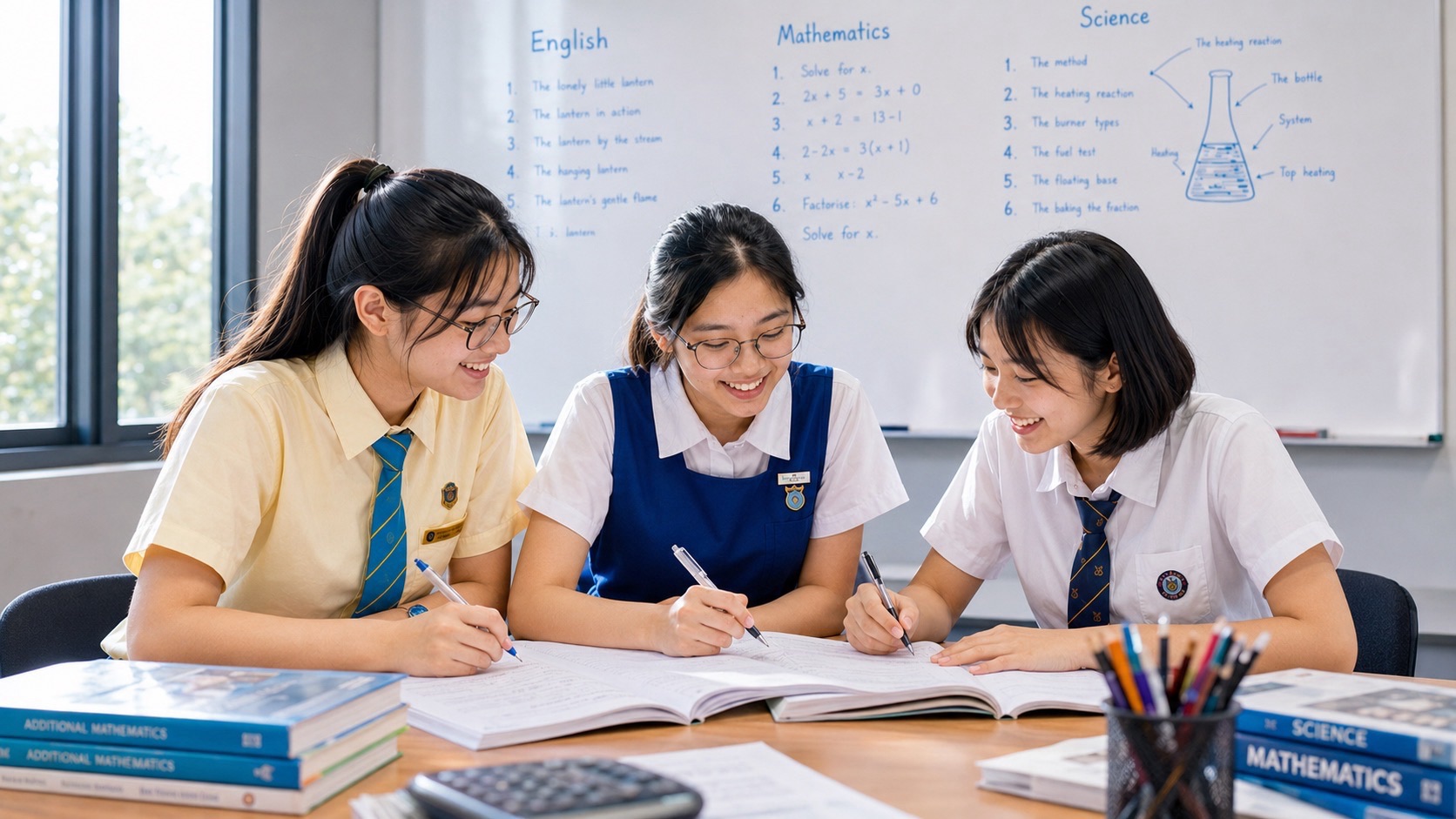
A Secondary 2 English tutor in Punggol should help a student consolidate secondary English before upper-secondary pressure increases. Families searching for Sec 2 English tuition Punggol, English tutor Punggol, Secondary English tuition Singapore, one-to-one tutoring, small-group classes, online lessons or tutor rates are often dealing with a learner who can complete school work but still shows recurring weaknesses in comprehension, summary, writing development, vocabulary, grammar, oral and timed execution.
SETC uses three recurring teaching lenses in this guide. Maren represents writing and idea structure; Iona represents reading, inference and answer scope; Leonie represents timing, execution and recovery. These lenses keep the student’s English system connected rather than treating every component as an isolated worksheet.
Secondary 2 consolidation
Secondary 2 gives enough time to strengthen this area because familiar strategies should become independently selected routines. The tutor should make the decision process visible enough that the learner can later recognise and use it without a prompt.
What to inspect. The tutor should compare several school tasks for repeated weaknesses. Authentic school work should drive diagnosis because it reveals the context in which the student’s method actually fails.
What to teach. The tutor should teach the smallest unstable process first. Explanation should move quickly into guided practice and then into a less-supported attempt.
Focused practice. Use several short repetitions around the exact weak process before returning to a full task. This increases useful practice density and prevents already-secure components from consuming most of the lesson.
Independent selection. Mix near-similar tasks so the learner must decide which method applies. A skill is not fully owned if the tutor has to announce the strategy before every attempt.
How to verify. The tutor should use unfamiliar material after delay. Use unfamiliar material and, where useful, delay the check so success cannot depend on the original explanation remaining fresh in memory.
Transfer. Change topic, genre, audience, wording or timing while preserving the underlying demand. If performance collapses, return to the rule before adding complexity.
Student ownership. Ask the learner to name the error signature, warning sign and first corrective action. This turns tutor feedback into an internal monitoring routine.
Parent evidence. Look for fewer repeated errors, clearer explanations, better completion and less prompting across several pieces of work. These process changes often appear before a large score movement.
Common failure mode. Avoid treating Secondary 2 as a year to coast. More volume cannot compensate for an inaccurate diagnosis or a method that never transfers.
Maintenance standard. Move the target out of active repair when the learner can explain the method, select it appropriately, use it on unseen work and retain it after a gap.
Error mapping
This deserves explicit attention because overall marks can hide recurring process losses. The tutor should make the decision process visible enough that the learner can later recognise and use it without a prompt.
What to inspect. The tutor should classify reading, inference, summary, writing, grammar and timing errors. Authentic school work should drive diagnosis because it reveals the context in which the student’s method actually fails.
What to teach. The tutor should rank patterns by frequency and leverage. Explanation should move quickly into guided practice and then into a less-supported attempt.
Focused practice. Use several short repetitions around the exact weak process before returning to a full task. This increases useful practice density and prevents already-secure components from consuming most of the lesson.
Independent selection. Mix near-similar tasks so the learner must decide which method applies. A skill is not fully owned if the tutor has to announce the strategy before every attempt.
How to verify. The tutor should compare later work with the same map. Use unfamiliar material and, where useful, delay the check so success cannot depend on the original explanation remaining fresh in memory.
Transfer. Change topic, genre, audience, wording or timing while preserving the underlying demand. If performance collapses, return to the rule before adding complexity.
Student ownership. Ask the learner to name the error signature, warning sign and first corrective action. This turns tutor feedback into an internal monitoring routine.
Parent evidence. Look for fewer repeated errors, clearer explanations, better completion and less prompting across several pieces of work. These process changes often appear before a large score movement.
Common failure mode. Avoid reacting to whichever question felt hardest. More volume cannot compensate for an inaccurate diagnosis or a method that never transfers.
Maintenance standard. Move the target out of active repair when the learner can explain the method, select it appropriately, use it on unseen work and retain it after a gap.
Maren: paragraph reasoning
By Secondary 2, paragraphs should advance thinking rather than merely display a frame. The tutor should make the decision process visible enough that the learner can later recognise and use it without a prompt.
What to inspect. The tutor should inspect whether examples are explained and reasons are distinct. Authentic school work should drive diagnosis because it reveals the context in which the student’s method actually fails.
What to teach. The tutor should teach claim, explanation, example and implication as thinking jobs. Explanation should move quickly into guided practice and then into a less-supported attempt.
Focused practice. Use several short repetitions around the exact weak process before returning to a full task. This increases useful practice density and prevents already-secure components from consuming most of the lesson.
Independent selection. Mix near-similar tasks so the learner must decide which method applies. A skill is not fully owned if the tutor has to announce the strategy before every attempt.
How to verify. The tutor should switch topics while preserving the structure. Use unfamiliar material and, where useful, delay the check so success cannot depend on the original explanation remaining fresh in memory.
Transfer. Change topic, genre, audience, wording or timing while preserving the underlying demand. If performance collapses, return to the rule before adding complexity.
Student ownership. Ask the learner to name the error signature, warning sign and first corrective action. This turns tutor feedback into an internal monitoring routine.
Parent evidence. Look for fewer repeated errors, clearer explanations, better completion and less prompting across several pieces of work. These process changes often appear before a large score movement.
Common failure mode. Avoid using a formula that looks organised but says little. More volume cannot compensate for an inaccurate diagnosis or a method that never transfers.
Maintenance standard. Move the target out of active repair when the learner can explain the method, select it appropriately, use it on unseen work and retain it after a gap.
Iona: text architecture
Consolidation works when students should see cause, contrast, qualification and viewpoint shifts across whole texts. The tutor should make the decision process visible enough that the learner can later recognise and use it without a prompt.
What to inspect. The tutor should inspect paragraph function and relationships. Authentic school work should drive diagnosis because it reveals the context in which the student’s method actually fails.
What to teach. The tutor should teach structural reading and evidence boundaries. Explanation should move quickly into guided practice and then into a less-supported attempt.
Focused practice. Use several short repetitions around the exact weak process before returning to a full task. This increases useful practice density and prevents already-secure components from consuming most of the lesson.
Independent selection. Mix near-similar tasks so the learner must decide which method applies. A skill is not fully owned if the tutor has to announce the strategy before every attempt.
How to verify. The tutor should use a new genre and remap the text. Use unfamiliar material and, where useful, delay the check so success cannot depend on the original explanation remaining fresh in memory.
Transfer. Change topic, genre, audience, wording or timing while preserving the underlying demand. If performance collapses, return to the rule before adding complexity.
Student ownership. Ask the learner to name the error signature, warning sign and first corrective action. This turns tutor feedback into an internal monitoring routine.
Parent evidence. Look for fewer repeated errors, clearer explanations, better completion and less prompting across several pieces of work. These process changes often appear before a large score movement.
Common failure mode. Avoid reading every question as a keyword hunt. More volume cannot compensate for an inaccurate diagnosis or a method that never transfers.
Maintenance standard. Move the target out of active repair when the learner can explain the method, select it appropriately, use it on unseen work and retain it after a gap.
Leonie: independent execution
Secondary 2 gives enough time to strengthen this area because skills should survive when tutor cues disappear. The tutor should make the decision process visible enough that the learner can later recognise and use it without a prompt.
What to inspect. The tutor should compare guided and unguided attempts. Authentic school work should drive diagnosis because it reveals the context in which the student’s method actually fails.
What to teach. The tutor should fade prompts deliberately and teach recovery routines. Explanation should move quickly into guided practice and then into a less-supported attempt.
Focused practice. Use several short repetitions around the exact weak process before returning to a full task. This increases useful practice density and prevents already-secure components from consuming most of the lesson.
Independent selection. Mix near-similar tasks so the learner must decide which method applies. A skill is not fully owned if the tutor has to announce the strategy before every attempt.
How to verify. The tutor should begin fresh tasks without hints. Use unfamiliar material and, where useful, delay the check so success cannot depend on the original explanation remaining fresh in memory.
Transfer. Change topic, genre, audience, wording or timing while preserving the underlying demand. If performance collapses, return to the rule before adding complexity.
Student ownership. Ask the learner to name the error signature, warning sign and first corrective action. This turns tutor feedback into an internal monitoring routine.
Parent evidence. Look for fewer repeated errors, clearer explanations, better completion and less prompting across several pieces of work. These process changes often appear before a large score movement.
Common failure mode. Avoid mistaking guided fluency for mastery. More volume cannot compensate for an inaccurate diagnosis or a method that never transfers.
Maintenance standard. Move the target out of active repair when the learner can explain the method, select it appropriately, use it on unseen work and retain it after a gap.
Comprehension precision
This deserves explicit attention because many losses come from answer scope rather than total misunderstanding. The tutor should make the decision process visible enough that the learner can later recognise and use it without a prompt.
What to inspect. The tutor should inspect evidence choice, inference distance and final wording separately. Authentic school work should drive diagnosis because it reveals the context in which the student’s method actually fails.
What to teach. The tutor should teach question paraphrase, evidence boundaries and concise expression. Explanation should move quickly into guided practice and then into a less-supported attempt.
Focused practice. Use several short repetitions around the exact weak process before returning to a full task. This increases useful practice density and prevents already-secure components from consuming most of the lesson.
Independent selection. Mix near-similar tasks so the learner must decide which method applies. A skill is not fully owned if the tutor has to announce the strategy before every attempt.
How to verify. The tutor should use near-similar answers. Use unfamiliar material and, where useful, delay the check so success cannot depend on the original explanation remaining fresh in memory.
Transfer. Change topic, genre, audience, wording or timing while preserving the underlying demand. If performance collapses, return to the rule before adding complexity.
Student ownership. Ask the learner to name the error signature, warning sign and first corrective action. This turns tutor feedback into an internal monitoring routine.
Parent evidence. Look for fewer repeated errors, clearer explanations, better completion and less prompting across several pieces of work. These process changes often appear before a large score movement.
Common failure mode. Avoid doing more passages without repairing the exact stage. More volume cannot compensate for an inaccurate diagnosis or a method that never transfers.
Maintenance standard. Move the target out of active repair when the learner can explain the method, select it appropriately, use it on unseen work and retain it after a gap.
Language effect
By Secondary 2, analysis should explain local meaning before claiming effect. The tutor should make the decision process visible enough that the learner can later recognise and use it without a prompt.
What to inspect. The tutor should inspect generic comments about imagery, tone or emphasis. Authentic school work should drive diagnosis because it reveals the context in which the student’s method actually fails.
What to teach. The tutor should teach connotation, structural shift and context-specific purpose. Explanation should move quickly into guided practice and then into a less-supported attempt.
Focused practice. Use several short repetitions around the exact weak process before returning to a full task. This increases useful practice density and prevents already-secure components from consuming most of the lesson.
Independent selection. Mix near-similar tasks so the learner must decide which method applies. A skill is not fully owned if the tutor has to announce the strategy before every attempt.
How to verify. The tutor should use a fresh feature in a new passage. Use unfamiliar material and, where useful, delay the check so success cannot depend on the original explanation remaining fresh in memory.
Transfer. Change topic, genre, audience, wording or timing while preserving the underlying demand. If performance collapses, return to the rule before adding complexity.
Student ownership. Ask the learner to name the error signature, warning sign and first corrective action. This turns tutor feedback into an internal monitoring routine.
Parent evidence. Look for fewer repeated errors, clearer explanations, better completion and less prompting across several pieces of work. These process changes often appear before a large score movement.
Common failure mode. Avoid memorising universal effects. More volume cannot compensate for an inaccurate diagnosis or a method that never transfers.
Maintenance standard. Move the target out of active repair when the learner can explain the method, select it appropriately, use it on unseen work and retain it after a gap.
Summary control
Consolidation works when summary requires selection, paraphrase, compression and grammar. The tutor should make the decision process visible enough that the learner can later recognise and use it without a prompt.
What to inspect. The tutor should inspect omitted points, overlap, changed meaning and lost qualifiers. Authentic school work should drive diagnosis because it reveals the context in which the student’s method actually fails.
What to teach. The tutor should teach a staged workflow. Explanation should move quickly into guided practice and then into a less-supported attempt.
Focused practice. Use several short repetitions around the exact weak process before returning to a full task. This increases useful practice density and prevents already-secure components from consuming most of the lesson.
Independent selection. Mix near-similar tasks so the learner must decide which method applies. A skill is not fully owned if the tutor has to announce the strategy before every attempt.
How to verify. The tutor should use delayed unseen work. Use unfamiliar material and, where useful, delay the check so success cannot depend on the original explanation remaining fresh in memory.
Transfer. Change topic, genre, audience, wording or timing while preserving the underlying demand. If performance collapses, return to the rule before adding complexity.
Student ownership. Ask the learner to name the error signature, warning sign and first corrective action. This turns tutor feedback into an internal monitoring routine.
Parent evidence. Look for fewer repeated errors, clearer explanations, better completion and less prompting across several pieces of work. These process changes often appear before a large score movement.
Common failure mode. Avoid reducing summary to synonym replacement. More volume cannot compensate for an inaccurate diagnosis or a method that never transfers.
Maintenance standard. Move the target out of active repair when the learner can explain the method, select it appropriately, use it on unseen work and retain it after a gap.
Argumentative foundations
Secondary 2 gives enough time to strengthen this area because reasoned paragraphs need claims, mechanisms and evidence. The tutor should make the decision process visible enough that the learner can later recognise and use it without a prompt.
What to inspect. The tutor should inspect whether examples genuinely support the claim. Authentic school work should drive diagnosis because it reveals the context in which the student’s method actually fails.
What to teach. The tutor should teach because-but-therefore reasoning and qualification. Explanation should move quickly into guided practice and then into a less-supported attempt.
Focused practice. Use several short repetitions around the exact weak process before returning to a full task. This increases useful practice density and prevents already-secure components from consuming most of the lesson.
Independent selection. Mix near-similar tasks so the learner must decide which method applies. A skill is not fully owned if the tutor has to announce the strategy before every attempt.
How to verify. The tutor should change topics while preserving the architecture. Use unfamiliar material and, where useful, delay the check so success cannot depend on the original explanation remaining fresh in memory.
Transfer. Change topic, genre, audience, wording or timing while preserving the underlying demand. If performance collapses, return to the rule before adding complexity.
Student ownership. Ask the learner to name the error signature, warning sign and first corrective action. This turns tutor feedback into an internal monitoring routine.
Parent evidence. Look for fewer repeated errors, clearer explanations, better completion and less prompting across several pieces of work. These process changes often appear before a large score movement.
Common failure mode. Avoid memorising model paragraphs. More volume cannot compensate for an inaccurate diagnosis or a method that never transfers.
Maintenance standard. Move the target out of active repair when the learner can explain the method, select it appropriately, use it on unseen work and retain it after a gap.
Discursive foundations
This deserves explicit attention because perspectives need a meaningful organising axis. The tutor should make the decision process visible enough that the learner can later recognise and use it without a prompt.
What to inspect. The tutor should inspect whether writing simply lists advantages and disadvantages. Authentic school work should drive diagnosis because it reveals the context in which the student’s method actually fails.
What to teach. The tutor should teach stakeholder, time-horizon and risk-benefit lenses. Explanation should move quickly into guided practice and then into a less-supported attempt.
Focused practice. Use several short repetitions around the exact weak process before returning to a full task. This increases useful practice density and prevents already-secure components from consuming most of the lesson.
Independent selection. Mix near-similar tasks so the learner must decide which method applies. A skill is not fully owned if the tutor has to announce the strategy before every attempt.
How to verify. The tutor should use a new issue and require an organising principle. Use unfamiliar material and, where useful, delay the check so success cannot depend on the original explanation remaining fresh in memory.
Transfer. Change topic, genre, audience, wording or timing while preserving the underlying demand. If performance collapses, return to the rule before adding complexity.
Student ownership. Ask the learner to name the error signature, warning sign and first corrective action. This turns tutor feedback into an internal monitoring routine.
Parent evidence. Look for fewer repeated errors, clearer explanations, better completion and less prompting across several pieces of work. These process changes often appear before a large score movement.
Common failure mode. Avoid ending with a vague ‘both sides’ conclusion. More volume cannot compensate for an inaccurate diagnosis or a method that never transfers.
Maintenance standard. Move the target out of active repair when the learner can explain the method, select it appropriately, use it on unseen work and retain it after a gap.
Narrative pacing
By Secondary 2, creative writing should control scene and summary. The tutor should make the decision process visible enough that the learner can later recognise and use it without a prompt.
What to inspect. The tutor should inspect where the story slows down or races. Authentic school work should drive diagnosis because it reveals the context in which the student’s method actually fails.
What to teach. The tutor should teach purposeful expansion and compression. Explanation should move quickly into guided practice and then into a less-supported attempt.
Focused practice. Use several short repetitions around the exact weak process before returning to a full task. This increases useful practice density and prevents already-secure components from consuming most of the lesson.
Independent selection. Mix near-similar tasks so the learner must decide which method applies. A skill is not fully owned if the tutor has to announce the strategy before every attempt.
How to verify. The tutor should map the pace of a new prompt. Use unfamiliar material and, where useful, delay the check so success cannot depend on the original explanation remaining fresh in memory.
Transfer. Change topic, genre, audience, wording or timing while preserving the underlying demand. If performance collapses, return to the rule before adding complexity.
Student ownership. Ask the learner to name the error signature, warning sign and first corrective action. This turns tutor feedback into an internal monitoring routine.
Parent evidence. Look for fewer repeated errors, clearer explanations, better completion and less prompting across several pieces of work. These process changes often appear before a large score movement.
Common failure mode. Avoid overloading every scene with description. More volume cannot compensate for an inaccurate diagnosis or a method that never transfers.
Maintenance standard. Move the target out of active repair when the learner can explain the method, select it appropriately, use it on unseen work and retain it after a gap.
Situational writing
Consolidation works when purpose and audience should shape every choice. The tutor should make the decision process visible enough that the learner can later recognise and use it without a prompt.
What to inspect. The tutor should inspect role, required content, tone and reader outcome. Authentic school work should drive diagnosis because it reveals the context in which the student’s method actually fails.
What to teach. The tutor should teach prompt extraction and functional language. Explanation should move quickly into guided practice and then into a less-supported attempt.
Focused practice. Use several short repetitions around the exact weak process before returning to a full task. This increases useful practice density and prevents already-secure components from consuming most of the lesson.
Independent selection. Mix near-similar tasks so the learner must decide which method applies. A skill is not fully owned if the tutor has to announce the strategy before every attempt.
How to verify. The tutor should change audience while keeping content similar. Use unfamiliar material and, where useful, delay the check so success cannot depend on the original explanation remaining fresh in memory.
Transfer. Change topic, genre, audience, wording or timing while preserving the underlying demand. If performance collapses, return to the rule before adding complexity.
Student ownership. Ask the learner to name the error signature, warning sign and first corrective action. This turns tutor feedback into an internal monitoring routine.
Parent evidence. Look for fewer repeated errors, clearer explanations, better completion and less prompting across several pieces of work. These process changes often appear before a large score movement.
Common failure mode. Avoid using one template regardless of context. More volume cannot compensate for an inaccurate diagnosis or a method that never transfers.
Maintenance standard. Move the target out of active repair when the learner can explain the method, select it appropriately, use it on unseen work and retain it after a gap.
Vocabulary networks
Secondary 2 gives enough time to strengthen this area because Secondary 2 students benefit from semantic relationships and collocations. The tutor should make the decision process visible enough that the learner can later recognise and use it without a prompt.
What to inspect. The tutor should inspect vague verbs, inaccurate intensity and unnatural combinations. Authentic school work should drive diagnosis because it reveals the context in which the student’s method actually fails.
What to teach. The tutor should teach networks for cause, stance, evaluation and degree. Explanation should move quickly into guided practice and then into a less-supported attempt.
Focused practice. Use several short repetitions around the exact weak process before returning to a full task. This increases useful practice density and prevents already-secure components from consuming most of the lesson.
Independent selection. Mix near-similar tasks so the learner must decide which method applies. A skill is not fully owned if the tutor has to announce the strategy before every attempt.
How to verify. The tutor should retrieve language in new writing. Use unfamiliar material and, where useful, delay the check so success cannot depend on the original explanation remaining fresh in memory.
Transfer. Change topic, genre, audience, wording or timing while preserving the underlying demand. If performance collapses, return to the rule before adding complexity.
Student ownership. Ask the learner to name the error signature, warning sign and first corrective action. This turns tutor feedback into an internal monitoring routine.
Parent evidence. Look for fewer repeated errors, clearer explanations, better completion and less prompting across several pieces of work. These process changes often appear before a large score movement.
Common failure mode. Avoid collecting vocabulary without retrieval. More volume cannot compensate for an inaccurate diagnosis or a method that never transfers.
Maintenance standard. Move the target out of active repair when the learner can explain the method, select it appropriately, use it on unseen work and retain it after a gap.
Grammar self-editing
This deserves explicit attention because correction should shift from tutor action to student detection. The tutor should make the decision process visible enough that the learner can later recognise and use it without a prompt.
What to inspect. The tutor should rank recurring error families. Authentic school work should drive diagnosis because it reveals the context in which the student’s method actually fails.
What to teach. The tutor should teach a personal multi-pass edit. Explanation should move quickly into guided practice and then into a less-supported attempt.
Focused practice. Use several short repetitions around the exact weak process before returning to a full task. This increases useful practice density and prevents already-secure components from consuming most of the lesson.
Independent selection. Mix near-similar tasks so the learner must decide which method applies. A skill is not fully owned if the tutor has to announce the strategy before every attempt.
How to verify. The tutor should run an unaided edit on fresh writing. Use unfamiliar material and, where useful, delay the check so success cannot depend on the original explanation remaining fresh in memory.
Transfer. Change topic, genre, audience, wording or timing while preserving the underlying demand. If performance collapses, return to the rule before adding complexity.
Student ownership. Ask the learner to name the error signature, warning sign and first corrective action. This turns tutor feedback into an internal monitoring routine.
Parent evidence. Look for fewer repeated errors, clearer explanations, better completion and less prompting across several pieces of work. These process changes often appear before a large score movement.
Common failure mode. Avoid marking everything for the student. More volume cannot compensate for an inaccurate diagnosis or a method that never transfers.
Maintenance standard. Move the target out of active repair when the learner can explain the method, select it appropriately, use it on unseen work and retain it after a gap.
Oral reasoning
By Secondary 2, students should answer, develop, qualify and respond to challenge. The tutor should make the decision process visible enough that the learner can later recognise and use it without a prompt.
What to inspect. The tutor should inspect relevance, examples and follow-up performance. Authentic school work should drive diagnosis because it reveals the context in which the student’s method actually fails.
What to teach. The tutor should teach adaptable speaking structures. Explanation should move quickly into guided practice and then into a less-supported attempt.
Focused practice. Use several short repetitions around the exact weak process before returning to a full task. This increases useful practice density and prevents already-secure components from consuming most of the lesson.
Independent selection. Mix near-similar tasks so the learner must decide which method applies. A skill is not fully owned if the tutor has to announce the strategy before every attempt.
How to verify. The tutor should use unexpected follow-ups. Use unfamiliar material and, where useful, delay the check so success cannot depend on the original explanation remaining fresh in memory.
Transfer. Change topic, genre, audience, wording or timing while preserving the underlying demand. If performance collapses, return to the rule before adding complexity.
Student ownership. Ask the learner to name the error signature, warning sign and first corrective action. This turns tutor feedback into an internal monitoring routine.
Parent evidence. Look for fewer repeated errors, clearer explanations, better completion and less prompting across several pieces of work. These process changes often appear before a large score movement.
Common failure mode. Avoid memorising full speeches. More volume cannot compensate for an inaccurate diagnosis or a method that never transfers.
Maintenance standard. Move the target out of active repair when the learner can explain the method, select it appropriately, use it on unseen work and retain it after a gap.
Listening and viewing
Consolidation works when students need to distinguish central claims from supporting detail. The tutor should make the decision process visible enough that the learner can later recognise and use it without a prompt.
What to inspect. The tutor should inspect note-taking, speaker shifts and visual cues. Authentic school work should drive diagnosis because it reveals the context in which the student’s method actually fails.
What to teach. The tutor should teach selective notes and multimodal interpretation. Explanation should move quickly into guided practice and then into a less-supported attempt.
Focused practice. Use several short repetitions around the exact weak process before returning to a full task. This increases useful practice density and prevents already-secure components from consuming most of the lesson.
Independent selection. Mix near-similar tasks so the learner must decide which method applies. A skill is not fully owned if the tutor has to announce the strategy before every attempt.
How to verify. The tutor should use fresh clips and layouts. Use unfamiliar material and, where useful, delay the check so success cannot depend on the original explanation remaining fresh in memory.
Transfer. Change topic, genre, audience, wording or timing while preserving the underlying demand. If performance collapses, return to the rule before adding complexity.
Student ownership. Ask the learner to name the error signature, warning sign and first corrective action. This turns tutor feedback into an internal monitoring routine.
Parent evidence. Look for fewer repeated errors, clearer explanations, better completion and less prompting across several pieces of work. These process changes often appear before a large score movement.
Common failure mode. Avoid trying to capture every word. More volume cannot compensate for an inaccurate diagnosis or a method that never transfers.
Maintenance standard. Move the target out of active repair when the learner can explain the method, select it appropriately, use it on unseen work and retain it after a gap.
One-to-one versus group
Secondary 2 gives enough time to strengthen this area because format should match repair needs while preserving independence. The tutor should make the decision process visible enough that the learner can later recognise and use it without a prompt.
What to inspect. The tutor should inspect personal feedback and unaided work. Authentic school work should drive diagnosis because it reveals the context in which the student’s method actually fails.
What to teach. The tutor should use one-to-one for narrow diagnosis and groups for comparison where appropriate. Explanation should move quickly into guided practice and then into a less-supported attempt.
Focused practice. Use several short repetitions around the exact weak process before returning to a full task. This increases useful practice density and prevents already-secure components from consuming most of the lesson.
Independent selection. Mix near-similar tasks so the learner must decide which method applies. A skill is not fully owned if the tutor has to announce the strategy before every attempt.
How to verify. The tutor should review independent transfer after a month. Use unfamiliar material and, where useful, delay the check so success cannot depend on the original explanation remaining fresh in memory.
Transfer. Change topic, genre, audience, wording or timing while preserving the underlying demand. If performance collapses, return to the rule before adding complexity.
Student ownership. Ask the learner to name the error signature, warning sign and first corrective action. This turns tutor feedback into an internal monitoring routine.
Parent evidence. Look for fewer repeated errors, clearer explanations, better completion and less prompting across several pieces of work. These process changes often appear before a large score movement.
Common failure mode. Avoid assuming format alone creates quality. More volume cannot compensate for an inaccurate diagnosis or a method that never transfers.
Maintenance standard. Move the target out of active repair when the learner can explain the method, select it appropriately, use it on unseen work and retain it after a gap.
Online versus in-person
This deserves explicit attention because the medium should protect concentration and document flow. The tutor should make the decision process visible enough that the learner can later recognise and use it without a prompt.
What to inspect. The tutor should compare travel, screen attention, annotation and home setup. Authentic school work should drive diagnosis because it reveals the context in which the student’s method actually fails.
What to teach. The tutor should choose the mode that preserves the learning loop. Explanation should move quickly into guided practice and then into a less-supported attempt.
Focused practice. Use several short repetitions around the exact weak process before returning to a full task. This increases useful practice density and prevents already-secure components from consuming most of the lesson.
Independent selection. Mix near-similar tasks so the learner must decide which method applies. A skill is not fully owned if the tutor has to announce the strategy before every attempt.
How to verify. The tutor should track fatigue and attendance. Use unfamiliar material and, where useful, delay the check so success cannot depend on the original explanation remaining fresh in memory.
Transfer. Change topic, genre, audience, wording or timing while preserving the underlying demand. If performance collapses, return to the rule before adding complexity.
Student ownership. Ask the learner to name the error signature, warning sign and first corrective action. This turns tutor feedback into an internal monitoring routine.
Parent evidence. Look for fewer repeated errors, clearer explanations, better completion and less prompting across several pieces of work. These process changes often appear before a large score movement.
Common failure mode. Avoid choosing convenience over attention quality. More volume cannot compensate for an inaccurate diagnosis or a method that never transfers.
Maintenance standard. Move the target out of active repair when the learner can explain the method, select it appropriately, use it on unseen work and retain it after a gap.
Punggol scheduling
By Secondary 2, the complete weekly route shapes consistency. The tutor should make the decision process visible enough that the learner can later recognise and use it without a prompt.
What to inspect. The tutor should count school, CCA, transport, tuition, home study and sleep. Authentic school work should drive diagnosis because it reveals the context in which the student’s method actually fails.
What to teach. The tutor should choose a sustainable timetable. Explanation should move quickly into guided practice and then into a less-supported attempt.
Focused practice. Use several short repetitions around the exact weak process before returning to a full task. This increases useful practice density and prevents already-secure components from consuming most of the lesson.
Independent selection. Mix near-similar tasks so the learner must decide which method applies. A skill is not fully owned if the tutor has to announce the strategy before every attempt.
How to verify. The tutor should review fatigue and missed work. Use unfamiliar material and, where useful, delay the check so success cannot depend on the original explanation remaining fresh in memory.
Transfer. Change topic, genre, audience, wording or timing while preserving the underlying demand. If performance collapses, return to the rule before adding complexity.
Student ownership. Ask the learner to name the error signature, warning sign and first corrective action. This turns tutor feedback into an internal monitoring routine.
Parent evidence. Look for fewer repeated errors, clearer explanations, better completion and less prompting across several pieces of work. These process changes often appear before a large score movement.
Common failure mode. Avoid equating nearby with low-friction. More volume cannot compensate for an inaccurate diagnosis or a method that never transfers.
Maintenance standard. Move the target out of active repair when the learner can explain the method, select it appropriately, use it on unseen work and retain it after a gap.
Tutor rates and qualifications
Consolidation works when credentials matter when linked to method and marking depth. The tutor should make the decision process visible enough that the learner can later recognise and use it without a prompt.
What to inspect. The tutor should inspect what the fee includes and how individual work is reviewed. Authentic school work should drive diagnosis because it reveals the context in which the student’s method actually fails.
What to teach. The tutor should ask how a recurring problem is diagnosed, retaught and retested. Explanation should move quickly into guided practice and then into a less-supported attempt.
Focused practice. Use several short repetitions around the exact weak process before returning to a full task. This increases useful practice density and prevents already-secure components from consuming most of the lesson.
Independent selection. Mix near-similar tasks so the learner must decide which method applies. A skill is not fully owned if the tutor has to announce the strategy before every attempt.
How to verify. The tutor should judge value by independent transfer. Use unfamiliar material and, where useful, delay the check so success cannot depend on the original explanation remaining fresh in memory.
Transfer. Change topic, genre, audience, wording or timing while preserving the underlying demand. If performance collapses, return to the rule before adding complexity.
Student ownership. Ask the learner to name the error signature, warning sign and first corrective action. This turns tutor feedback into an internal monitoring routine.
Parent evidence. Look for fewer repeated errors, clearer explanations, better completion and less prompting across several pieces of work. These process changes often appear before a large score movement.
Common failure mode. Avoid using price or title as a proxy for quality. More volume cannot compensate for an inaccurate diagnosis or a method that never transfers.
Maintenance standard. Move the target out of active repair when the learner can explain the method, select it appropriately, use it on unseen work and retain it after a gap.
G1 G2 G3 and SEC context
Secondary 2 gives enough time to strengthen this area because Secondary 2 is close enough to upper secondary that subject level matters increasingly. The tutor should make the decision process visible enough that the learner can later recognise and use it without a prompt.
What to inspect. The tutor should confirm actual English level and school expectations. Authentic school work should drive diagnosis because it reveals the context in which the student’s method actually fails.
What to teach. The tutor should use current SEAB information as the learner progresses. Explanation should move quickly into guided practice and then into a less-supported attempt.
Focused practice. Use several short repetitions around the exact weak process before returning to a full task. This increases useful practice density and prevents already-secure components from consuming most of the lesson.
Independent selection. Mix near-similar tasks so the learner must decide which method applies. A skill is not fully owned if the tutor has to announce the strategy before every attempt.
How to verify. The tutor should recheck before examination preparation. Use unfamiliar material and, where useful, delay the check so success cannot depend on the original explanation remaining fresh in memory.
Transfer. Change topic, genre, audience, wording or timing while preserving the underlying demand. If performance collapses, return to the rule before adding complexity.
Student ownership. Ask the learner to name the error signature, warning sign and first corrective action. This turns tutor feedback into an internal monitoring routine.
Parent evidence. Look for fewer repeated errors, clearer explanations, better completion and less prompting across several pieces of work. These process changes often appear before a large score movement.
Common failure mode. Avoid using one generic route for every learner. More volume cannot compensate for an inaccurate diagnosis or a method that never transfers.
Maintenance standard. Move the target out of active repair when the learner can explain the method, select it appropriately, use it on unseen work and retain it after a gap.
Progress and readiness for Secondary 3
This deserves explicit attention because the goal is fewer hidden weaknesses and more self-regulation. The tutor should make the decision process visible enough that the learner can later recognise and use it without a prompt.
What to inspect. The tutor should inspect recurrence, timing, planning quality and prompt dependence. Authentic school work should drive diagnosis because it reveals the context in which the student’s method actually fails.
What to teach. The tutor should maintain a short error-review and retrieval loop. Explanation should move quickly into guided practice and then into a less-supported attempt.
Focused practice. Use several short repetitions around the exact weak process before returning to a full task. This increases useful practice density and prevents already-secure components from consuming most of the lesson.
Independent selection. Mix near-similar tasks so the learner must decide which method applies. A skill is not fully owned if the tutor has to announce the strategy before every attempt.
How to verify. The tutor should use unseen tasks at cycle end. Use unfamiliar material and, where useful, delay the check so success cannot depend on the original explanation remaining fresh in memory.
Transfer. Change topic, genre, audience, wording or timing while preserving the underlying demand. If performance collapses, return to the rule before adding complexity.
Student ownership. Ask the learner to name the error signature, warning sign and first corrective action. This turns tutor feedback into an internal monitoring routine.
Parent evidence. Look for fewer repeated errors, clearer explanations, better completion and less prompting across several pieces of work. These process changes often appear before a large score movement.
Common failure mode. Avoid entering Secondary 3 with many worksheets but no diagnostic map. More volume cannot compensate for an inaccurate diagnosis or a method that never transfers.
Maintenance standard. Move the target out of active repair when the learner can explain the method, select it appropriately, use it on unseen work and retain it after a gap.
A practical 12-week Secondary 2 route
- Weeks 1–2: build an error map from real school evidence.
- Weeks 3–4: repair the highest-leverage process at reduced complexity.
- Weeks 5–6: vary genre, topic and wording.
- Weeks 7–8: interleave old and new skills so strategy selection becomes independent.
- Weeks 9–10: add moderate timing and analyse what the clock changes.
- Weeks 11–12: use unseen tasks with minimal prompts and compare with the original map.
How this Punggol Secondary 2 tutor page is hubbed
This page owns Secondary 2 English tutor selection and tutor fit in Punggol. The broader year-level owner remains English Tuition for Secondary 2. The broader local programme owner remains SEC English Tuition | Punggol. Subject-level tutor intent remains with SEC G1 English Tutor | Punggol, SEC G2 English Tutor | Punggol, SEC G3 English Tutor | Punggol and Choosing a SEC English Tutor | Punggol: G1, G2 and G3. These pages should reinforce one another rather than duplicate ownership.
Official references
- Singapore Examinations and Assessment Board
- SEAB: 2026 GCE O-Level syllabuses for school candidates
- SEAB: Singapore-Cambridge Secondary Education Certificate
- SEAB: 2027 SEC G1 English Language K100
- SEAB: 2027 SEC G2 English Language K200
- SEAB: 2027 SEC G3 English Language K300
- Ministry of Education, Singapore