
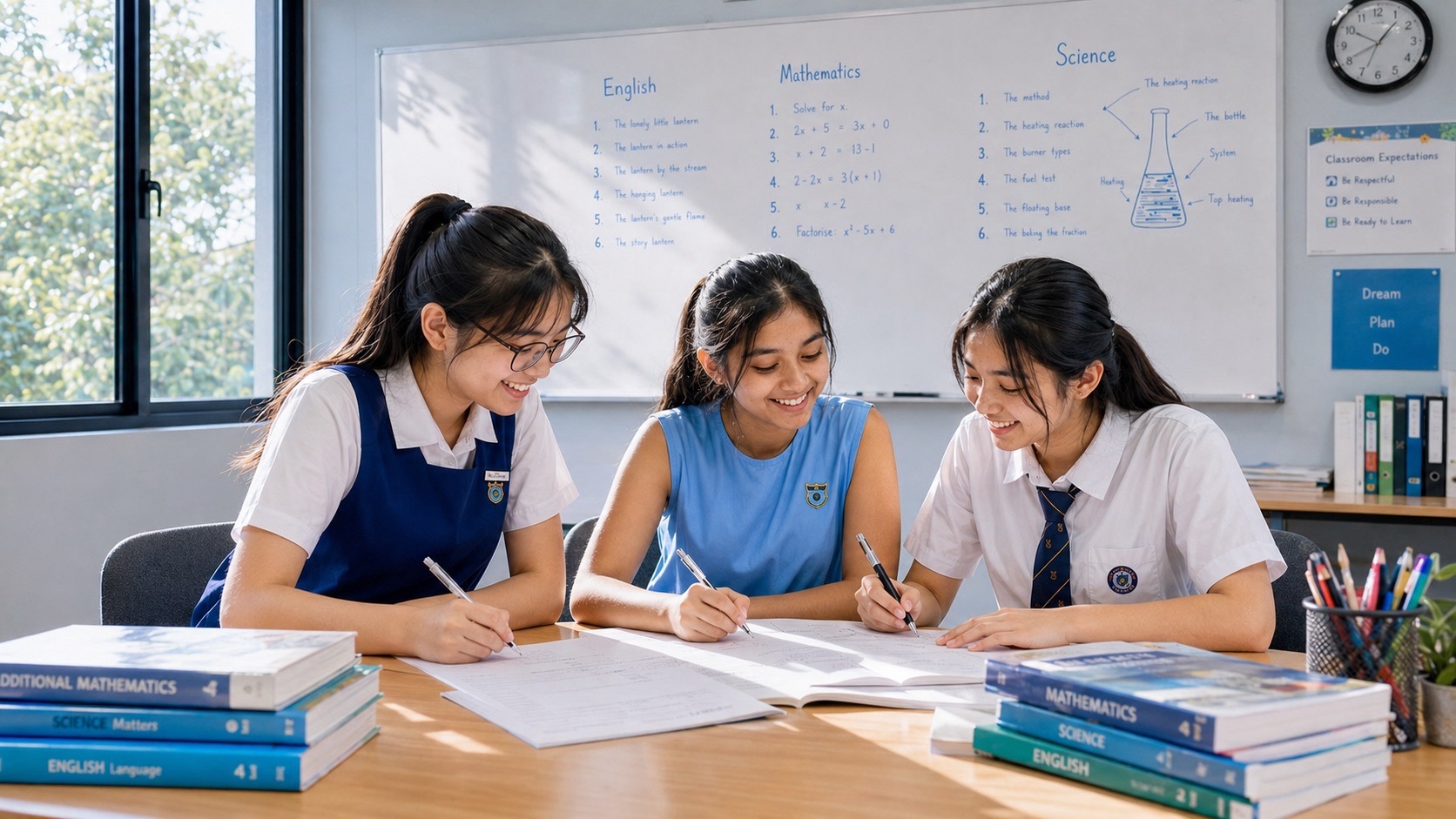
A Secondary 1 English tutor in Queenstown should help a student cross the Primary 6-to-secondary transition, not simply add more worksheets. Parents searching for Sec 1 English tuition Queenstown, English tutor Queenstown, Secondary English tuition Singapore, one-to-one English tuition, small-group English tuition, tutor fees or online English lessons are usually trying to solve a specific transition problem: comprehension has become less literal, writing needs more development, vocabulary must be more precise, and students are expected to manage tasks more independently.
The important question is whether the tutor can diagnose the process beneath the mark. A student may read fluently but over-infer. Another may understand a passage orally but write vague answers. Another may have imaginative ideas yet weak paragraph control. Good Secondary 1 tutoring separates reading, inference, answer scope, summary, situational writing, continuous writing, grammar, vocabulary, oral, listening and timing so that the real bottleneck can be taught rather than hidden by generic practice.
This Queenstown guide owns tutor-fit and tutor-selection intent. It does not replace SETC’s broader Secondary 1 curriculum owner, and it does not imply that SETC has a physical branch in every neighbourhood. It explains what to bring to a first lesson, how a tutor should diagnose, what Maren, Iona and Leonie represent, how to compare class formats and rates, how local travel around Queenstown affects consistency, and how G1, G2 and G3 subject levels connect to the 2027 Singapore-Cambridge SEC transition.
Primary 6 to Secondary 1 transition
This area matters because students must make more independent decisions about questions, evidence, paragraph purpose and revision. A Secondary 1 tutor should explain the mechanism in language the student can repeat, not hide it behind a technique name. When the learner understands what the task is asking and why a particular method works, later transfer becomes more likely.
What to inspect. The tutor should compare late Primary 6 work with early Secondary 1 work and identify which old routines no longer fit. This inspection should use the student’s own work wherever possible, because authentic school evidence reveals repeated habits, not just performance on a tutor-designed exercise.
What to teach. The tutor should teach one new decision at a time and make the learner explain why that decision fits the task. Explanation should be followed by a guided attempt and then by a version where part of the support is removed. The student should be required to explain the choice, not merely copy the tutor’s finished method.
How to practise. Build short repetitions around the exact weakness before returning to a whole task. A reading weakness may need several small evidence decisions; a writing weakness may need paragraph work before another full composition. Focused practice produces more useful repetitions than repeatedly completing large tasks with the same hidden error.
How to verify. The tutor should use an unfamiliar prompt or passage so the student must choose the method without being told. Verification must use material the student has not rehearsed. Familiarity can make performance look stronger than it is, while fresh material shows whether the method has become portable.
Student self-check. Ask the learner to state the rule in one or two sentences, identify the warning sign that the problem is occurring, and name the first action to take. If the student cannot explain the method without notes, recognition may still be stronger than retrieval.
Parent evidence. Parents do not need to mark the work. They can look for a simpler pattern: is the same comment appearing less often, can the student describe the current target, and is less prompting needed? These are useful signs even before one school test shows a large score change.
Transfer test. Move the same underlying skill into a different surface task. If the lesson was about evidence and inference, change the text type. If it was about paragraph development, change the topic. If the student succeeds only when the exercise looks familiar, the skill is not yet fully independent.
Common failure mode. Avoid racing ahead before the old routine has been converted. A tutor should be willing to change the sequence when evidence shows that the original diagnosis was incomplete. More of the same is not a plan when the same error keeps returning.
When to move on. Move the target from active repair to maintenance when the student can explain it, apply it on unseen material and retain it after a delay. Maintenance can then be folded into later lessons while attention shifts to the next highest-value weakness.
First-lesson diagnosis
For Secondary 1, the first lesson should explain causes rather than merely produce another score. That makes this a teaching problem as well as a practice problem. The useful tutor asks what the student is doing before the error appears, because the visible wrong answer is often only the final step of a longer process.
What to inspect. The tutor should inspect recent assessments, marked writing, comprehension, editing and recurring teacher comments. This inspection should use the student’s own work wherever possible, because authentic school evidence reveals repeated habits, not just performance on a tutor-designed exercise.
What to teach. The tutor should classify losses into reading, expression, structure, language control, task interpretation and timing. Explanation should be followed by a guided attempt and then by a version where part of the support is removed. The student should be required to explain the choice, not merely copy the tutor’s finished method.
How to practise. Build short repetitions around the exact weakness before returning to a whole task. A reading weakness may need several small evidence decisions; a writing weakness may need paragraph work before another full composition. Focused practice produces more useful repetitions than repeatedly completing large tasks with the same hidden error.
How to verify. The tutor should revisit the same error family after two or three weeks and compare with the baseline. Verification must use material the student has not rehearsed. Familiarity can make performance look stronger than it is, while fresh material shows whether the method has become portable.
Student self-check. Ask the learner to state the rule in one or two sentences, identify the warning sign that the problem is occurring, and name the first action to take. If the student cannot explain the method without notes, recognition may still be stronger than retrieval.
Parent evidence. Parents do not need to mark the work. They can look for a simpler pattern: is the same comment appearing less often, can the student describe the current target, and is less prompting needed? These are useful signs even before one school test shows a large score change.
Transfer test. Move the same underlying skill into a different surface task. If the lesson was about evidence and inference, change the text type. If it was about paragraph development, change the topic. If the student succeeds only when the exercise looks familiar, the skill is not yet fully independent.
Common failure mode. Avoid building a programme from one total mark. A tutor should be willing to change the sequence when evidence shows that the original diagnosis was incomplete. More of the same is not a plan when the same error keeps returning.
When to move on. Move the target from active repair to maintenance when the student can explain it, apply it on unseen material and retain it after a delay. Maintenance can then be folded into later lessons while attention shifts to the next highest-value weakness.
Maren: writing and idea structure
At this stage, writing improves when every paragraph has a clear intellectual or narrative job. The tutor therefore needs to separate the student’s knowledge from the student’s execution. A learner can know a rule yet fail to retrieve it at the right moment, or understand a passage yet express the answer imprecisely.
What to inspect. The tutor should look at plans, drafts, paragraph order, explanation, examples and revision choices. This inspection should use the student’s own work wherever possible, because authentic school evidence reveals repeated habits, not just performance on a tutor-designed exercise.
What to teach. The tutor should teach purpose, sequence, development, revision and the difference between ideas and decoration. Explanation should be followed by a guided attempt and then by a version where part of the support is removed. The student should be required to explain the choice, not merely copy the tutor’s finished method.
How to practise. Build short repetitions around the exact weakness before returning to a whole task. A reading weakness may need several small evidence decisions; a writing weakness may need paragraph work before another full composition. Focused practice produces more useful repetitions than repeatedly completing large tasks with the same hidden error.
How to verify. The tutor should ask for a fresh plan and have the student state what each paragraph is meant to accomplish. Verification must use material the student has not rehearsed. Familiarity can make performance look stronger than it is, while fresh material shows whether the method has become portable.
Student self-check. Ask the learner to state the rule in one or two sentences, identify the warning sign that the problem is occurring, and name the first action to take. If the student cannot explain the method without notes, recognition may still be stronger than retrieval.
Parent evidence. Parents do not need to mark the work. They can look for a simpler pattern: is the same comment appearing less often, can the student describe the current target, and is less prompting needed? These are useful signs even before one school test shows a large score change.
Transfer test. Move the same underlying skill into a different surface task. If the lesson was about evidence and inference, change the text type. If it was about paragraph development, change the topic. If the student succeeds only when the exercise looks familiar, the skill is not yet fully independent.
Common failure mode. Avoid treating sophisticated vocabulary as a substitute for developed thinking. A tutor should be willing to change the sequence when evidence shows that the original diagnosis was incomplete. More of the same is not a plan when the same error keeps returning.
When to move on. Move the target from active repair to maintenance when the student can explain it, apply it on unseen material and retain it after a delay. Maintenance can then be folded into later lessons while attention shifts to the next highest-value weakness.
Iona: reading, inference and answer scope
In a good transition programme, comprehension depends on staying close enough to evidence while answering exactly what was asked. The point is not to create a perfect lesson performance. The point is to build a process that the student can recognise and use when the wording, topic or school context changes.
What to inspect. The tutor should watch for keyword hunting, copying, unsupported assumptions and answers that are too broad or too narrow. This inspection should use the student’s own work wherever possible, because authentic school evidence reveals repeated habits, not just performance on a tutor-designed exercise.
What to teach. The tutor should teach question classification, evidence location, plain-language restatement and the smallest justified inference. Explanation should be followed by a guided attempt and then by a version where part of the support is removed. The student should be required to explain the choice, not merely copy the tutor’s finished method.
How to practise. Build short repetitions around the exact weakness before returning to a whole task. A reading weakness may need several small evidence decisions; a writing weakness may need paragraph work before another full composition. Focused practice produces more useful repetitions than repeatedly completing large tasks with the same hidden error.
How to verify. The tutor should require the student to underline evidence for a new answer and reject a tempting over-inference. Verification must use material the student has not rehearsed. Familiarity can make performance look stronger than it is, while fresh material shows whether the method has become portable.
Student self-check. Ask the learner to state the rule in one or two sentences, identify the warning sign that the problem is occurring, and name the first action to take. If the student cannot explain the method without notes, recognition may still be stronger than retrieval.
Parent evidence. Parents do not need to mark the work. They can look for a simpler pattern: is the same comment appearing less often, can the student describe the current target, and is less prompting needed? These are useful signs even before one school test shows a large score change.
Transfer test. Move the same underlying skill into a different surface task. If the lesson was about evidence and inference, change the text type. If it was about paragraph development, change the topic. If the student succeeds only when the exercise looks familiar, the skill is not yet fully independent.
Common failure mode. Avoid rewarding clever guesses that cannot be traced to the passage. A tutor should be willing to change the sequence when evidence shows that the original diagnosis was incomplete. More of the same is not a plan when the same error keeps returning.
When to move on. Move the target from active repair to maintenance when the student can explain it, apply it on unseen material and retain it after a delay. Maintenance can then be folded into later lessons while attention shifts to the next highest-value weakness.
Leonie: timing and recovery
This area matters because execution matters only after the underlying skill is understood well enough to survive some pressure. A Secondary 1 tutor should explain the mechanism in language the student can repeat, not hide it behind a technique name. When the learner understands what the task is asking and why a particular method works, later transfer becomes more likely.
What to inspect. The tutor should compare timed and untimed work and identify where quality changes or time disappears. This inspection should use the student’s own work wherever possible, because authentic school evidence reveals repeated habits, not just performance on a tutor-designed exercise.
What to teach. The tutor should teach task reading, rough allocation, skip-and-return decisions and a short checking routine. Explanation should be followed by a guided attempt and then by a version where part of the support is removed. The student should be required to explain the choice, not merely copy the tutor’s finished method.
How to practise. Build short repetitions around the exact weakness before returning to a whole task. A reading weakness may need several small evidence decisions; a writing weakness may need paragraph work before another full composition. Focused practice produces more useful repetitions than repeatedly completing large tasks with the same hidden error.
How to verify. The tutor should move from untimed accuracy to short timed sections before using whole papers. Verification must use material the student has not rehearsed. Familiarity can make performance look stronger than it is, while fresh material shows whether the method has become portable.
Student self-check. Ask the learner to state the rule in one or two sentences, identify the warning sign that the problem is occurring, and name the first action to take. If the student cannot explain the method without notes, recognition may still be stronger than retrieval.
Parent evidence. Parents do not need to mark the work. They can look for a simpler pattern: is the same comment appearing less often, can the student describe the current target, and is less prompting needed? These are useful signs even before one school test shows a large score change.
Transfer test. Move the same underlying skill into a different surface task. If the lesson was about evidence and inference, change the text type. If it was about paragraph development, change the topic. If the student succeeds only when the exercise looks familiar, the skill is not yet fully independent.
Common failure mode. Avoid telling the learner to work faster without identifying the leak. A tutor should be willing to change the sequence when evidence shows that the original diagnosis was incomplete. More of the same is not a plan when the same error keeps returning.
When to move on. Move the target from active repair to maintenance when the student can explain it, apply it on unseen material and retain it after a delay. Maintenance can then be folded into later lessons while attention shifts to the next highest-value weakness.
Comprehension foundations
For Secondary 1, different question types require different reading moves and answer shapes. That makes this a teaching problem as well as a practice problem. The useful tutor asks what the student is doing before the error appears, because the visible wrong answer is often only the final step of a longer process.
What to inspect. The tutor should separate retrieval, inference, language effect, purpose, comparison and synthesis errors. This inspection should use the student’s own work wherever possible, because authentic school evidence reveals repeated habits, not just performance on a tutor-designed exercise.
What to teach. The tutor should correct backwards from command to evidence to interpretation to final wording. Explanation should be followed by a guided attempt and then by a version where part of the support is removed. The student should be required to explain the choice, not merely copy the tutor’s finished method.
How to practise. Build short repetitions around the exact weakness before returning to a whole task. A reading weakness may need several small evidence decisions; a writing weakness may need paragraph work before another full composition. Focused practice produces more useful repetitions than repeatedly completing large tasks with the same hidden error.
How to verify. The tutor should test the same reading move across narrative and non-fiction passages. Verification must use material the student has not rehearsed. Familiarity can make performance look stronger than it is, while fresh material shows whether the method has become portable.
Student self-check. Ask the learner to state the rule in one or two sentences, identify the warning sign that the problem is occurring, and name the first action to take. If the student cannot explain the method without notes, recognition may still be stronger than retrieval.
Parent evidence. Parents do not need to mark the work. They can look for a simpler pattern: is the same comment appearing less often, can the student describe the current target, and is less prompting needed? These are useful signs even before one school test shows a large score change.
Transfer test. Move the same underlying skill into a different surface task. If the lesson was about evidence and inference, change the text type. If it was about paragraph development, change the topic. If the student succeeds only when the exercise looks familiar, the skill is not yet fully independent.
Common failure mode. Avoid giving model answers without rebuilding the reasoning. A tutor should be willing to change the sequence when evidence shows that the original diagnosis was incomplete. More of the same is not a plan when the same error keeps returning.
When to move on. Move the target from active repair to maintenance when the student can explain it, apply it on unseen material and retain it after a delay. Maintenance can then be folded into later lessons while attention shifts to the next highest-value weakness.
Summary foundations
At this stage, summary combines scope reading, point selection, paraphrase, compression and grammatical accuracy. The tutor therefore needs to separate the student’s knowledge from the student’s execution. A learner can know a rule yet fail to retrieve it at the right moment, or understand a passage yet express the answer imprecisely.
What to inspect. The tutor should check whether irrelevant examples are included, distinct points are missed or qualifiers are lost. This inspection should use the student’s own work wherever possible, because authentic school evidence reveals repeated habits, not just performance on a tutor-designed exercise.
What to teach. The tutor should teach selection before rewriting and compression only after meaning is stable. Explanation should be followed by a guided attempt and then by a version where part of the support is removed. The student should be required to explain the choice, not merely copy the tutor’s finished method.
How to practise. Build short repetitions around the exact weakness before returning to a whole task. A reading weakness may need several small evidence decisions; a writing weakness may need paragraph work before another full composition. Focused practice produces more useful repetitions than repeatedly completing large tasks with the same hidden error.
How to verify. The tutor should use a delayed summary on a different passage with no prompt about the previous method. Verification must use material the student has not rehearsed. Familiarity can make performance look stronger than it is, while fresh material shows whether the method has become portable.
Student self-check. Ask the learner to state the rule in one or two sentences, identify the warning sign that the problem is occurring, and name the first action to take. If the student cannot explain the method without notes, recognition may still be stronger than retrieval.
Parent evidence. Parents do not need to mark the work. They can look for a simpler pattern: is the same comment appearing less often, can the student describe the current target, and is less prompting needed? These are useful signs even before one school test shows a large score change.
Transfer test. Move the same underlying skill into a different surface task. If the lesson was about evidence and inference, change the text type. If it was about paragraph development, change the topic. If the student succeeds only when the exercise looks familiar, the skill is not yet fully independent.
Common failure mode. Avoid celebrating a short answer whose meaning has changed. A tutor should be willing to change the sequence when evidence shows that the original diagnosis was incomplete. More of the same is not a plan when the same error keeps returning.
When to move on. Move the target from active repair to maintenance when the student can explain it, apply it on unseen material and retain it after a delay. Maintenance can then be folded into later lessons while attention shifts to the next highest-value weakness.
Vocabulary for precision
In a good transition programme, usable vocabulary depends on collocation, register, connotation and retrieval rather than list size. The point is not to create a perfect lesson performance. The point is to build a process that the student can recognise and use when the wording, topic or school context changes.
What to inspect. The tutor should look for impressive words that are inaccurate, unnatural or wrong for the audience. This inspection should use the student’s own work wherever possible, because authentic school evidence reveals repeated habits, not just performance on a tutor-designed exercise.
What to teach. The tutor should teach semantic families and contrast near-synonyms inside real sentences. Explanation should be followed by a guided attempt and then by a version where part of the support is removed. The student should be required to explain the choice, not merely copy the tutor’s finished method.
How to practise. Build short repetitions around the exact weakness before returning to a whole task. A reading weakness may need several small evidence decisions; a writing weakness may need paragraph work before another full composition. Focused practice produces more useful repetitions than repeatedly completing large tasks with the same hidden error.
How to verify. The tutor should remove the list and require the student to retrieve words in new speaking and writing contexts. Verification must use material the student has not rehearsed. Familiarity can make performance look stronger than it is, while fresh material shows whether the method has become portable.
Student self-check. Ask the learner to state the rule in one or two sentences, identify the warning sign that the problem is occurring, and name the first action to take. If the student cannot explain the method without notes, recognition may still be stronger than retrieval.
Parent evidence. Parents do not need to mark the work. They can look for a simpler pattern: is the same comment appearing less often, can the student describe the current target, and is less prompting needed? These are useful signs even before one school test shows a large score change.
Transfer test. Move the same underlying skill into a different surface task. If the lesson was about evidence and inference, change the text type. If it was about paragraph development, change the topic. If the student succeeds only when the exercise looks familiar, the skill is not yet fully independent.
Common failure mode. Avoid rewarding rarity instead of precision. A tutor should be willing to change the sequence when evidence shows that the original diagnosis was incomplete. More of the same is not a plan when the same error keeps returning.
When to move on. Move the target from active repair to maintenance when the student can explain it, apply it on unseen material and retain it after a delay. Maintenance can then be folded into later lessons while attention shifts to the next highest-value weakness.
Grammar and editing
This area matters because recurring grammar errors are better treated as systems than isolated red marks. A Secondary 1 tutor should explain the mechanism in language the student can repeat, not hide it behind a technique name. When the learner understands what the task is asking and why a particular method works, later transfer becomes more likely.
What to inspect. The tutor should rank sentence boundaries, tense, agreement, pronoun reference, articles, prepositions and punctuation by frequency. This inspection should use the student’s own work wherever possible, because authentic school evidence reveals repeated habits, not just performance on a tutor-designed exercise.
What to teach. The tutor should teach one error family explicitly and build a personal editing sequence. Explanation should be followed by a guided attempt and then by a version where part of the support is removed. The student should be required to explain the choice, not merely copy the tutor’s finished method.
How to practise. Build short repetitions around the exact weakness before returning to a whole task. A reading weakness may need several small evidence decisions; a writing weakness may need paragraph work before another full composition. Focused practice produces more useful repetitions than repeatedly completing large tasks with the same hidden error.
How to verify. The tutor should retest the same family inside new authentic writing after a delay. Verification must use material the student has not rehearsed. Familiarity can make performance look stronger than it is, while fresh material shows whether the method has become portable.
Student self-check. Ask the learner to state the rule in one or two sentences, identify the warning sign that the problem is occurring, and name the first action to take. If the student cannot explain the method without notes, recognition may still be stronger than retrieval.
Parent evidence. Parents do not need to mark the work. They can look for a simpler pattern: is the same comment appearing less often, can the student describe the current target, and is less prompting needed? These are useful signs even before one school test shows a large score change.
Transfer test. Move the same underlying skill into a different surface task. If the lesson was about evidence and inference, change the text type. If it was about paragraph development, change the topic. If the student succeeds only when the exercise looks familiar, the skill is not yet fully independent.
Common failure mode. Avoid correcting everything for the student and mistaking a clean draft for mastery. A tutor should be willing to change the sequence when evidence shows that the original diagnosis was incomplete. More of the same is not a plan when the same error keeps returning.
When to move on. Move the target from active repair to maintenance when the student can explain it, apply it on unseen material and retain it after a delay. Maintenance can then be folded into later lessons while attention shifts to the next highest-value weakness.
Situational writing
For Secondary 1, communication purpose should control format, tone, detail selection and organisation. That makes this a teaching problem as well as a practice problem. The useful tutor asks what the student is doing before the error appears, because the visible wrong answer is often only the final step of a longer process.
What to inspect. The tutor should check whether the student understands role, audience, purpose, required content and desired outcome. This inspection should use the student’s own work wherever possible, because authentic school evidence reveals repeated habits, not just performance on a tutor-designed exercise.
What to teach. The tutor should teach functional moves such as request, recommend, explain, apologise, invite, decline and persuade. Explanation should be followed by a guided attempt and then by a version where part of the support is removed. The student should be required to explain the choice, not merely copy the tutor’s finished method.
How to practise. Build short repetitions around the exact weakness before returning to a whole task. A reading weakness may need several small evidence decisions; a writing weakness may need paragraph work before another full composition. Focused practice produces more useful repetitions than repeatedly completing large tasks with the same hidden error.
How to verify. The tutor should change the audience or purpose and see whether the student adapts language without a memorised script. Verification must use material the student has not rehearsed. Familiarity can make performance look stronger than it is, while fresh material shows whether the method has become portable.
Student self-check. Ask the learner to state the rule in one or two sentences, identify the warning sign that the problem is occurring, and name the first action to take. If the student cannot explain the method without notes, recognition may still be stronger than retrieval.
Parent evidence. Parents do not need to mark the work. They can look for a simpler pattern: is the same comment appearing less often, can the student describe the current target, and is less prompting needed? These are useful signs even before one school test shows a large score change.
Transfer test. Move the same underlying skill into a different surface task. If the lesson was about evidence and inference, change the text type. If it was about paragraph development, change the topic. If the student succeeds only when the exercise looks familiar, the skill is not yet fully independent.
Common failure mode. Avoid treating situational writing as a format-recitation exercise. A tutor should be willing to change the sequence when evidence shows that the original diagnosis was incomplete. More of the same is not a plan when the same error keeps returning.
When to move on. Move the target from active repair to maintenance when the student can explain it, apply it on unseen material and retain it after a delay. Maintenance can then be folded into later lessons while attention shifts to the next highest-value weakness.
Continuous writing
At this stage, composition needs viewpoint, movement, development and consequence before decorative style. The tutor therefore needs to separate the student’s knowledge from the student’s execution. A learner can know a rule yet fail to retrieve it at the right moment, or understand a passage yet express the answer imprecisely.
What to inspect. The tutor should look for event lists, static description, dialogue that does no work and endings unrelated to the setup. This inspection should use the student’s own work wherever possible, because authentic school evidence reveals repeated habits, not just performance on a tutor-designed exercise.
What to teach. The tutor should teach compact planning around change, pressure, turning point, consequence and resolution. Explanation should be followed by a guided attempt and then by a version where part of the support is removed. The student should be required to explain the choice, not merely copy the tutor’s finished method.
How to practise. Build short repetitions around the exact weakness before returning to a whole task. A reading weakness may need several small evidence decisions; a writing weakness may need paragraph work before another full composition. Focused practice produces more useful repetitions than repeatedly completing large tasks with the same hidden error.
How to verify. The tutor should give a new prompt and ask the student to justify paragraph order before drafting. Verification must use material the student has not rehearsed. Familiarity can make performance look stronger than it is, while fresh material shows whether the method has become portable.
Student self-check. Ask the learner to state the rule in one or two sentences, identify the warning sign that the problem is occurring, and name the first action to take. If the student cannot explain the method without notes, recognition may still be stronger than retrieval.
Parent evidence. Parents do not need to mark the work. They can look for a simpler pattern: is the same comment appearing less often, can the student describe the current target, and is less prompting needed? These are useful signs even before one school test shows a large score change.
Transfer test. Move the same underlying skill into a different surface task. If the lesson was about evidence and inference, change the text type. If it was about paragraph development, change the topic. If the student succeeds only when the exercise looks familiar, the skill is not yet fully independent.
Common failure mode. Avoid assuming more description automatically means better writing. A tutor should be willing to change the sequence when evidence shows that the original diagnosis was incomplete. More of the same is not a plan when the same error keeps returning.
When to move on. Move the target from active repair to maintenance when the student can explain it, apply it on unseen material and retain it after a delay. Maintenance can then be folded into later lessons while attention shifts to the next highest-value weakness.
Oral and listening
In a good transition programme, spoken and listening performance require flexible reasoning, selective attention and recovery. The point is not to create a perfect lesson performance. The point is to build a process that the student can recognise and use when the wording, topic or school context changes.
What to inspect. The tutor should observe whether oral answers stop early, drift off-task or collapse after follow-up questions, and why listening details are missed. This inspection should use the student’s own work wherever possible, because authentic school evidence reveals repeated habits, not just performance on a tutor-designed exercise.
What to teach. The tutor should teach answer-reason-example-implication for speaking and selective note-taking for listening. Explanation should be followed by a guided attempt and then by a version where part of the support is removed. The student should be required to explain the choice, not merely copy the tutor’s finished method.
How to practise. Build short repetitions around the exact weakness before returning to a whole task. A reading weakness may need several small evidence decisions; a writing weakness may need paragraph work before another full composition. Focused practice produces more useful repetitions than repeatedly completing large tasks with the same hidden error.
How to verify. The tutor should use unfamiliar follow-up questions and fresh audio so the student has to adapt rather than recite. Verification must use material the student has not rehearsed. Familiarity can make performance look stronger than it is, while fresh material shows whether the method has become portable.
Student self-check. Ask the learner to state the rule in one or two sentences, identify the warning sign that the problem is occurring, and name the first action to take. If the student cannot explain the method without notes, recognition may still be stronger than retrieval.
Parent evidence. Parents do not need to mark the work. They can look for a simpler pattern: is the same comment appearing less often, can the student describe the current target, and is less prompting needed? These are useful signs even before one school test shows a large score change.
Transfer test. Move the same underlying skill into a different surface task. If the lesson was about evidence and inference, change the text type. If it was about paragraph development, change the topic. If the student succeeds only when the exercise looks familiar, the skill is not yet fully independent.
Common failure mode. Avoid memorising polished scripts that work only for predicted prompts. A tutor should be willing to change the sequence when evidence shows that the original diagnosis was incomplete. More of the same is not a plan when the same error keeps returning.
When to move on. Move the target from active repair to maintenance when the student can explain it, apply it on unseen material and retain it after a delay. Maintenance can then be folded into later lessons while attention shifts to the next highest-value weakness.
One-to-one tuition
This area matters because individual lessons can expose hidden processes and allow narrow repair when used carefully. A Secondary 1 tutor should explain the mechanism in language the student can repeat, not hide it behind a technique name. When the learner understands what the task is asking and why a particular method works, later transfer becomes more likely.
What to inspect. The tutor should watch how much of the lesson the student actually decides before the tutor intervenes. This inspection should use the student’s own work wherever possible, because authentic school evidence reveals repeated habits, not just performance on a tutor-designed exercise.
What to teach. The tutor should fade scaffolds from modelled reasoning to guided practice to independent attempts. Explanation should be followed by a guided attempt and then by a version where part of the support is removed. The student should be required to explain the choice, not merely copy the tutor’s finished method.
How to practise. Build short repetitions around the exact weakness before returning to a whole task. A reading weakness may need several small evidence decisions; a writing weakness may need paragraph work before another full composition. Focused practice produces more useful repetitions than repeatedly completing large tasks with the same hidden error.
How to verify. The tutor should begin a fresh task with no hint and compare supported with unsupported performance. Verification must use material the student has not rehearsed. Familiarity can make performance look stronger than it is, while fresh material shows whether the method has become portable.
Student self-check. Ask the learner to state the rule in one or two sentences, identify the warning sign that the problem is occurring, and name the first action to take. If the student cannot explain the method without notes, recognition may still be stronger than retrieval.
Parent evidence. Parents do not need to mark the work. They can look for a simpler pattern: is the same comment appearing less often, can the student describe the current target, and is less prompting needed? These are useful signs even before one school test shows a large score change.
Transfer test. Move the same underlying skill into a different surface task. If the lesson was about evidence and inference, change the text type. If it was about paragraph development, change the topic. If the student succeeds only when the exercise looks familiar, the skill is not yet fully independent.
Common failure mode. Avoid creating dependency through constant personalised prompting. A tutor should be willing to change the sequence when evidence shows that the original diagnosis was incomplete. More of the same is not a plan when the same error keeps returning.
When to move on. Move the target from active repair to maintenance when the student can explain it, apply it on unseen material and retain it after a delay. Maintenance can then be folded into later lessons while attention shifts to the next highest-value weakness.
Small-group tuition
For Secondary 1, small groups can add peer comparison and discussion while preserving individual accountability. That makes this a teaching problem as well as a practice problem. The useful tutor asks what the student is doing before the error appears, because the visible wrong answer is often only the final step of a longer process.
What to inspect. The tutor should check whether every learner writes, explains and receives personal feedback. This inspection should use the student’s own work wherever possible, because authentic school evidence reveals repeated habits, not just performance on a tutor-designed exercise.
What to teach. The tutor should teach shared concepts together but inspect each student’s application and error patterns separately. Explanation should be followed by a guided attempt and then by a version where part of the support is removed. The student should be required to explain the choice, not merely copy the tutor’s finished method.
How to practise. Build short repetitions around the exact weakness before returning to a whole task. A reading weakness may need several small evidence decisions; a writing weakness may need paragraph work before another full composition. Focused practice produces more useful repetitions than repeatedly completing large tasks with the same hidden error.
How to verify. The tutor should track each learner’s recurring errors across several weeks. Verification must use material the student has not rehearsed. Familiarity can make performance look stronger than it is, while fresh material shows whether the method has become portable.
Student self-check. Ask the learner to state the rule in one or two sentences, identify the warning sign that the problem is occurring, and name the first action to take. If the student cannot explain the method without notes, recognition may still be stronger than retrieval.
Parent evidence. Parents do not need to mark the work. They can look for a simpler pattern: is the same comment appearing less often, can the student describe the current target, and is less prompting needed? These are useful signs even before one school test shows a large score change.
Transfer test. Move the same underlying skill into a different surface task. If the lesson was about evidence and inference, change the text type. If it was about paragraph development, change the topic. If the student succeeds only when the exercise looks familiar, the skill is not yet fully independent.
Common failure mode. Avoid advertising a small group while teaching it as a lecture. A tutor should be willing to change the sequence when evidence shows that the original diagnosis was incomplete. More of the same is not a plan when the same error keeps returning.
When to move on. Move the target from active repair to maintenance when the student can explain it, apply it on unseen material and retain it after a delay. Maintenance can then be folded into later lessons while attention shifts to the next highest-value weakness.
Online versus in-person lessons
At this stage, the best medium is the one that preserves attention, feedback and consistent practice. The tutor therefore needs to separate the student’s knowledge from the student’s execution. A learner can know a rule yet fail to retrieve it at the right moment, or understand a passage yet express the answer imprecisely.
What to inspect. The tutor should compare concentration, document sharing, live annotation, travel fatigue and setup quality. This inspection should use the student’s own work wherever possible, because authentic school evidence reveals repeated habits, not just performance on a tutor-designed exercise.
What to teach. The tutor should keep the same learning loop in either medium: diagnose, model, practise, reduce support, review. Explanation should be followed by a guided attempt and then by a version where part of the support is removed. The student should be required to explain the choice, not merely copy the tutor’s finished method.
How to practise. Build short repetitions around the exact weakness before returning to a whole task. A reading weakness may need several small evidence decisions; a writing weakness may need paragraph work before another full composition. Focused practice produces more useful repetitions than repeatedly completing large tasks with the same hidden error.
How to verify. The tutor should compare completion and transfer over several weeks rather than judging one lesson. Verification must use material the student has not rehearsed. Familiarity can make performance look stronger than it is, while fresh material shows whether the method has become portable.
Student self-check. Ask the learner to state the rule in one or two sentences, identify the warning sign that the problem is occurring, and name the first action to take. If the student cannot explain the method without notes, recognition may still be stronger than retrieval.
Parent evidence. Parents do not need to mark the work. They can look for a simpler pattern: is the same comment appearing less often, can the student describe the current target, and is less prompting needed? These are useful signs even before one school test shows a large score change.
Transfer test. Move the same underlying skill into a different surface task. If the lesson was about evidence and inference, change the text type. If it was about paragraph development, change the topic. If the student succeeds only when the exercise looks familiar, the skill is not yet fully independent.
Common failure mode. Avoid choosing by ideology rather than the student’s actual behaviour. A tutor should be willing to change the sequence when evidence shows that the original diagnosis was incomplete. More of the same is not a plan when the same error keeps returning.
When to move on. Move the target from active repair to maintenance when the student can explain it, apply it on unseen material and retain it after a delay. Maintenance can then be folded into later lessons while attention shifts to the next highest-value weakness.
Queenstown travel and scheduling
In a good transition programme, weekly tuition succeeds only when the route fits the student’s real school-day energy. The point is not to create a perfect lesson performance. The point is to build a process that the student can recognise and use when the wording, topic or school context changes.
What to inspect. The tutor should count dismissal, CCA, Queenstown or nearby MRT travel, food, lesson, return home, homework and sleep. This inspection should use the student’s own work wherever possible, because authentic school evidence reveals repeated habits, not just performance on a tutor-designed exercise.
What to teach. The tutor should choose a schedule that is sustainable for months and compare online if travel repeatedly erodes attention. Explanation should be followed by a guided attempt and then by a version where part of the support is removed. The student should be required to explain the choice, not merely copy the tutor’s finished method.
How to practise. Build short repetitions around the exact weakness before returning to a whole task. A reading weakness may need several small evidence decisions; a writing weakness may need paragraph work before another full composition. Focused practice produces more useful repetitions than repeatedly completing large tasks with the same hidden error.
How to verify. The tutor should review punctuality, fatigue and homework completion after the first month. Verification must use material the student has not rehearsed. Familiarity can make performance look stronger than it is, while fresh material shows whether the method has become portable.
Student self-check. Ask the learner to state the rule in one or two sentences, identify the warning sign that the problem is occurring, and name the first action to take. If the student cannot explain the method without notes, recognition may still be stronger than retrieval.
Parent evidence. Parents do not need to mark the work. They can look for a simpler pattern: is the same comment appearing less often, can the student describe the current target, and is less prompting needed? These are useful signs even before one school test shows a large score change.
Transfer test. Move the same underlying skill into a different surface task. If the lesson was about evidence and inference, change the text type. If it was about paragraph development, change the topic. If the student succeeds only when the exercise looks familiar, the skill is not yet fully independent.
Common failure mode. Avoid equating ‘near MRT’ with low total friction. A tutor should be willing to change the sequence when evidence shows that the original diagnosis was incomplete. More of the same is not a plan when the same error keeps returning.
When to move on. Move the target from active repair to maintenance when the student can explain it, apply it on unseen material and retain it after a delay. Maintenance can then be folded into later lessons while attention shifts to the next highest-value weakness.
Tutor rates, qualifications and value
This area matters because price and credentials matter only when connected to a teaching system that changes performance. A Secondary 1 tutor should explain the mechanism in language the student can repeat, not hide it behind a technique name. When the learner understands what the task is asking and why a particular method works, later transfer becomes more likely.
What to inspect. The tutor should inspect what is included: diagnostics, composition marking, materials, class size, make-up policy and progress review. This inspection should use the student’s own work wherever possible, because authentic school evidence reveals repeated habits, not just performance on a tutor-designed exercise.
What to teach. The tutor should ask the tutor to explain how reading errors, writing errors and timing problems are diagnosed and retested. Explanation should be followed by a guided attempt and then by a version where part of the support is removed. The student should be required to explain the choice, not merely copy the tutor’s finished method.
How to practise. Build short repetitions around the exact weakness before returning to a whole task. A reading weakness may need several small evidence decisions; a writing weakness may need paragraph work before another full composition. Focused practice produces more useful repetitions than repeatedly completing large tasks with the same hidden error.
How to verify. The tutor should look for reduced recurrence and greater independence rather than worksheet volume. Verification must use material the student has not rehearsed. Familiarity can make performance look stronger than it is, while fresh material shows whether the method has become portable.
Student self-check. Ask the learner to state the rule in one or two sentences, identify the warning sign that the problem is occurring, and name the first action to take. If the student cannot explain the method without notes, recognition may still be stronger than retrieval.
Parent evidence. Parents do not need to mark the work. They can look for a simpler pattern: is the same comment appearing less often, can the student describe the current target, and is less prompting needed? These are useful signs even before one school test shows a large score change.
Transfer test. Move the same underlying skill into a different surface task. If the lesson was about evidence and inference, change the text type. If it was about paragraph development, change the topic. If the student succeeds only when the exercise looks familiar, the skill is not yet fully independent.
Common failure mode. Avoid assuming the highest rate or most impressive label automatically gives the best fit. A tutor should be willing to change the sequence when evidence shows that the original diagnosis was incomplete. More of the same is not a plan when the same error keeps returning.
When to move on. Move the target from active repair to maintenance when the student can explain it, apply it on unseen material and retain it after a delay. Maintenance can then be folded into later lessons while attention shifts to the next highest-value weakness.
Full Subject-Based Banding and the 2027 SEC
For Secondary 1, students may take subjects at G1, G2 or G3 and future examination preparation must match the actual subject level. That makes this a teaching problem as well as a practice problem. The useful tutor asks what the student is doing before the error appears, because the visible wrong answer is often only the final step of a longer process.
What to inspect. The tutor should confirm the learner’s cohort, school requirements and English subject level before selecting materials. This inspection should use the student’s own work wherever possible, because authentic school evidence reveals repeated habits, not just performance on a tutor-designed exercise.
What to teach. The tutor should use current SEAB information: 2027 English Language is K100 at G1, K200 at G2 and K300 at G3. Explanation should be followed by a guided attempt and then by a version where part of the support is removed. The student should be required to explain the choice, not merely copy the tutor’s finished method.
How to practise. Build short repetitions around the exact weakness before returning to a whole task. A reading weakness may need several small evidence decisions; a writing weakness may need paragraph work before another full composition. Focused practice produces more useful repetitions than repeatedly completing large tasks with the same hidden error.
How to verify. The tutor should periodically verify the current syllabus and use school evidence rather than old generic worksheets. Verification must use material the student has not rehearsed. Familiarity can make performance look stronger than it is, while fresh material shows whether the method has become portable.
Student self-check. Ask the learner to state the rule in one or two sentences, identify the warning sign that the problem is occurring, and name the first action to take. If the student cannot explain the method without notes, recognition may still be stronger than retrieval.
Parent evidence. Parents do not need to mark the work. They can look for a simpler pattern: is the same comment appearing less often, can the student describe the current target, and is less prompting needed? These are useful signs even before one school test shows a large score change.
Transfer test. Move the same underlying skill into a different surface task. If the lesson was about evidence and inference, change the text type. If it was about paragraph development, change the topic. If the student succeeds only when the exercise looks familiar, the skill is not yet fully independent.
Common failure mode. Avoid flattening different subject levels or cohorts into one examination route. A tutor should be willing to change the sequence when evidence shows that the original diagnosis was incomplete. More of the same is not a plan when the same error keeps returning.
When to move on. Move the target from active repair to maintenance when the student can explain it, apply it on unseen material and retain it after a delay. Maintenance can then be folded into later lessons while attention shifts to the next highest-value weakness.
Progress tracking and exit
At this stage, the long-term goal of tutoring is reliable independent performance rather than permanent attendance. The tutor therefore needs to separate the student’s knowledge from the student’s execution. A learner can know a rule yet fail to retrieve it at the right moment, or understand a passage yet express the answer imprecisely.
What to inspect. The tutor should observe evidence use, paragraph development, recurring errors, task completion and the amount of prompting required. This inspection should use the student’s own work wherever possible, because authentic school evidence reveals repeated habits, not just performance on a tutor-designed exercise.
What to teach. The tutor should maintain a simple repaired-improving-unstable record and let the student explain the current target. Explanation should be followed by a guided attempt and then by a version where part of the support is removed. The student should be required to explain the choice, not merely copy the tutor’s finished method.
How to practise. Build short repetitions around the exact weakness before returning to a whole task. A reading weakness may need several small evidence decisions; a writing weakness may need paragraph work before another full composition. Focused practice produces more useful repetitions than repeatedly completing large tasks with the same hidden error.
How to verify. The tutor should use delayed unseen tasks to decide whether support can be reduced. Verification must use material the student has not rehearsed. Familiarity can make performance look stronger than it is, while fresh material shows whether the method has become portable.
Student self-check. Ask the learner to state the rule in one or two sentences, identify the warning sign that the problem is occurring, and name the first action to take. If the student cannot explain the method without notes, recognition may still be stronger than retrieval.
Parent evidence. Parents do not need to mark the work. They can look for a simpler pattern: is the same comment appearing less often, can the student describe the current target, and is less prompting needed? These are useful signs even before one school test shows a large score change.
Transfer test. Move the same underlying skill into a different surface task. If the lesson was about evidence and inference, change the text type. If it was about paragraph development, change the topic. If the student succeeds only when the exercise looks familiar, the skill is not yet fully independent.
Common failure mode. Avoid continuing the same intensity simply because tuition has become routine. A tutor should be willing to change the sequence when evidence shows that the original diagnosis was incomplete. More of the same is not a plan when the same error keeps returning.
When to move on. Move the target from active repair to maintenance when the student can explain it, apply it on unseen material and retain it after a delay. Maintenance can then be folded into later lessons while attention shifts to the next highest-value weakness.
A practical 12-week Secondary 1 route
- Weeks 1–2: collect marked work and identify two high-leverage weaknesses plus one execution habit.
- Weeks 3–4: model the missing process at reduced complexity and require the student to explain it back.
- Weeks 5–6: vary text type, topic and wording so the method has to transfer.
- Weeks 7–8: combine reading, writing, vocabulary and editing rather than training every skill in isolation.
- Weeks 9–10: add moderate timing only after the underlying process is stable.
- Weeks 11–12: use unseen work with minimal prompts and compare the result with the original baseline.
How this Queenstown page is hubbed
This page owns Secondary 1 English tutor selection and tutor fit in Queenstown. The broader year-level owner remains English Tuition for Secondary 1, while the wider pathway remains the Secondary English Tuition hub.
The existing SEC English Tuition | Queenstown page remains the broader local programme owner. This article stays on diagnosis, tutor choice, feedback, class format, rates, travel and year-specific fit so the two pages do not compete for the same primary intent.