
Secondary 1 nonfiction becomes easier to analyse when students stop treating every sentence as the same kind of information.
A writer may make a claim, give an example, cite evidence, explain a reason, acknowledge a limitation or draw a conclusion. If the reader cannot distinguish these jobs, the passage becomes a block of facts rather than an argument or explanation.
This page expands the Secondary 1 English tuition guide by teaching students to separate four core moves: what the writer says is true, what supports it, how the support connects to the claim and where the claim needs qualification.
Claims, Evidence and Reasoning Are Different Jobs
Claim: an idea the writer wants the reader to accept.
Evidence: information used to support the claim.
Example: a specific case that illustrates an idea; it may or may not be strong evidence for a broad claim.
Reasoning: the explanation showing why the evidence supports the claim.
Students often collect the evidence and skip the reasoning. Others repeat the claim after the evidence as though repetition created explanation.
The Claim → Support → Link → Limit Routine
- Claim: state what the writer is arguing or explaining.
- Support: identify the fact, example, data or source used.
- Link: explain how that support bears on the claim.
- Limit: identify what the evidence does not prove or where the claim is qualified.
Maren: She Calls Every Sentence a Fact
Maren reads, “Schools should provide more shaded outdoor spaces because heat can discourage students from using playground areas.”
She labels the whole sentence as a fact.
We separate it. “Schools should provide more shaded outdoor spaces” is a recommendation. “Heat can discourage students from using playground areas” functions as a reason supporting that recommendation.
The sentence contains more than one job.
Iona: She Finds Evidence but Cannot Explain Why It Matters
Iona highlights a statistic showing that library use increased after opening hours were extended.
Asked what the evidence supports, she repeats the number.
We ask what changed and what that suggests. The increase may support the idea that extended access made the library more usable for students who could not visit earlier.
The reasoning turns data into an argument.
Leonie: She Treats One Example as Proof of a Universal Claim
Leonie reads about one student who improved after studying in a group and concludes that group study is better for everyone.
The example shows that group study can help in at least one case. It does not prove that every student benefits or that group study is always superior.
We teach Leonie to match the strength of the claim to the strength of the evidence.
A Claim Can Be Explicit or Implied
Sometimes the writer states the position directly: “Public transport should be made more reliable.”
Sometimes the claim emerges through repeated evidence and evaluation. If a paragraph lists delays, missed connections and inconsistent schedules, the writer may be building towards a criticism even before stating it.
Students should look at the whole paragraph rather than hunt only for sentences beginning “I believe”.
Evidence Can Take Different Forms
- statistics;
- survey results;
- observations;
- expert statements;
- historical examples;
- case studies;
- comparisons;
- measured outcomes.
Different evidence types have different strengths and limits. A personal anecdote can make an issue concrete but may not establish how common it is. A large survey can show a pattern but may not explain every individual case.
Examples Illustrate; Evidence Supports
The same example can sometimes function as evidence, but students should ask what it actually proves.
“For example, one school added water refill stations” shows what an initiative can look like. By itself, it does not prove that refill stations reduce plastic waste unless the passage also provides a relevant outcome.
This distinction prevents students from equating specificity with proof.
Reasoning Is the Missing Middle
Claim: “Later library hours could support students with after-school activities.”
Evidence: “Many activity groups end after the current library closing time.”
Reasoning: “If the library remains open later, those students would have access to study space after their activities instead of losing that option.”
The reasoning explains the relationship. Without it, evidence can sit beside the claim without actually supporting it in the reader’s mind.
Signal Words Can Help, but They Are Not Enough
- because often signals reason;
- for example often introduces illustration;
- therefore can mark conclusion;
- however can introduce contrast or limitation;
- according to can introduce source attribution.
Writers do not always label their moves so neatly. Students should identify the function, not depend on one keyword.
Source Attribution Matters
“A teacher said…” and “A national survey found…” should not automatically carry the same weight.
Students can begin asking:
- Who produced this information?
- What did they actually observe or measure?
- How broad is the evidence?
- Is the source being quoted accurately?
Secondary 1 is an appropriate time to make source identity part of reading, even when formal research skills are taught elsewhere.
Numbers Need Context
“Attendance increased by 20%” sounds significant. Students should still ask: from what starting point, over what time and in which group?
A number without context can be technically correct and still difficult to interpret.
The aim is not advanced statistics. It is the habit of asking what the number actually represents.
Correlation Is Not Automatically Cause
If library visits increase after a renovation, the sequence may suggest a relationship. It does not by itself prove that the renovation was the only cause.
Students can use careful language: “The increase followed the renovation” is safer than “The renovation caused the increase” unless the source establishes causation.
Writers Qualify Claims for a Reason
Words such as may, can, often, in some cases, largely and generally limit the strength of a claim.
Removing them can create a stronger statement than the writer intended.
Students should treat qualifiers as meaning-bearing words, not as weak language to ignore.
Counterexamples Can Test a Claim
If a writer claims that online learning always increases independence, ask whether a student who needs frequent support could fit the claim.
A counterexample does not automatically destroy the whole argument. It may show that the claim needs qualification: online learning can increase independence when students have suitable support and routines.
Compare Strong and Weak Evidence
Students can be given three pieces of support for the same claim and asked which is strongest.
- one student’s opinion;
- a school survey of 300 students;
- a statement from an expert discussing several studies.
The answer depends on the claim and the quality of the sources, but the comparison forces students to justify their judgement instead of treating all evidence as equal.
Distinguish Fact from Claim
“The programme began in March” is a checkable factual statement.
“The programme was a major success” is an evaluative claim that needs criteria and support.
Students should not assume that confident language turns evaluation into fact.
Distinguish Opinion from Unsupported Assertion
Opinions can be reasoned and evidence-based.
“I prefer printed books because I annotate them more easily” is a personal judgement supported by a reason. “Printed books are better for everyone” expands that personal preference into a broad claim that requires different support.
Read Paragraphs by Function
Instead of underlining every important sentence, label paragraph jobs:
- P1: introduce issue;
- P2: give first reason;
- P3: provide evidence;
- P4: acknowledge limitation;
- P5: make recommendation.
This makes the argument structure visible and prepares students for summary, analysis and their own writing.
The Skill Transfers into Argumentative Writing
Students who can identify claim, evidence and reasoning in reading are better prepared to build the same architecture in writing.
The transfer should be explicit: after analysing a passage, ask students to write one claim, choose one piece of support and explain the link.
The Skill Transfers into Source-Based Writing
When students read a source pack, they should know whether a detail is a claim from the source, evidence presented by the source or their own inference.
This prevents accidental mixing of source content and personal interpretation.
A Three-Student Tutorial Makes Reasoning Visible
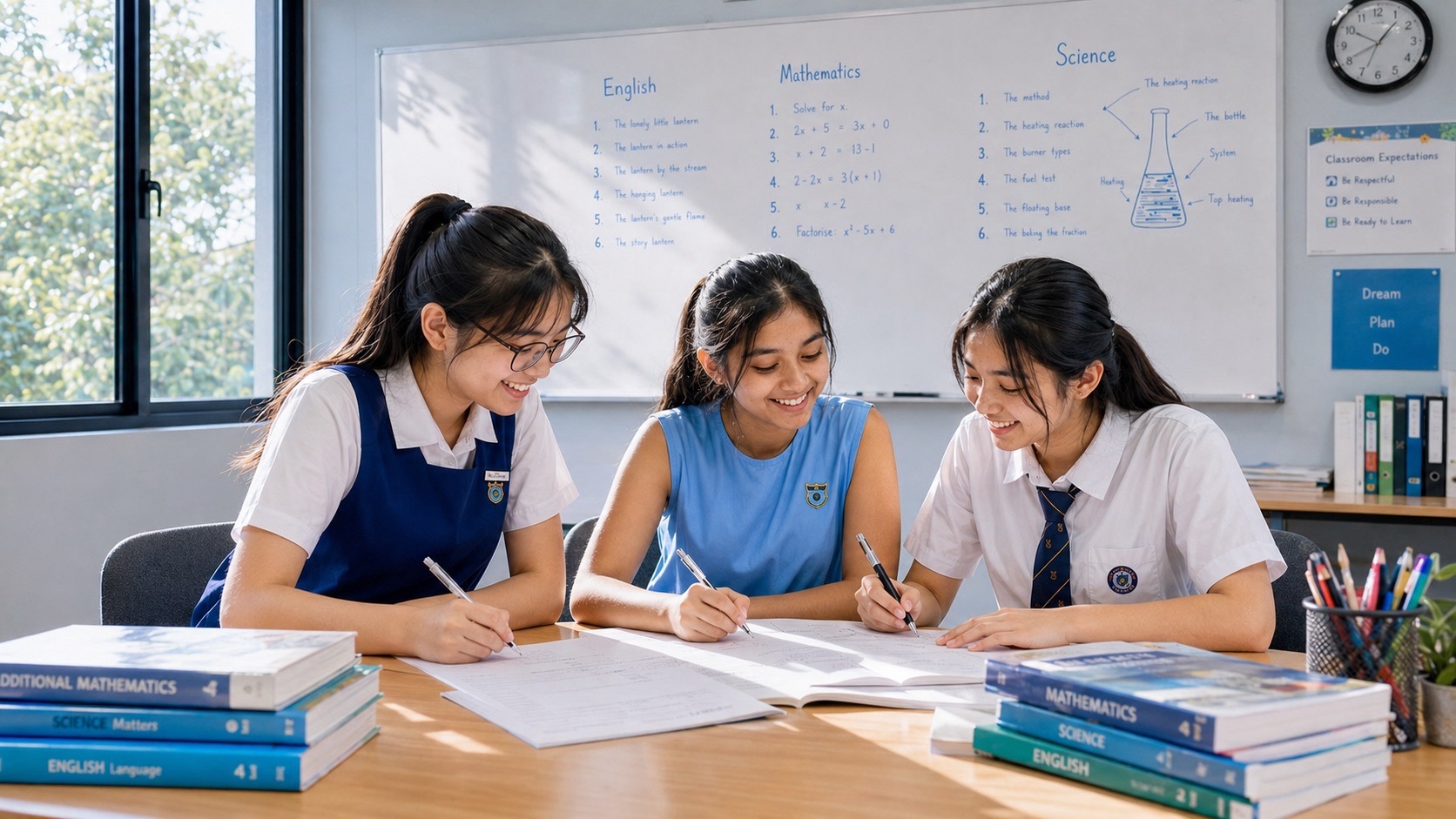
One student identifies the claim, one identifies support and one explains the reasoning link or limitation.
Roles rotate. Students learn that “evidence found” and “argument understood” are not the same achievement.
A 90-Minute Secondary 1 Claim-and-Evidence Lesson
- Sentence sorting: classify claims, facts, examples and reasons.
- Paragraph map: label the job of each paragraph in a short nonfiction text.
- Evidence link: explain why one detail supports one claim.
- Strength check: compare two pieces of evidence.
- Qualification: identify words limiting the claim.
- Counterexample: test whether a broad claim needs narrowing.
- Writing transfer: build one claim–evidence–reasoning paragraph.
- Unseen transfer: analyse a fresh passage independently.
Home Practice Can Use Short Articles
- Underline the main claim.
- Box one piece of supporting evidence.
- Write one sentence explaining the link.
- Circle one qualifier.
- Ask what the passage does not prove.
What Parents Should Avoid
- Calling every sentence a fact or opinion.
- Accepting a statistic without asking what it represents.
- Treating one anecdote as proof of a universal claim.
- Removing qualifiers to make answers sound stronger.
- Rewarding copied evidence without explanation.
Common Secondary 1 Failure Patterns
- Claims and facts are confused.
- Evidence is found but not connected to the claim.
- Examples are treated as conclusive proof.
- Source identity is ignored.
- Correlation is treated as cause.
- Qualifiers disappear during paraphrase.
- Students repeat the claim instead of explaining reasoning.
What Progress Looks Like
- Claim and support are separated more accurately.
- Evidence is explained rather than copied.
- Students ask who produced the information.
- Broad claims are qualified more carefully.
- Examples are used at an appropriate scale.
- Paragraph functions become clearer.
- The same architecture begins to appear in student writing.
The Secondary 1 to Secondary 2 Bridge
Secondary 2 students increasingly encounter more complex argument, perspective and evidence. A strong bridge is a reader who already understands that nonfiction is built from different reasoning moves, not simply a sequence of facts.
The Secondary 1 Goal: Ask What Each Sentence Is Doing
Find the claim. Identify the support. Explain the link. Notice the limits. Then carry the same structure into your own writing.
Continue through Secondary 1 informational and nonfiction reading, argumentative writing, and research and source-based writing.
Properly taught kids shine a bright light into the future.