
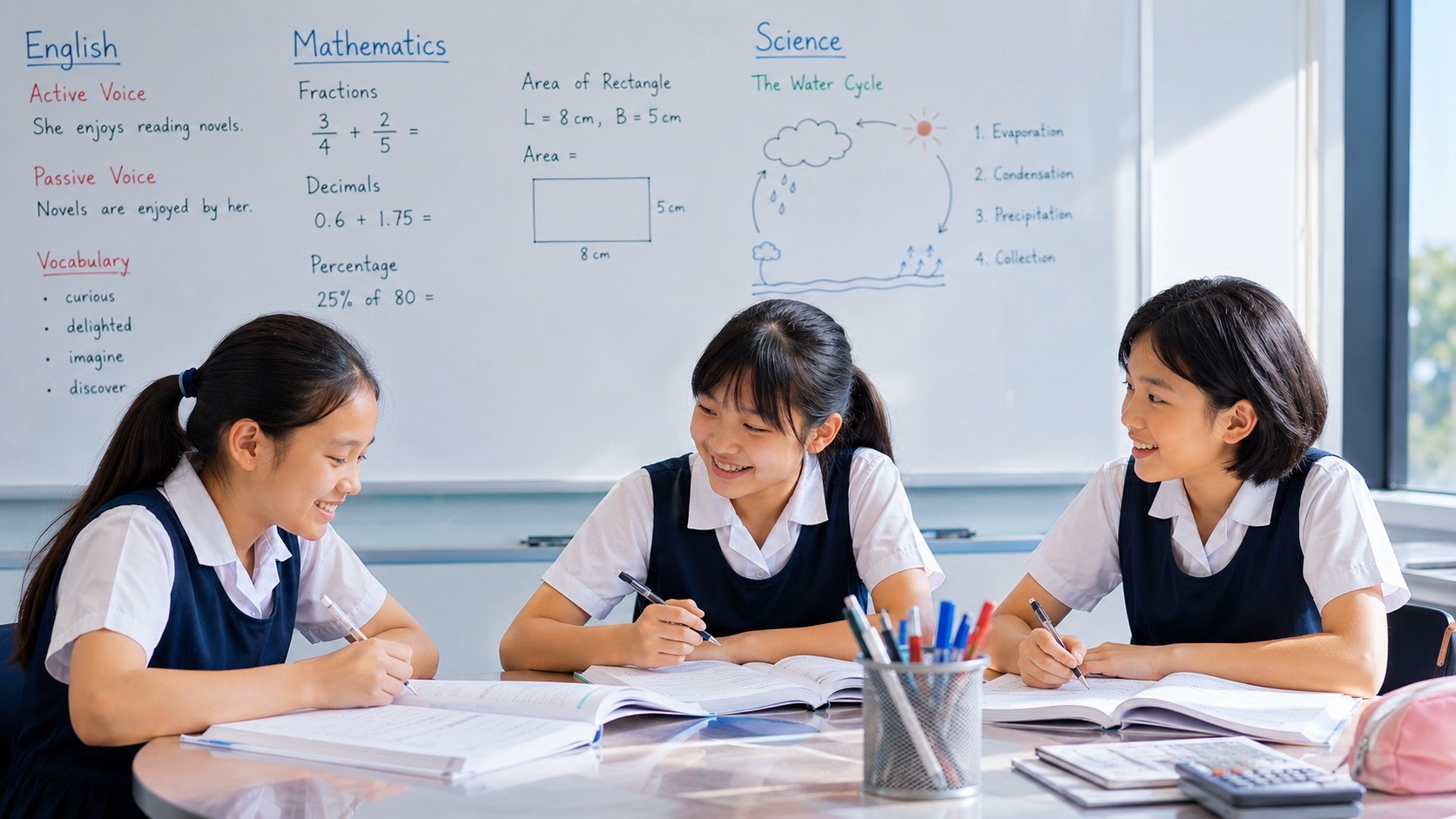
Primary 2 English tuition in Telok Blangah should help a child convert first-year foundations into fluent, transferable and increasingly independent English. Parents searching for Primary 2 English Tuition Telok Blangah, P2 English tuition near Telok Blangah MRT, Primary English tuition near HarbourFront, English enrichment around Telok Blangah Heights, comprehension, grammar, vocabulary, composition writing, spelling, oral communication or small-group English tuition are usually noticing the same pattern: the child has seen the skills before but still cannot always use them without prompts.
The core P2 problem is therefore not simply knowledge. It is transfer. A learner may recognise a grammar rule but lose it in free writing, know a vocabulary word while looking at a list but fail to retrieve it later, or read accurately but require repeated reminders to check meaning. Strong P2 tuition should reduce those gaps. Reading becomes smoother, answers more complete, vocabulary more active, grammar more portable, writing more connected and editing more independent.
This guide is written for families around Telok Blangah MRT, Telok Blangah Heights, Bukit Purmei, Henderson, HarbourFront, Mount Faber and nearby parts of Bukit Merah. It is a local learning and tuition-selection guide, not a claim that Singapore English Tuition Centre operates a physical branch in Telok Blangah. The focus is the P2 developmental layer: how familiar English skills become reliable enough to support the bigger transition into Primary 3.
Singapore’s Primary English Language syllabus connects listening, speaking, reading, viewing, writing, grammar and vocabulary. Parents can read the Ministry of Education syllabus here: https://www.moe.gov.sg/-/media/files/primary/2020-english-language-primary.pdf . In P2, the important question is not whether the child has encountered a skill, but whether the child can retrieve and apply it when the original cue disappears.
From support to ownership
Primary 2 should reduce the amount of adult prompting required for familiar work. A child may know how to reread but still wait for a parent to say reread that sentence. Delay the prompt and ask the learner to complete a small block independently. The aim is to turn a familiar skill into a reusable routine rather than create success only on one worksheet. Known routines begin appearing without immediate adult direction. The tutor should revisit the same mechanism later with a new sentence, passage or prompt, because P2 progress is strongest when the learner can retrieve the method without the original cue.
Reading fluency baseline
P2 reading should require less effort at the word-recognition level. In Primary 2, the child is expected to carry more of the process independently. A learner who still decodes every common word laboriously has little attention left for meaning. Listen to oral reading and note where hesitations cluster. A practical sign of improvement is that frequent words and familiar patterns become more automatic. The tutor should revisit the same mechanism later with a new sentence, passage or prompt, because P2 progress is strongest when the learner can retrieve the method without the original cue.
Phrase-level fluency
Meaning is easier to retain when words are grouped into phrases. The teaching should remain concrete enough for the learner to see what changed. After the rain stopped / Ben carried the umbrellas / to the rack is more coherent than a word-by-word reading. The next move is to model phrase groups, use echo reading and remove the support gradually. When transfer is developing, the learner reads more naturally and remembers the event better. The tutor should revisit the same mechanism later with a new sentence, passage or prompt, because P2 progress is strongest when the learner can retrieve the method without the original cue.
Accuracy within fluency
Fluent-sounding reading can still be inaccurate. The distinction is between knowing the idea when prompted and owning it when the prompt disappears. Skipping not, before or after can distort a sentence while the reading sounds smooth. Ask for a quick verification read after the first attempt. The evidence is straightforward: pace and accuracy begin working together. The tutor should revisit the same mechanism later with a new sentence, passage or prompt, because P2 progress is strongest when the learner can retrieve the method without the original cue.
Comprehension monitoring
P2 readers should notice when the words have been pronounced but meaning has disappeared. The learner reaches the end of a paragraph and cannot explain what changed. Teach stop, reread locally, paraphrase and continue. The aim is to turn a familiar skill into a reusable routine rather than create success only on one worksheet. The child repairs understanding without waiting for the tutor to restart the passage. The tutor should revisit the same mechanism later with a new sentence, passage or prompt, because P2 progress is strongest when the learner can retrieve the method without the original cue.
Retelling short sequences
Retelling bridges reading and comprehension. In Primary 2, the child is expected to carry more of the process independently. A passage contains a problem, response and result. Ask the child to retell the chain before looking at the questions. A practical sign of improvement is that sequence remains available when written answers begin. The tutor should revisit the same mechanism later with a new sentence, passage or prompt, because P2 progress is strongest when the learner can retrieve the method without the original cue.
Question-word control
Question words tell the learner what kind of answer is needed. The teaching should remain concrete enough for the learner to see what changed. Why asks for cause, where for place, when for time and who for a person. The next move is to name the question word during training, then fade the cue. When transfer is developing, answers become more relevant. The tutor should revisit the same mechanism later with a new sentence, passage or prompt, because P2 progress is strongest when the learner can retrieve the method without the original cue.
Answer scope
P2 learners often give a keyword when an explanation is required. The distinction is between knowing the idea when prompted and owning it when the prompt disappears. Why did Lina go back? answered with Bottle is not enough. Teach answer plus cause using the relevant evidence. The evidence is straightforward: responses become complete without copying whole sentences. The tutor should revisit the same mechanism later with a new sentence, passage or prompt, because P2 progress is strongest when the learner can retrieve the method without the original cue.
Evidence before general knowledge
Children sometimes answer from what usually happens rather than from the passage. A learner knows what commonly happens at a playground and gives a plausible but unsupported answer. Ask for the clue before accepting the response. The aim is to turn a familiar skill into a reusable routine rather than create success only on one worksheet. Iona’s evidence habit becomes more dependable. The tutor should revisit the same mechanism later with a new sentence, passage or prompt, because P2 progress is strongest when the learner can retrieve the method without the original cue.
Simple inference
P2 can begin making small evidence-based inferences. In Primary 2, the child is expected to carry more of the process independently. A wrapped gift is hidden when a sibling walks into the room. Ask what the behaviour probably means and which detail supports the idea. A practical sign of improvement is that the learner distinguishes inference from guessing. The tutor should revisit the same mechanism later with a new sentence, passage or prompt, because P2 progress is strongest when the learner can retrieve the method without the original cue.
Reference words
Pronouns increasingly connect meaning across sentences. The teaching should remain concrete enough for the learner to see what changed. A child may lose who he, she or they refers to after one sentence. The next move is to trace the noun-pronoun connection first with visible marks and later without them. When transfer is developing, reference errors decline. The tutor should revisit the same mechanism later with a new sentence, passage or prompt, because P2 progress is strongest when the learner can retrieve the method without the original cue.
Vocabulary from context
P2 readers can begin using surrounding events to infer unfamiliar words. The distinction is between knowing the idea when prompted and owning it when the prompt disappears. A character finds a missing item, sighs and smiles; relieved fits the event. Ask what happened before and which feeling matches the result. The evidence is straightforward: unknown words become less disruptive to comprehension. The tutor should revisit the same mechanism later with a new sentence, passage or prompt, because P2 progress is strongest when the learner can retrieve the method without the original cue.
Vocabulary precision
Recognition should grow into explanation and use. reluctant, afraid and refusing overlap but are not identical. Compare the words in simple situations. The aim is to turn a familiar skill into a reusable routine rather than create success only on one worksheet. Word choice becomes more accurate. The tutor should revisit the same mechanism later with a new sentence, passage or prompt, because P2 progress is strongest when the learner can retrieve the method without the original cue.
Collocation
Words often travel with familiar partners. In Primary 2, the child is expected to carry more of the process independently. make a decision, heavy rain, pay attention and take responsibility are common combinations. Notice useful partnerships in reading and reuse them. A practical sign of improvement is that vocabulary becomes easier to retrieve naturally. The tutor should revisit the same mechanism later with a new sentence, passage or prompt, because P2 progress is strongest when the learner can retrieve the method without the original cue.
Word families
Related forms provide structure. The teaching should remain concrete enough for the learner to see what changed. decide, decision and decisive share a core. The next move is to ask what changes when the ending changes. When transfer is developing, the learner uses related forms more accurately. The tutor should revisit the same mechanism later with a new sentence, passage or prompt, because P2 progress is strongest when the learner can retrieve the method without the original cue.
Spaced vocabulary review
A word should remain available after the original worksheet disappears. The distinction is between knowing the idea when prompted and owning it when the prompt disappears. A word taught on Monday may be forgotten by Friday. Retrieve it later in the lesson, next week and in a different text. The evidence is straightforward: vocabulary becomes active memory. The tutor should revisit the same mechanism later with a new sentence, passage or prompt, because P2 progress is strongest when the learner can retrieve the method without the original cue.
Grammar recognition versus production
Choosing the right answer is easier than generating a correct sentence from scratch. A child scores well on grammar drills but repeats the same error in composition. Move from choosing to explaining, repairing, generating and applying. The aim is to turn a familiar skill into a reusable routine rather than create success only on one worksheet. Grammar begins transferring into original writing. The tutor should revisit the same mechanism later with a new sentence, passage or prompt, because P2 progress is strongest when the learner can retrieve the method without the original cue.
Agreement in real sentences
Subject-verb agreement should survive outside the exercise format. In Primary 2, the child is expected to carry more of the process independently. The boy was waiting; the boys were waiting. Compare number and verb form, then create fresh examples. A practical sign of improvement is that agreement appears more often in independent sentences. The tutor should revisit the same mechanism later with a new sentence, passage or prompt, because P2 progress is strongest when the learner can retrieve the method without the original cue.
Past-tense control
P2 narratives often drift between time frames. The teaching should remain concrete enough for the learner to see what changed. Yesterday, Mei walks to the shop and bought bread contains a mismatch. The next move is to use time markers to anchor the verbs in the same event. When transfer is developing, past narratives become more stable. The tutor should revisit the same mechanism later with a new sentence, passage or prompt, because P2 progress is strongest when the learner can retrieve the method without the original cue.
Conjunction meaning
Connectors should express real logical relationships. The distinction is between knowing the idea when prompted and owning it when the prompt disappears. because signals cause, but signals contrast, so signals result and when signals time. Compare sentences where changing the connector changes the relationship. The evidence is straightforward: the learner chooses conjunctions for meaning rather than variety alone. The tutor should revisit the same mechanism later with a new sentence, passage or prompt, because P2 progress is strongest when the learner can retrieve the method without the original cue.
Purposeful sentence expansion
Longer sentences should add useful information. The cyclist stopped can add where, why or consequence. Ask one precise question before expanding. The aim is to turn a familiar skill into a reusable routine rather than create success only on one worksheet. Sentences develop without becoming cluttered. The tutor should revisit the same mechanism later with a new sentence, passage or prompt, because P2 progress is strongest when the learner can retrieve the method without the original cue.
Sentence boundaries
P2 writers can chain several ideas together with and. In Primary 2, the child is expected to carry more of the process independently. A long line of actions becomes difficult to follow. Read aloud and decide where one complete thought ends. A practical sign of improvement is that punctuation begins reflecting idea structure. The tutor should revisit the same mechanism later with a new sentence, passage or prompt, because P2 progress is strongest when the learner can retrieve the method without the original cue.
Spelling from personal errors
Recurring mistakes provide high-value teaching data. The teaching should remain concrete enough for the learner to see what changed. The learner repeatedly misspells because, first or friend. The next move is to teach the difficult part, retrieve it and use it in fresh sentences. When transfer is developing, the same errors appear less often later. The tutor should revisit the same mechanism later with a new sentence, passage or prompt, because P2 progress is strongest when the learner can retrieve the method without the original cue.
Editing routine
Check your work is too broad for many eight-year-olds. The distinction is between knowing the idea when prompted and owning it when the prompt disappears. A practical sequence can include meaning, capital letter, ending punctuation, verb time and one spelling risk. Use the same sequence repeatedly until it becomes familiar. The evidence is straightforward: the child self-corrects more before asking for help. The tutor should revisit the same mechanism later with a new sentence, passage or prompt, because P2 progress is strongest when the learner can retrieve the method without the original cue.
Composition event chain
P2 writing should move from sentence sequence toward causality. A tray is carried, someone turns, a collision happens and a drink spills. Ask what caused each next event. The aim is to turn a familiar skill into a reusable routine rather than create success only on one worksheet. Writing becomes an event chain instead of a list. The tutor should revisit the same mechanism later with a new sentence, passage or prompt, because P2 progress is strongest when the learner can retrieve the method without the original cue.
Simple planning
Planning should reduce cognitive load, not create another difficult task. In Primary 2, the child is expected to carry more of the process independently. Use who and where, trigger, next event, biggest moment and ending. Allow keywords or small sketches. A practical sign of improvement is that the child can glance at the plan and continue independently. The tutor should revisit the same mechanism later with a new sentence, passage or prompt, because P2 progress is strongest when the learner can retrieve the method without the original cue.
Relevant openings
P2 compositions can begin closer to the actual event. The teaching should remain concrete enough for the learner to see what changed. A lost-item story does not need a long account of breakfast. The next move is to establish the important object, setting or problem quickly. When transfer is developing, more writing time is spent on the meaningful part. The tutor should revisit the same mechanism later with a new sentence, passage or prompt, because P2 progress is strongest when the learner can retrieve the method without the original cue.
Purposeful dialogue
Dialogue should change what happens. The distinction is between knowing the idea when prompted and owning it when the prompt disappears. Watch out matters if it affects the next action. Use speech for warning, asking, refusing, admitting or apologising. The evidence is straightforward: dialogue supports the event rather than filling space. The tutor should revisit the same mechanism later with a new sentence, passage or prompt, because P2 progress is strongest when the learner can retrieve the method without the original cue.
Visible feeling
Simple behaviour can communicate emotion more effectively than labels. Instead of He was nervous, use He checked the door again. Ask what the character does because of the feeling. The aim is to turn a familiar skill into a reusable routine rather than create success only on one worksheet. Description becomes specific to the scene. The tutor should revisit the same mechanism later with a new sentence, passage or prompt, because P2 progress is strongest when the learner can retrieve the method without the original cue.
Resolve the main problem
A P2 ending should show what happened to the central issue. In Primary 2, the child is expected to carry more of the process independently. If a book is lost, the ending should show whether it was found, replaced or reported. Ask what changed because the event happened. A practical sign of improvement is that endings become connected. The tutor should revisit the same mechanism later with a new sentence, passage or prompt, because P2 progress is strongest when the learner can retrieve the method without the original cue.
Oral answer development
Speaking can rehearse idea expansion. The teaching should remain concrete enough for the learner to see what changed. Use answer, reason and one detail. The next move is to start with familiar questions and then vary the topic. When transfer is developing, oral language becomes material for later writing. The tutor should revisit the same mechanism later with a new sentence, passage or prompt, because P2 progress is strongest when the learner can retrieve the method without the original cue.
Listening for sequence
P2 learners increasingly need to act on several spoken steps. The distinction is between knowing the idea when prompted and owning it when the prompt disappears. Read the paragraph, underline the evidence, then write one sentence. Repeat the action sequence before beginning. The evidence is straightforward: fewer instructions are lost midway through the task. The tutor should revisit the same mechanism later with a new sentence, passage or prompt, because P2 progress is strongest when the learner can retrieve the method without the original cue.
Listening for key details
The child does not need to remember every spoken word. Who, what changed and why may carry the important structure. Ask for two or three key details after listening. The aim is to turn a familiar skill into a reusable routine rather than create success only on one worksheet. Working memory becomes more selective. The tutor should revisit the same mechanism later with a new sentence, passage or prompt, because P2 progress is strongest when the learner can retrieve the method without the original cue.
Independent starting
Reassurance dependence can hide actual capability. In Primary 2, the child is expected to carry more of the process independently. The learner asks Is this right? after every item. Complete a short block, circle uncertainty and review afterward. A practical sign of improvement is that the child begins with less external confirmation. The tutor should revisit the same mechanism later with a new sentence, passage or prompt, because P2 progress is strongest when the learner can retrieve the method without the original cue.
Mark and move
One difficult item should not block the rest of the page. The teaching should remain concrete enough for the learner to see what changed. Leonie meets an unfamiliar question and stops. The next move is to mark it, continue and return later. When transfer is developing, the learner develops recovery rather than paralysis. The tutor should revisit the same mechanism later with a new sentence, passage or prompt, because P2 progress is strongest when the learner can retrieve the method without the original cue.
Productive struggle
Independence still needs calibrated support. The distinction is between knowing the idea when prompted and owning it when the prompt disappears. The learner should get thinking time before the tutor supplies the answer. Use a smaller question, clue and modelling only if needed. The evidence is straightforward: the child does more of the cognitive work. The tutor should revisit the same mechanism later with a new sentence, passage or prompt, because P2 progress is strongest when the learner can retrieve the method without the original cue.
Small-group comparison
P2 students can learn from comparing different answers. Two sentences may both be grammatical but one may answer the question more directly. Ask which one fits the scope and why. The aim is to turn a familiar skill into a reusable routine rather than create success only on one worksheet. Language choices become visible. The tutor should revisit the same mechanism later with a new sentence, passage or prompt, because P2 progress is strongest when the learner can retrieve the method without the original cue.
Individual proof
Group agreement can make everyone look successful. In Primary 2, the child is expected to carry more of the process independently. A learner may follow a peer’s explanation without being able to reproduce it. Follow discussion with a fresh individual item. A practical sign of improvement is that the tutor sees genuine ownership. The tutor should revisit the same mechanism later with a new sentence, passage or prompt, because P2 progress is strongest when the learner can retrieve the method without the original cue.
Feedback for the next attempt
Useful feedback should narrow attention. The teaching should remain concrete enough for the learner to see what changed. Your sequence is clear; now keep the verbs in the same time frame gives one practical target. The next move is to ask the learner to apply it immediately. When transfer is developing, the next paragraph changes for the intended reason. The tutor should revisit the same mechanism later with a new sentence, passage or prompt, because P2 progress is strongest when the learner can retrieve the method without the original cue.
Correction and transfer
Copying a correction does not prove learning. The distinction is between knowing the idea when prompted and owning it when the prompt disappears. After fixing The girls was waiting, create another plural sentence. Retest later in a different context. The evidence is straightforward: the correction survives beyond the original item. The tutor should revisit the same mechanism later with a new sentence, passage or prompt, because P2 progress is strongest when the learner can retrieve the method without the original cue.
Reading volume
Worksheets cannot provide enough connected text. Books repeatedly expose the learner to vocabulary, syntax and story structure. Build enjoyable independent reading alongside shared reading. The aim is to turn a familiar skill into a reusable routine rather than create success only on one worksheet. Fluency and background knowledge grow together. The tutor should revisit the same mechanism later with a new sentence, passage or prompt, because P2 progress is strongest when the learner can retrieve the method without the original cue.
Non-fiction reading
P2 reading can widen beyond stories. In Primary 2, the child is expected to carry more of the process independently. Texts about transport, animals, food, places and how things work build informational vocabulary. Discuss one new idea and one useful word rather than testing every detail. A practical sign of improvement is that the learner becomes more comfortable with factual language. The tutor should revisit the same mechanism later with a new sentence, passage or prompt, because P2 progress is strongest when the learner can retrieve the method without the original cue.
Telok Blangah local language
Ordinary neighbourhood movement can supply real language. The teaching should remain concrete enough for the learner to see what changed. HarbourFront, Telok Blangah MRT, hills, shelters, crossings, bus stops and housing blocks provide route and place vocabulary. The next move is to notice one or two words in context and later reuse them in speech or writing. When transfer is developing, language connects with daily experience. The tutor should revisit the same mechanism later with a new sentence, passage or prompt, because P2 progress is strongest when the learner can retrieve the method without the original cue.
Home discussion
Comprehension can be practised without another worksheet. The distinction is between knowing the idea when prompted and owning it when the prompt disappears. Ask what changed, why it happened and which detail mattered. Use ordinary books and family conversation. The evidence is straightforward: the child practises reasoning without associating every reading session with testing. The tutor should revisit the same mechanism later with a new sentence, passage or prompt, because P2 progress is strongest when the learner can retrieve the method without the original cue.
Home writing
Short writing can target tense, sequence and editing. A few sentences about a journey, market visit or playground event are enough. Keep the task small enough to reread. The aim is to turn a familiar skill into a reusable routine rather than create success only on one worksheet. Practice remains sustainable. The tutor should revisit the same mechanism later with a new sentence, passage or prompt, because P2 progress is strongest when the learner can retrieve the method without the original cue.
Correction notebook
A useful notebook records patterns, not every mistake. In Primary 2, the child is expected to carry more of the process independently. Examples include why questions need causes and yesterday usually anchors a past event. Review the pattern before a fresh task. A practical sign of improvement is that the child develops a personal operating manual. The tutor should revisit the same mechanism later with a new sentence, passage or prompt, because P2 progress is strongest when the learner can retrieve the method without the original cue.
First-month calibration
The first month should identify which P2 routine is least reliable without support. The teaching should remain concrete enough for the learner to see what changed. Sample fluency, comprehension, vocabulary, grammar, writing and execution. The next move is to choose a few high-leverage priorities. When transfer is developing, parents understand the teaching plan. The tutor should revisit the same mechanism later with a new sentence, passage or prompt, because P2 progress is strongest when the learner can retrieve the method without the original cue.
Twelve-week P2 cycle
P2 improvement benefits from diagnosis, repair, connection, variation and transfer. The distinction is between knowing the idea when prompted and owning it when the prompt disappears. Weeks one to two baseline; three to four repair; five to eight connect and reduce prompts; nine to ten vary; eleven to twelve retest. Repeat with the next priority. The evidence is straightforward: the programme follows evidence rather than worksheet volume. The tutor should revisit the same mechanism later with a new sentence, passage or prompt, because P2 progress is strongest when the learner can retrieve the method without the original cue.
Readiness for P3
P2 readiness is about reliability rather than early acceleration. Useful signs include smoother reading, complete answers, evidence habits, vocabulary retrieval, grammar in original sentences, coherent short writing and simple self-editing. Strengthen unstable routines before adding difficulty. The aim is to turn a familiar skill into a reusable routine rather than create success only on one worksheet. P3 begins from a stronger bridge. The tutor should revisit the same mechanism later with a new sentence, passage or prompt, because P2 progress is strongest when the learner can retrieve the method without the original cue.
Telok Blangah travel fit
P2 learners still tire even as they become more independent. In Primary 2, the child is expected to carry more of the process independently. Families may travel through Telok Blangah MRT, HarbourFront, Bukit Purmei, Henderson and nearby bus routes. Check door-to-door time, class start, homework load and current rail information at https://www.lta.gov.sg/content/ltagov/en/map/train.html . A practical sign of improvement is that the weekly routine protects alertness and reading time. The tutor should revisit the same mechanism later with a new sentence, passage or prompt, because P2 progress is strongest when the learner can retrieve the method without the original cue.
Choosing a P2 tutor
Teaching quality is visible in the feedback loop. The teaching should remain concrete enough for the learner to see what changed. Ask how fluency is measured, how vocabulary is revisited, how grammar enters composition and how prompts are reduced. The next move is to look for examples of retesting and transfer. When transfer is developing, the tutor can explain the learner’s current priority precisely. The tutor should revisit the same mechanism later with a new sentence, passage or prompt, because P2 progress is strongest when the learner can retrieve the method without the original cue. ## Frequently asked questions about Primary 2 English tuition in Telok Blangah
Does every P2 child need tuition? No. Tuition is useful when a persistent gap needs diagnosis, when structured practice helps or when a child benefits from a small-group feedback environment.
Should P2 students start P3 work early? Only when P2 foundations are secure. Acceleration should not replace fluency, comprehension or sentence-control repair.
How much reading should P2 children do? Regular reading matters more than a fixed page count. Include enjoyable independent reading and richer shared reading.
What if grammar worksheets are strong but composition grammar is weak? The learner has recognition knowledge without reliable production. Move the same grammar into fresh sentences, paragraphs and editing.
What if comprehension answers are too short? Teach question scope. Why and how questions often require an explanation, not a keyword.
What if the child is very slow? Find where time is being used. Slow decoding, handwriting, uncertainty and repeated checking require different interventions.
Are vocabulary lists useful? Yes, when words are revisited and used. A long list forgotten after the test has limited value.
How should parents help? Read, talk, support retrieval and let the child attempt before stepping in.
What should improve most in P2? Fluency, independent starting, answer completeness, vocabulary retrieval, grammar transfer and simple self-editing.
What is the main P2 objective? Turn early English foundations into routines that remain reliable when the adult prompt disappears.
The Telok Blangah P2 route inside SETC
Canonical Primary 2 English Tuition: https://singaporeenglishtuitioncentre.com/primary-english-tuition/english-tuition-primary-2/
Primary 1 English Tuition | Telok Blangah: https://singaporeenglishtuitioncentre.com/primary-english-tuition/english-tuition-primary-1/primary-1-english-tuition-telok-blangah/
Primary 3 English Tuition | Telok Blangah: https://singaporeenglishtuitioncentre.com/primary-english-tuition/english-tuition-primary-3/primary-3-english-tuition-telok-blangah/
Primary 4 English Tuition | Telok Blangah: https://singaporeenglishtuitioncentre.com/primary-english-tuition/english-tuition-primary-4/primary-4-english-tuition-telok-blangah/
The existing P2 year owner remains canonical. Telok Blangah is the local discovery layer.
Final principle
Primary 2 English tuition in Telok Blangah should make familiar language skills more fluent and more independent. The learner should read with less friction, answer with better scope, retrieve vocabulary, apply grammar during writing, build connected short compositions, follow multi-step instructions, check work and recover from uncertainty.
That is the P2 transition: not simply doing more English, but owning more of the process.