
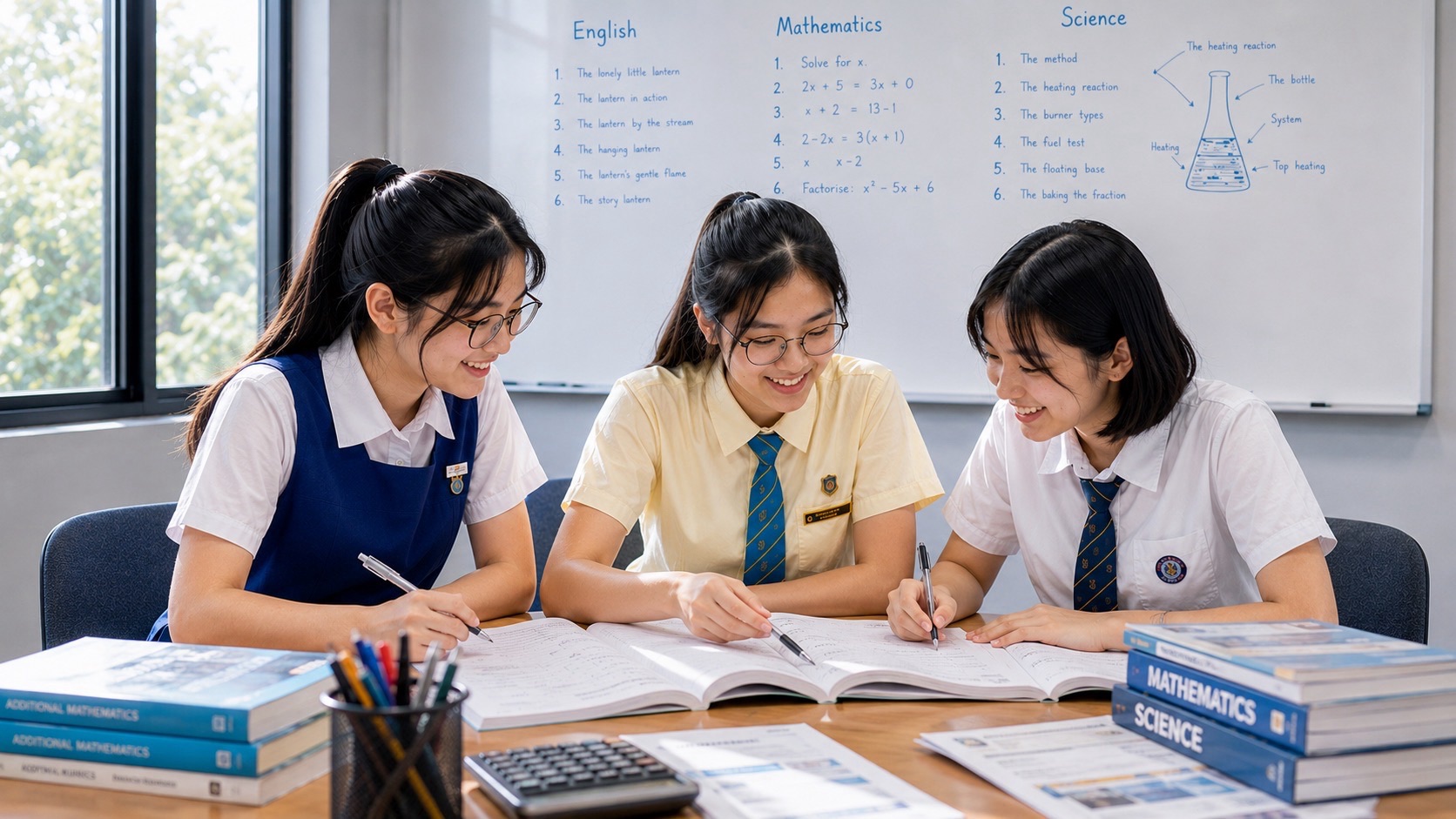
Something unusual happened to the history of English in 2022–2023. For centuries, people had used new technologies to preserve, copy, print, transmit and search words. Now millions of people began using tools that could generate substantial English answers when given ordinary-language instructions. The public introduction of ChatGPT on 30 November 2022 became a widely recognised milestone in that transition.
This did not mean computers suddenly invented language, understood everything they wrote or replaced human readers and authors. Earlier artificial-intelligence systems had already produced text and supported language-related tasks. But accessible conversational generative AI made the act of writing a prompt, reading a response and checking an answer a more familiar part of public life. The history of English in 2022–2023 therefore includes Wordle, prompt writing, large language models, AI-generated text and the renewed importance of source evaluation.
Imagine a student with a difficult paragraph. Before, the student might search for a model explanation, ask a teacher, or consult a textbook. By late 2022, another option was appearing: type an English question into a chatbot and receive a newly generated explanation. That change is significant, but only if we ask what the response means, how reliable it is, and what the student actually understands afterward.
The longer history: English has always adapted to new tools
This story did not begin with a chatbot. Old English words survived in runes and manuscripts. In the fifteenth century, printing helped copies travel more widely. Newspapers and dictionaries made information available to new groups of readers. Radio recorded voices; computers made text searchable; the web put vast libraries of words behind a screen.
Each technology changed the relationship between writer, reader and text.
A handwritten manuscript depends on a scribe. A printing press reproduces text at scale. A search engine locates existing material. A generative language model can produce a fresh sequence of words in response to a request.
These processes should not be confused. Copying an existing paragraph, retrieving a webpage and generating a plausible explanation are different actions with different reliability concerns.
The long history helps us avoid treating AI as an isolated miracle or as something disconnected from earlier writing technologies. It is another development in the long story of how people use language to coordinate knowledge.
A word game still mattered in 2022
The year opened with global enthusiasm for Wordle, the five-letter word game created by Josh Wardle and released publicly in 2021.
Its daily puzzle spread through simple patterns of social sharing. Players could compare their attempts using coloured squares without revealing the solution to friends.
In early 2022, Wordle also became a lively example of regional vocabulary differences. Some answers were more familiar to players of one variety of English than another.
The word homer, which can mean a home run in American baseball usage, became an especially visible case. Cambridge Dictionary reported a large search spike related to the Wordle answer and selected homer as its 2022 Word of the Year.
See Cambridge University Press’s retrospective.
This episode showed two important things. First, digital platforms could make vocabulary a shared international activity. Second, there was no single universal stock of English words that every English speaker knew equally well.
Wordle’s popularity was a celebration of word recognition. The next major shift asked computers to assemble words into paragraphs.
30 November 2022: ChatGPT is introduced
On 30 November 2022, OpenAI published its announcement titled Introducing ChatGPT.
The announcement described a conversational model able to respond to instructions and follow-up questions. It also explicitly warned that the model could produce answers that sounded plausible while being incorrect.
That warning is part of the historical record, not a criticism invented later.
See OpenAI’s original Introducing ChatGPT, 30 November 2022.
For the history of English, the central change was accessibility. A person did not need to write a conventional software program to request a paragraph, a summary or an explanation. The instructions could be expressed in everyday language.
A prompt might say, “Explain the difference between an adjective and an adverb for a Primary 5 student, then give three examples.”
The tool could return an answer resembling prose written specifically for that request.
Yet the existence of a fluent answer did not guarantee that the explanation was accurate, age-appropriate or based on trustworthy evidence.
What exactly is a prompt?
A prompt is the input or instruction supplied to a system to elicit a response.
In generative AI, the prompt may include a question, a task, background material, examples, constraints and an intended output format.
Consider two requests.
Broad: “Explain English grammar.”
Specific: “Explain how the past perfect differs from the simple past for a Secondary 2 learner. Use two contrasting sentences, identify the sequence of events and end with one independent practice question.”
The second prompt supplies an audience, topic, comparison, expected format and learning check.
This is not a magical phrase that guarantees correctness. It is a clearer specification of what the user wants.
The linguistic lesson is familiar: good instructions reduce ambiguity.
In a medieval monastery, an author needed to organise a lesson for readers. In a modern workplace, an editor writes a brief for a contributor. In generative AI, a user writes a prompt. All three require choices about purpose, context and clarity.
Why prompt writing deserves a place in English history
English teachers have always encouraged students to ask clear questions and explain their reasoning. Prompt writing adds a new environment in which those abilities matter.
To request useful output, a writer must know enough to describe the problem. If the request is vague, the response may be broad or misleading. If the request leaves out a crucial constraint, the model may invent an assumption that does not match the user’s intention.
This creates a distinction between the skill of asking and the skill of judging the answer.
A person can write a beautifully specific prompt and still receive an incorrect answer. Conversely, a person may receive a good answer without understanding why it is good.
The essential literacy skill is to connect three steps: formulate a question, assess the response, and revise understanding.
That is why prompt writing should not be taught simply as memorising a list of fashionable commands. It belongs within the broader practice of communicating clearly and evaluating evidence.
What is a large language model?
A large language model, or LLM, is a machine-learning system trained using large quantities of data to model patterns in language and related information. Different systems use different architectures, training methods and capabilities.
Some models generate responses by predicting and selecting sequences of tokens, or units of text, based on learned patterns and the context supplied. A fluent sentence can therefore be created without the system consulting a verified source for every claim.
That difference matters.
A database designed to retrieve a recorded date may return an entry linked to a specific source. A generative model can compose a plausible statement whose evidential basis is not visible to the reader.
The resulting answer may be useful, insightful or accurate. It may also be incorrect, incomplete or misleading.
Calling the output generated text rather than automatically calling it verified knowledge helps clarify the task.
The human reader still needs to decide which claims deserve trust.
The problem of an answer that sounds right
One reason generative AI attracted attention is that it could produce sentences with convincing structure, smooth transitions and confident wording.
Those qualities are familiar signs of competence when a human writer has done careful research. But they do not prove that a machine-generated claim has been checked.
A fabricated quotation can look elegant. A false historical date can fit smoothly into a timeline. An invented book title can resemble a real academic source.
This risk was already acknowledged in OpenAI’s November 2022 introduction, which warned that ChatGPT could produce plausible but incorrect or nonsensical answers.
The danger is particularly obvious in historical writing. Imagine asking, “What did a medieval monk say on a particular morning?” If no source records the conversation, a responsible answer must admit that limitation.
A fluent fictional dialogue could be entertaining, but it must not be presented as a historical quotation.
The first principle is simple: language fluency is not the same as factual evidence.
How can a reader verify a generated answer?
A practical verification process begins with identifying the claims that matter.
For a historical answer, check dates, names, places, quotations and the existence of sources. For a science answer, distinguish established findings from hypotheses and current uncertainty. For an educational explanation, verify that the rule actually works in fresh examples.
Useful questions include:
- What exactly is being claimed?
- Can I find a relevant primary or authoritative source?
- Does the cited source actually support this claim?
- Is the source contemporary with the event, or a later interpretation?
- Has the meaning been changed by leaving out context?
- Can I independently reproduce the reasoning?
Do not assume that a reference is genuine simply because it appears in a tidy list with a convincing title.
This is not a rule that only applies to AI. It is a strong research habit for newspapers, websites, books, social-media posts and human-written essays too.
The new technology made an old literacy problem more urgent.
Searching and generating are different operations
A search engine and a generative AI assistant can both help users find information, but their underlying tasks are not identical.
A search result can point toward an existing page or document. A generated answer may summarise, combine or formulate material in new wording.
Some AI tools can also retrieve sources, so modern systems may combine these functions. The reader still needs to distinguish retrieved evidence from generated explanation.
Consider a question about the date of the Norman Conquest. A relevant historical archive or museum can serve as a source for the event. A generated summary may help explain its language consequences.
The source provides evidence; the summary organises an answer.
Confusing the roles can lead readers to cite an AI paragraph as if it were an original historical document.
A good practice is to follow the evidence chain. Find the source. Read the relevant part. Then write a conclusion that makes no stronger claim than the evidence supports.
What changed for English students?
Students could now ask for examples, grammar explanations, vocabulary comparisons and feedback in conversational English.
Used carefully, this may help learners explore a concept from several angles. A student confused about tenses could request a comparison and then try to produce original examples.
But there is an important limit. Reading an explanation is not the same as being able to explain or apply it independently.
A student can copy a polished paragraph and receive no real practice in generating an argument. Another can ask for a model answer and then mistake familiarity for mastery.
The difference becomes visible when the screen is closed.
Can the student define the concept? Can the student start a changed question? Can the student notice an error in an example? Can the student explain why a revision improved the sentence?
Those tests have always mattered in English learning. Generative AI does not remove them.
It makes the need for independent retrieval and judgement more obvious.
A good learning loop uses the tool without surrendering the thinking
Here is a useful sequence.
First, attempt the task independently and make a note of the exact point of difficulty.
Second, ask for a targeted explanation or a comparison, rather than immediately requesting an entire finished essay.
Third, inspect the answer for mistakes, unclear steps or assumptions.
Fourth, close the model response and attempt a new question without copying.
Finally, explain the answer in your own words, using evidence where required.
This process is more educationally valuable than repeatedly asking for another polished paragraph and accepting it without reflection.
A student might begin with, “I can identify the main idea, but I cannot explain how the evidence supports it.”
That is a precise problem. The student can then request an explanation of the relationship between claim, evidence and reasoning, and practise applying it independently.
The fundamental teaching aim remains unchanged: understanding should survive after assistance is removed.
November 2022 was a beginning, not the completion of AI history
It is tempting to write, “ChatGPT arrived in 2022 and everything changed immediately.” That would flatten a complicated history.
Language technologies, machine translation and AI text generation were already established fields. The public release of ChatGPT was important because it made a particular conversational interface highly visible and accessible.
The systems, their uses and the public conversation continued changing rapidly during 2023 and beyond.
Education institutions began asking how to preserve learning, privacy, fairness and academic integrity. Writers debated attribution and originality. Readers discovered the need to check confident answers.
The effects were not identical everywhere. Access, policy and use varied across institutions and countries.
The safest historical description is therefore that 2022–2023 brought a major public expansion of conversational generative AI, not that one day created every capability in the field.
2023: UNESCO publishes guidance for education
In September 2023, UNESCO published Guidance for Generative AI in Education and Research.
The document examined emerging technologies and the need for human-centred approaches, educational validation, data protection and age-appropriate use.
See UNESCO’s official guidance, published 7 September 2023.
Its importance to English learning is not that it supplied one universal classroom formula. It highlighted the need for institutions to think carefully about what these tools can and cannot do, and how students and educators should use them.
That includes protecting learners’ information, checking the quality of generated material and making sure technology supports meaningful learning instead of replacing it.
A good educational tool should strengthen the learner’s ability to reason and communicate.
If it produces a finished answer while leaving the learner unable to explain the result, the task has been completed superficially but the learning goal may not have been met.
Authorship, originality and the new meaning of assistance
Before generative AI, students already received help from teachers, dictionaries, grammar checkers, peers and writing guides.
Generative tools complicated the boundary between assistance and substitution because they could produce extensive original-looking prose in response to a short instruction.
This raised new questions: who selected the ideas, who checked the sources, who composed the final sentences, and what does an assignment actually assess?
There is no single answer that works for every school, subject, institution or task. Rules differ and can change.
But a reliable guiding principle is to preserve clarity about the learner’s contribution.
If the assignment is intended to assess independent writing, copying an entire generated answer may defeat the purpose. If the task is to compare and critique AI explanations, using the tool may be central to the exercise.
The educational question must come first.
Technology should fit the learning objective, not silently replace it.
What happens to the English language itself?
Generative AI systems can imitate many forms of English: formal reports, emails, fictional dialogues, summaries and explanations.
That may change readers’ expectations about speed, tone and volume. It can also make generic phrasing more common in some contexts.
But English remains a human language used by communities. The systems learn from and generate patterns in language; they do not independently create the social purposes for which every person communicates.
A conversation with a friend, a parent’s explanation to a child and a student’s original reflection have human relationships behind them.
The challenge is not simply to decide whether machine-generated sentences look grammatical. It is to decide what the words are for, who is responsible for them and whether they are trustworthy.
That is a much broader question than spelling or grammar.
Singapore and the question of responsible learning
In a multilingual education system such as Singapore’s, English serves as a major language of instruction and public communication.
New writing tools create opportunities for explanation and revision, but they also raise questions about accuracy, language proficiency, unequal access and the difference between receiving an answer and learning to produce one.
For a student preparing to analyse a passage, a model can supply an interpretation. The student still needs to inspect the actual passage, select relevant evidence and explain why the interpretation follows.
For a student practising composition, a model may suggest a structure. The student still needs to make the choices that demonstrate independent control over content, sequence, tone and language.
These principles are broadly applicable, not claims about one specific school’s policy.
They carry forward the long history of English as a subject in which reading and writing are evaluated for understanding, accuracy and purpose.
A timeline for 2022–2023
- Early 2022: Wordle grew as an international English-language puzzle, prompting dictionary lookups and conversations about regional vocabulary.
- 31 January 2022: The New York Times announced the acquisition of Wordle.
- During 2022: Public interest in online language tools and word games continued to grow.
- 30 November 2022: OpenAI publicly introduced ChatGPT as a conversational AI research preview.
- Late 2022: Oxford selected goblin mode as its Word of the Year; Cambridge selected homer.
- Throughout 2023: Generative AI tools entered wider public conversation about writing, information reliability, creativity and education.
- 7 September 2023: UNESCO published guidance on generative AI in education and research.
- November 2023: Cambridge Dictionary announced hallucinate as its Word of the Year, reflecting interest in confident but inaccurate AI-generated information.
Frequently asked questions about English in 2022–2023
When was ChatGPT publicly introduced?
30 November 2022. OpenAI’s original announcement described the conversational model and explicitly acknowledged the possibility of plausible-sounding but incorrect answers.
Did ChatGPT invent artificial intelligence?
No. AI and natural-language processing have much longer histories. The 2022 release was an important milestone in making conversational generative AI widely accessible.
What is a prompt?
A prompt is the instruction, question or context supplied to a system to guide its response. Clear prompts generally specify purpose, audience and important constraints.
Does a well-written prompt guarantee the correct answer?
No. Clear instructions can reduce ambiguity, but they do not guarantee factual accuracy or reliable source use.
What is a large language model?
A model trained to represent patterns in language and related data so it can perform tasks such as generating or transforming text. Different models have different capabilities and limitations.
Why did Wordle matter to the history of English?
It made vocabulary recognition and spelling a widely shared online activity and exposed differences among regional English vocabularies.
What did UNESCO publish in 2023?
Guidance for Generative AI in Education and Research, which outlined concerns and approaches involving human-centred educational use, privacy, evaluation and policy.
Can AI-generated writing replace independent English practice?
Receiving polished text does not prove mastery. Learners still need independent retrieval, explanation, evidence selection and revision.
Why must AI answers be checked?
A generated response can be fluent while containing errors or invented details. Important claims should be verified against relevant reliable evidence.
The first principle: writing is now also a way of instructing machines
The year 2022–2023 did not end the history of human English. It added a new, highly visible activity to it: people using ordinary language to instruct systems that generate more language.
That may seem futuristic, but the underlying skills remain familiar. Define the task. State the audience. Ask a clear question. Examine the answer. Test whether the reasoning is sound.
The more easily words can be generated, the more important it becomes to ask whether those words carry understanding.
The next chapter follows the public language of hallucination, authenticity and online identity, as dictionaries recorded new meanings and communities argued about what makes a message trustworthy.
Read the previous chapter, History of English | 2021–2022 CE: Vax, Hybrid Work, Wordle and the Language of Adjustment, and explore the full sequence through History of English: Language Change and the English Learning Library.
Next chapter: History of English | 2023–2024 CE: Rizz, AI Hallucinations, Authenticity and the Battle for Attention.
Sources and further reading
- OpenAI — Introducing ChatGPT, 30 November 2022.
- UNESCO — Guidance for Generative AI in Education and Research, 2023.
- Cambridge English — Hallucinate Is Cambridge Dictionary’s Word of the Year 2023.
- Cambridge University Press — A Decade of Cambridge Words of the Year.
- Oxford University Press — Oxford Word of the Year history.
The history of English began long before printing, radio, the web or machine learning. Its central question remains remarkably stable: How do we make meaning clear enough for another reader—or now another kind of system—to respond?